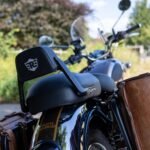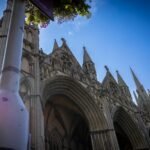
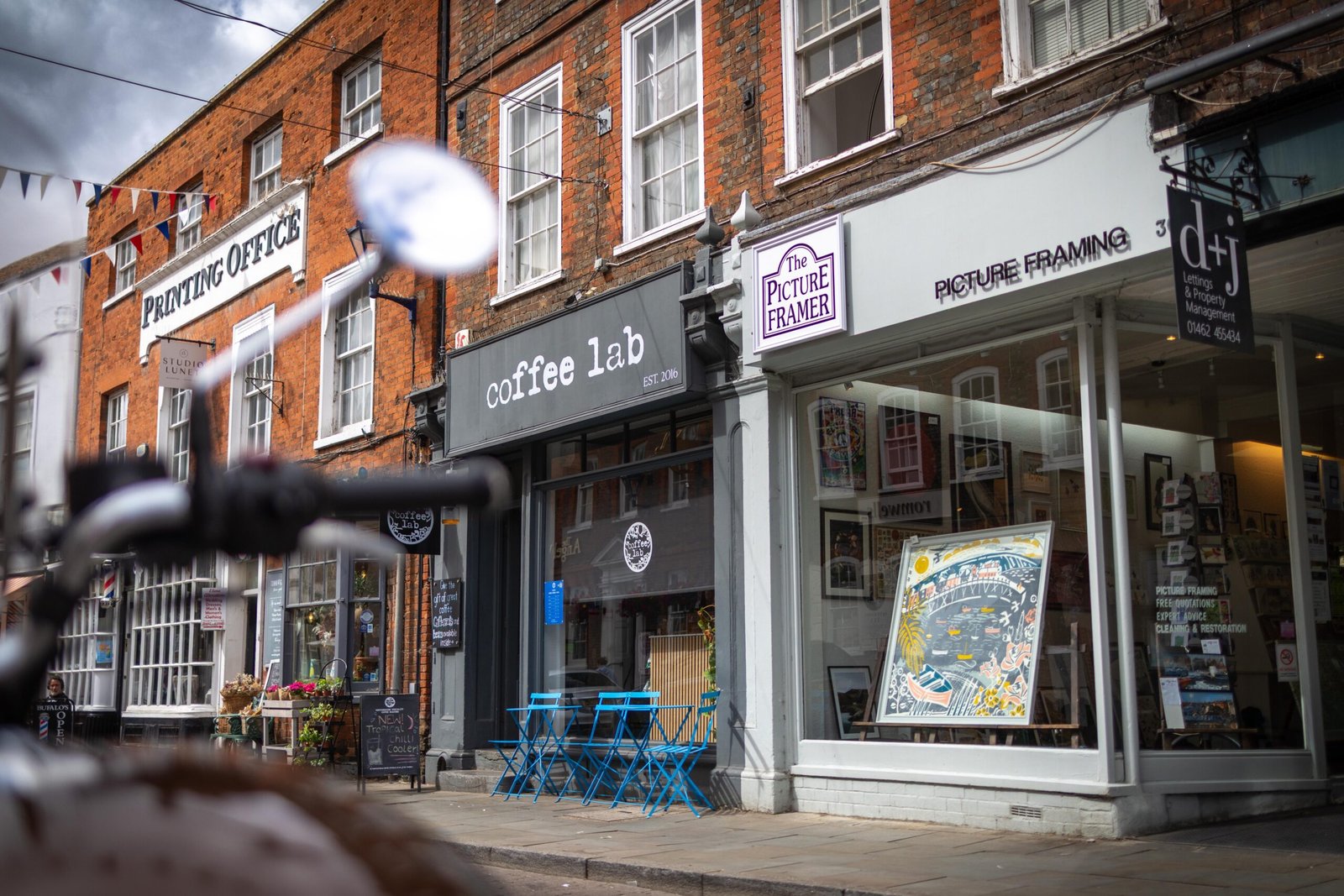

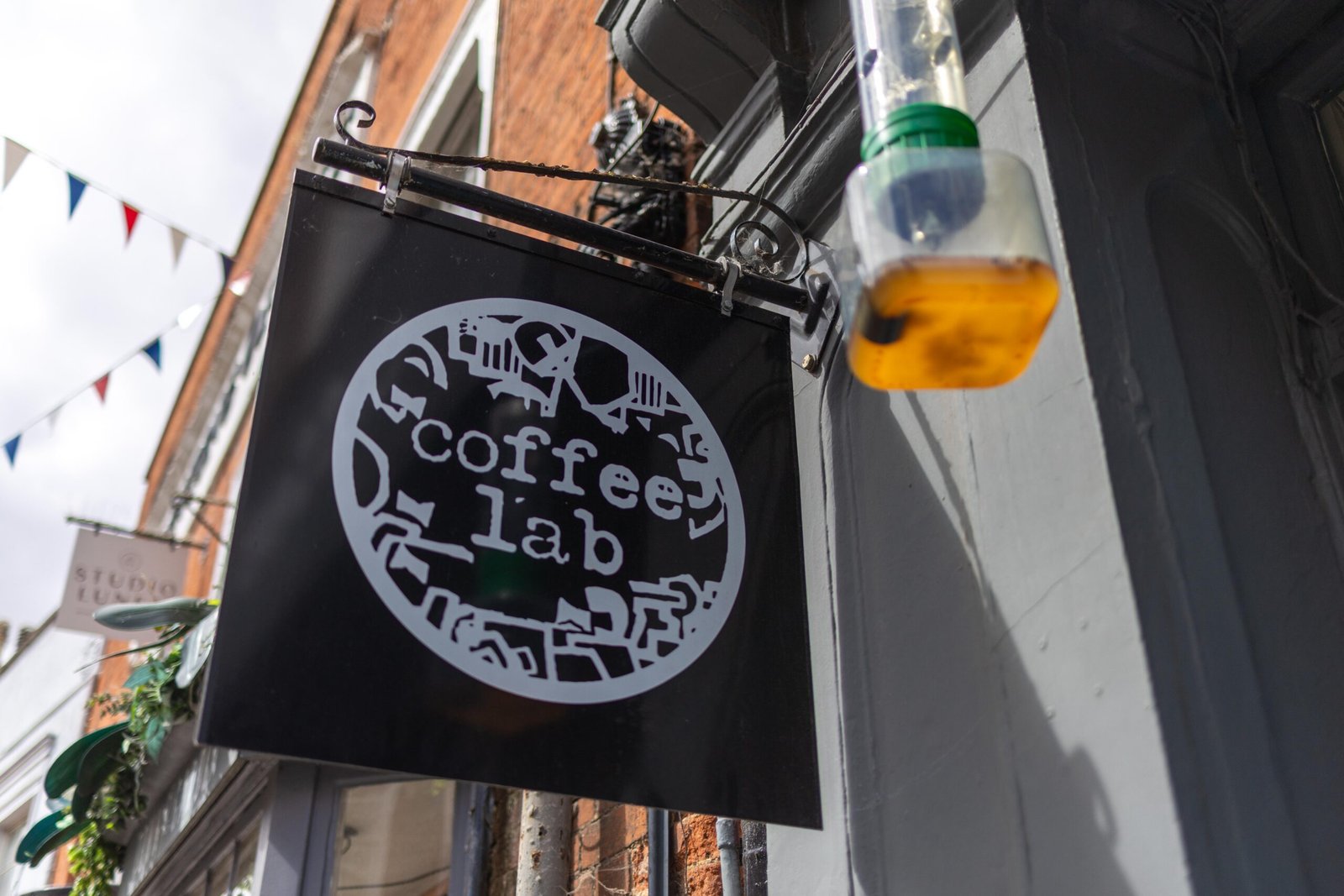
Getting from St Albans to the coffee shop in Hitchin took just over half an hour on the bike. It was sixteen easy miles on roads that were new to me. Sunny, around 25°C, windy roads, old churches, and big open countryside the whole way. The route took me through Kimpton and Whitwell, in no hurry at all. I broke the ride with a short stop at Emily’s Tea Shop in Whitwell, a recommendation from the day before. I took in the views and chatted with a few cyclists who’d stopped for the same reason. Sharing where I was going got me a few more recommendations to try. People always seem to have at least one favourite coffee stop. I love hearing about why it appeals to them.
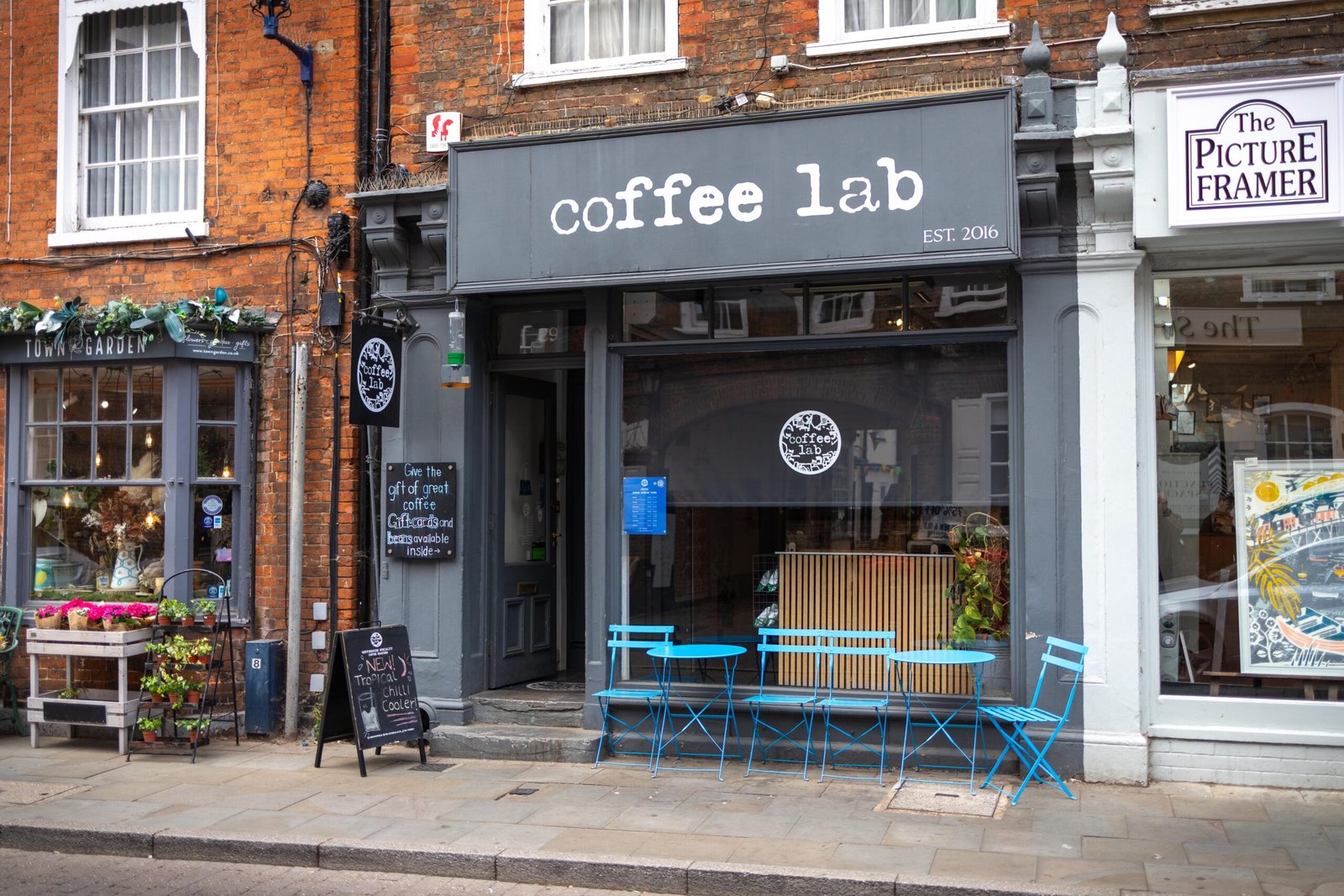
Seb Kripp, the roaster at Coffee Lab, was already waiting outside when I arrived. A fellow biker himself, he rides a BMW R nineT Urban G/S with tank stripes in the iconic BMW M tri-colour palette, light blue, dark blue and red. He is always looking for an excuse to get out on the road. The two of us had plenty to talk about before we’d even ordered. I parked just across the road, close enough to keep the bike in view. We ordered two Americanos before settling into one of the two turquoise outdoor tables for a chat. Strong and robust, the coffee held its own against the morning air. If you’re planning your own visit, the shop’s open 8am to 5pm Monday to Saturday, and 9am to 4pm on Sundays.
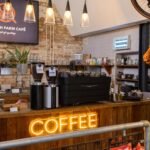
Inside the Coffee Shop in Hitchin
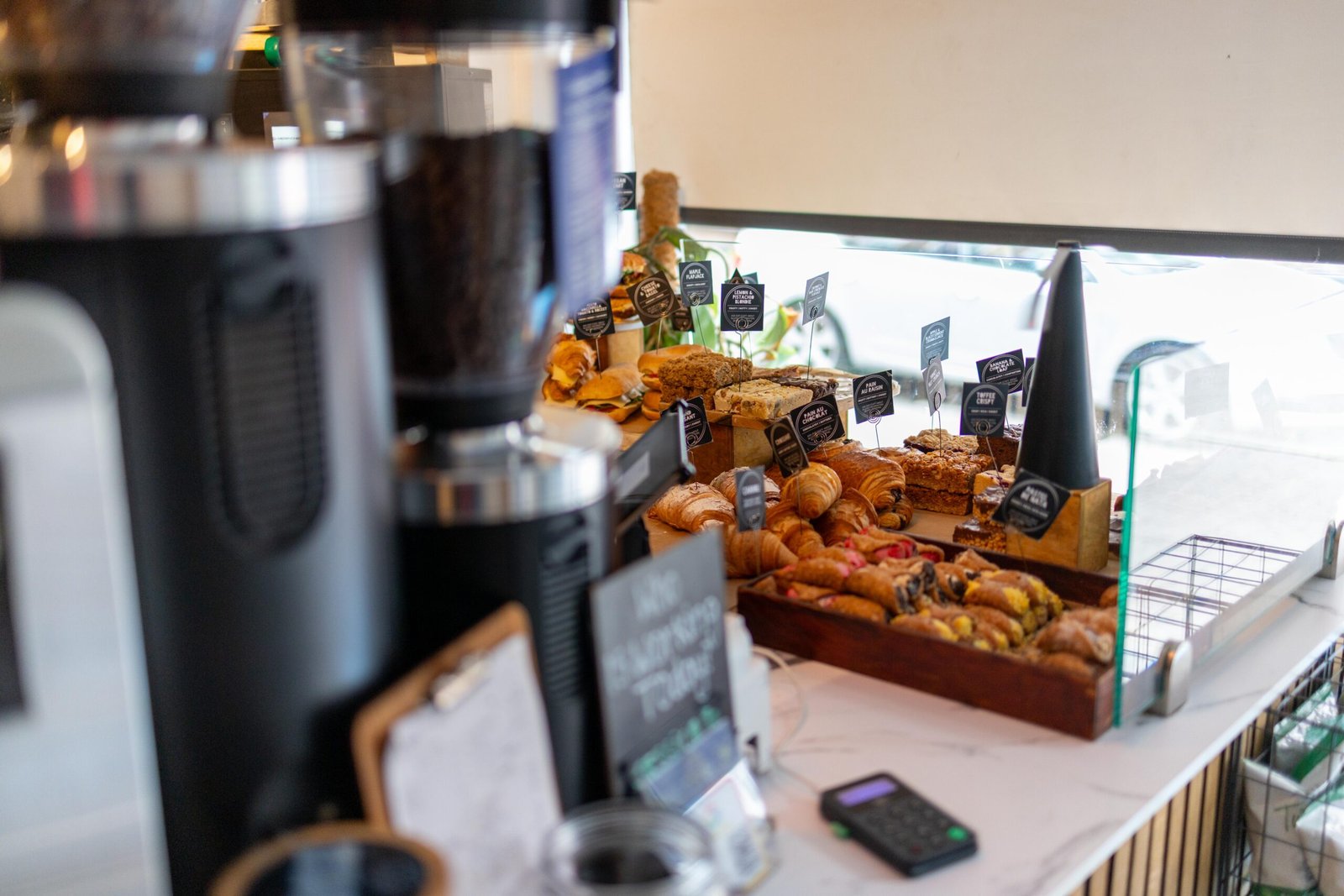
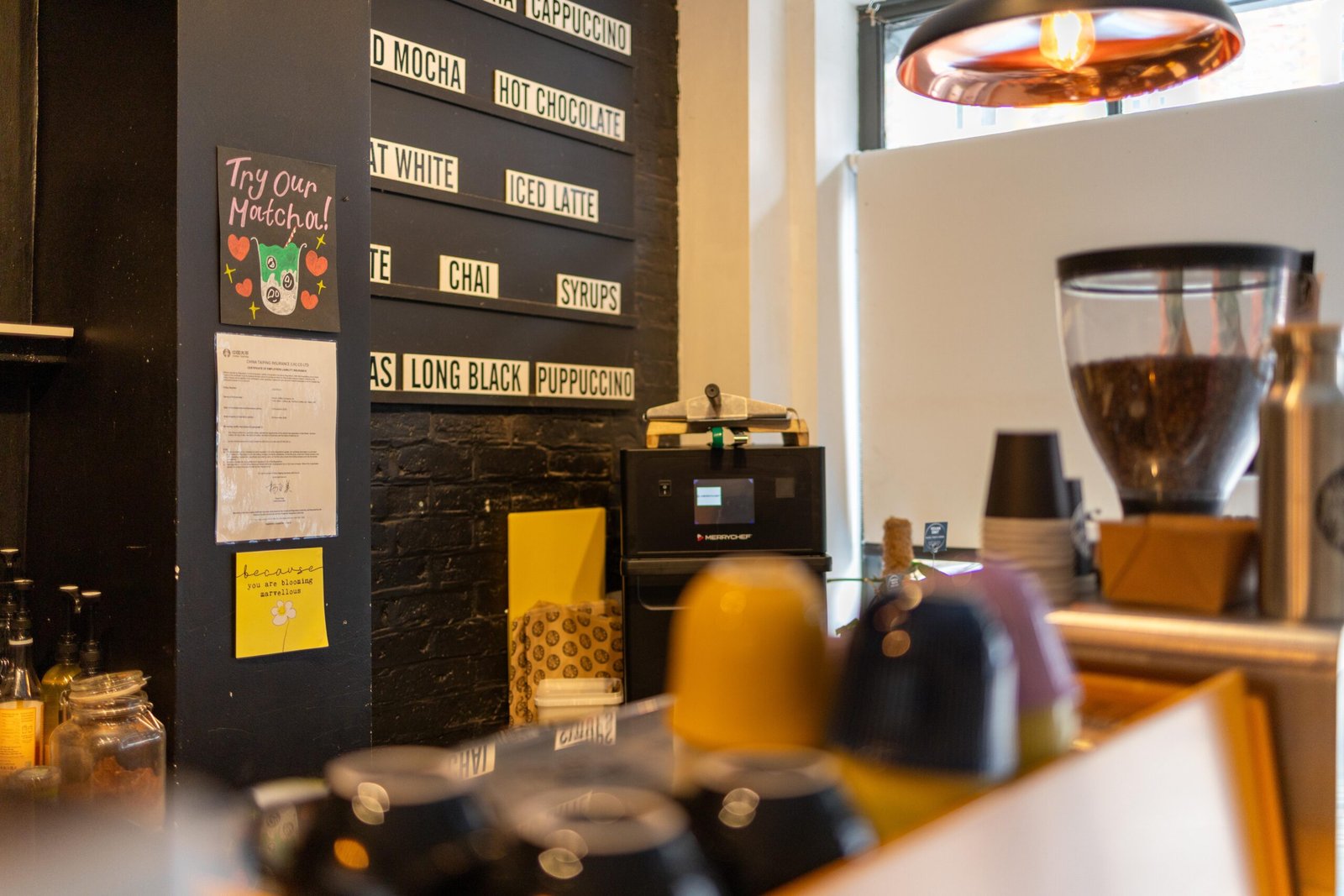
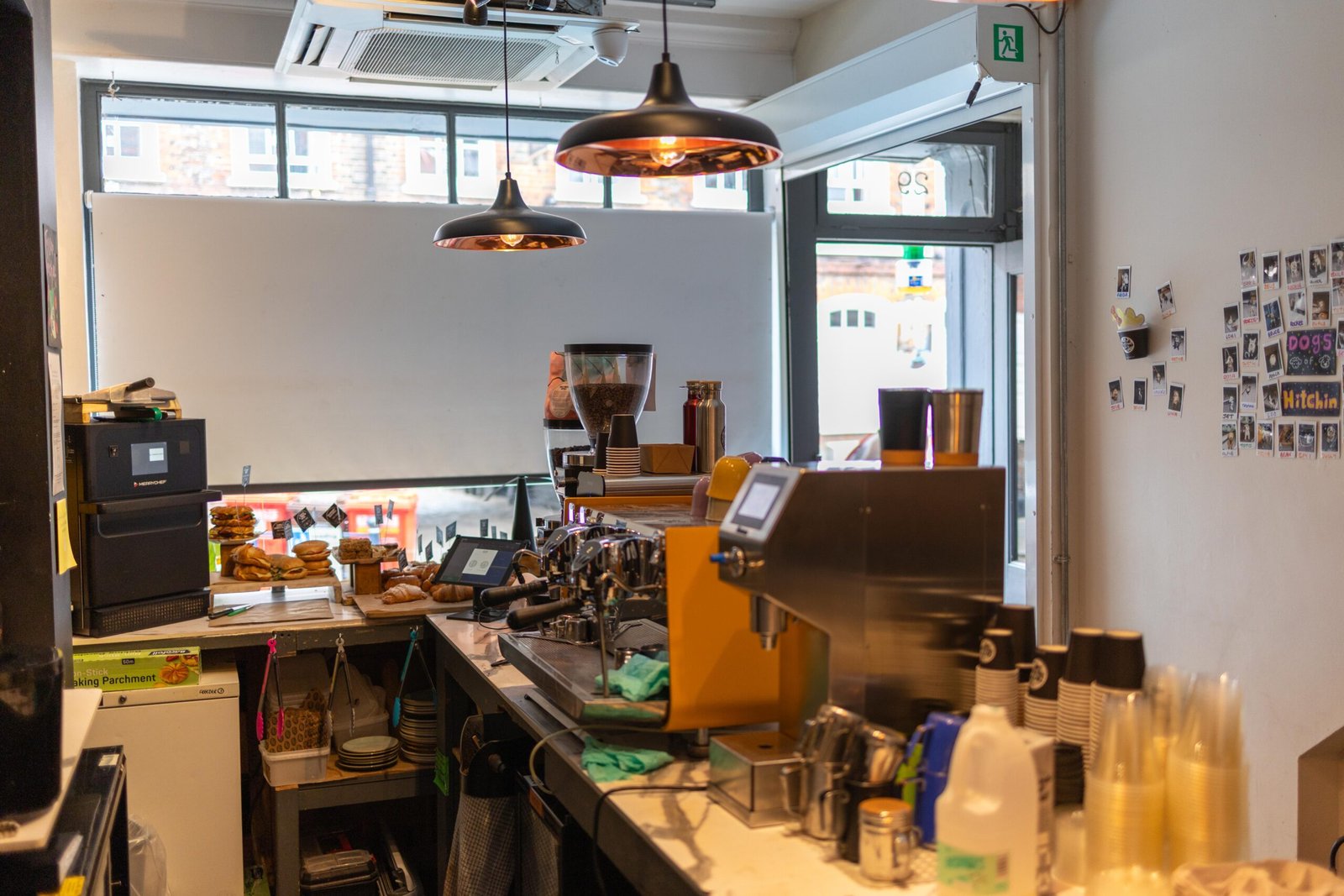
The counter itself is worth a look before you even order. Maple flapjacks, lemon and pistachio blondie, a banana and chocolate loaf, toffee crunch bars. Alongside them sat trays of croissants, pain au raisin, and filled pastries stuffed with berries and custard. Sandwiches too, for anyone stopping in closer to lunch. Behind it, a hand-lettered menu board lists the usual run of flat whites and iced lattes alongside a straight-faced “Puppuccino.” A handwritten sign nearby pushes the matcha with a little more enthusiasm than most cafés bother with.
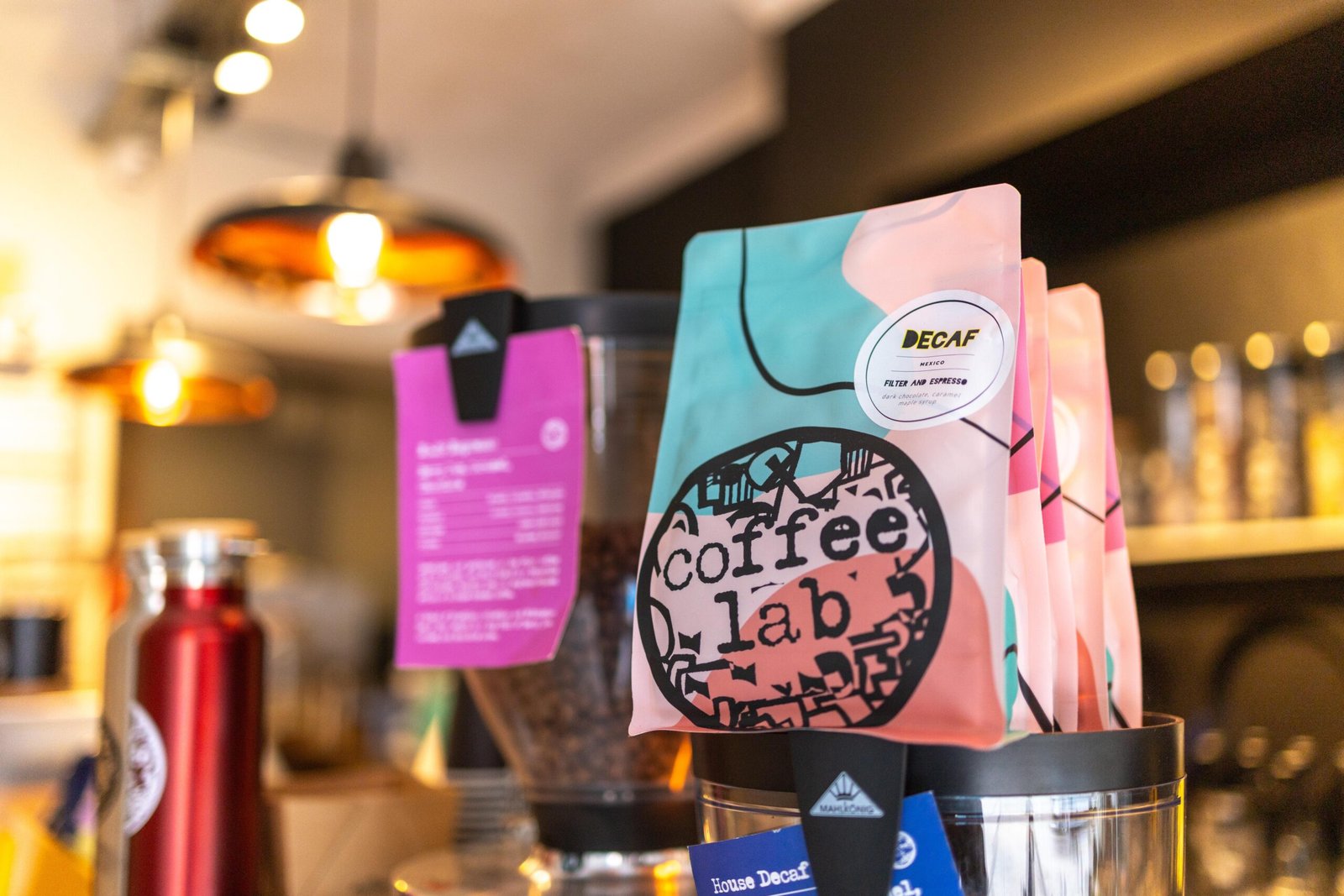
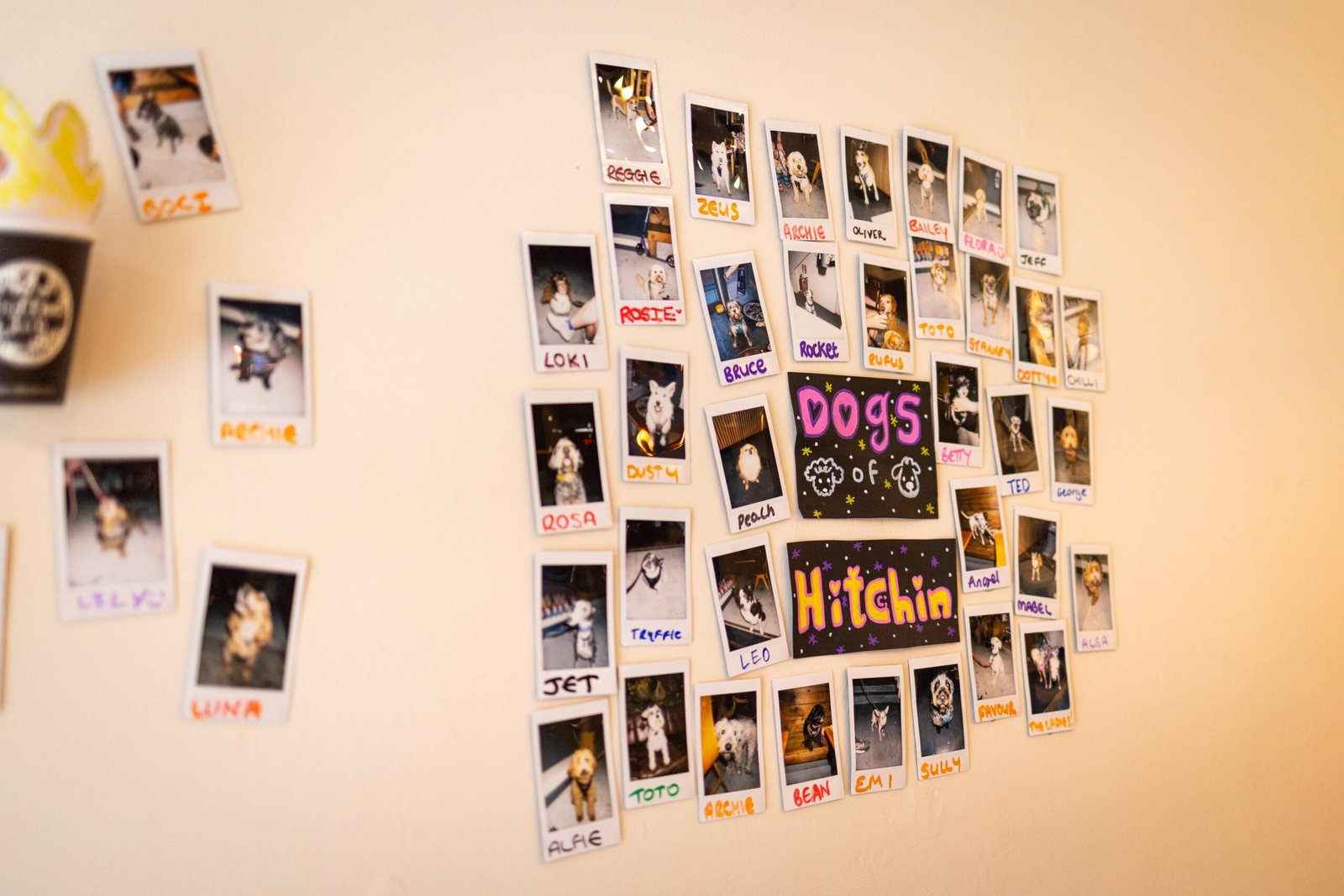
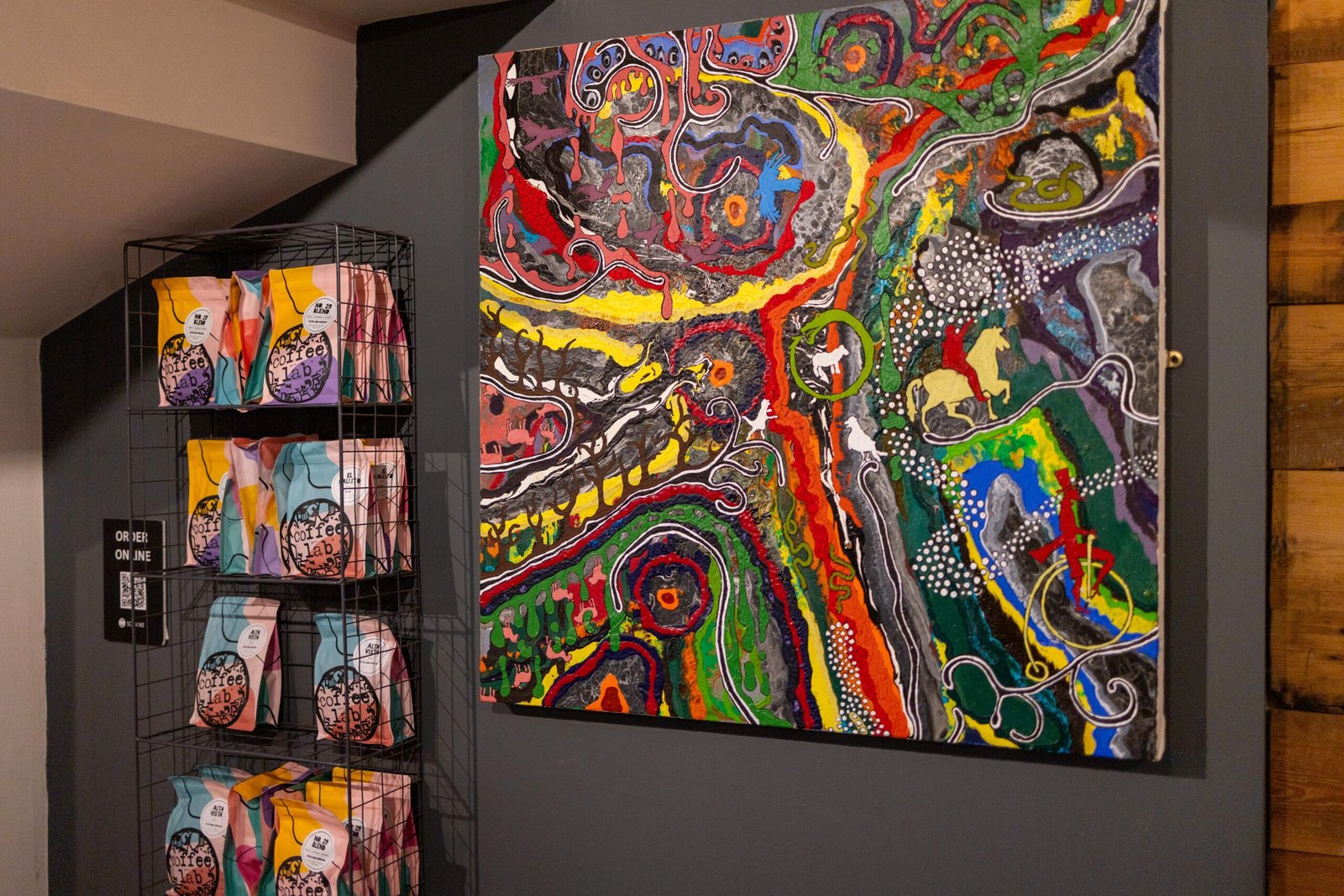
Their own coffee bags line up on the counter too, bold pink and teal packaging, each one printed with tasting notes. The Mexican decaf on the day I visited promising dark chocolate, caramel, and maple syrup. And then there’s the wall Seb had already told me about: dozens of Polaroids of customers’ dogs, hand-labelled in marker pen. They sit under a homemade sign reading “Dogs of Hitchin.” Exactly as promised.
How the Coffee Shop in Hitchin Started
The company belongs to Mehmet Ozdil, though it’s Seb who told most of this story. Before coffee, Mehmet ran a couple of restaurants in London, in Farringdon. After that chapter came to a natural end, he and his wife, started looking locally for whatever came next. They had already moved out to Harpenden by then. Nothing big, nothing expensive, just a small space and a tiny roaster. It is a one or two kilo machine that, fittingly, still lives in the Ware shop today if you ever want to see where it all began.
That was 2016. It is the same story printed straight onto their own coffee bags today: “The Coffee Lab story began in 2016 with the opening of a small coffee shop in Hitchin, with an even smaller roasting machine inside.” The original Sun Street address still lives on too, in the name of their No.29 house blend. It didn’t take long to realise people actually wanted this.
From One Roaster to Five Shops
The Hertford setup was modest, a ten kilo roaster in the back of the shop. Mehmet did the roasting himself while the business slowly outgrew its own back room. Boxes everywhere. Another shop opened in Ware. It became obvious the whole operation needed a real home, a dedicated roastery on an industrial estate. That’s where it’s stayed ever since. Welwyn Garden City followed, then Bishop’s Stortford. There’s a sixth site already in motion.
Seb himself spends most of his week in the roastery rather than any single shop. He roasts every Monday and Wednesday, a rhythm he’s protective of. “It’s really important to keep a coffee fresh, consistent,” he said. “I take great pride in it. I love that it’s a challenge every week.” Sourcing adds its own unpredictability: prices swing wildly (beans were roughly half the price two years ago), and global shipping routes, the Strait of Hormuz, the Suez Canal, can quietly reshape what’s actually available at any given time. It’s a theme that shows up on their own packaging too, coffee sourced “from suppliers who prioritise sustainability and the welfare of farmers,” the same values Seb talked through in person.
Running five sites now falls to a small team beyond Mehmet and Seb. Josh Johnson, the general manager, lives in Ware and splits his time across the shops, often described as “putting out fires”. That means a broken machine here, an ice machine on the blink there. Another team member, Felipe, is the one who gets the 9pm call about a leak in Hitchin. It’s mundane, constant, and exactly what keeps five separate shops actually running.
Why People Come to This Coffee Shop in Hitchin, and Who Else Is Doing It
Seb is unsentimental about competition. None of the other cafés nearby roast their own beans, which he sees as Coffee Lab’s real edge. He doesn’t see other specialty shops as rivals, even ones roasting in Hertfordshire like Sustain or Level Ground Co. They are neighbours doing their own version of the same thing. “I think we should actually work together more than we are,” he said, comparing it to how breweries collaborate on beer rather than treating each other as enemies. “It attracts customers to both of them.”
Hertford was a useful test case for that philosophy. When Coffee Lab first opened there, it was the first specialty coffee shop in town. The customers who found it back then are largely still coming, years on. Since then, other places have opened nearby, each with their own identity rather than a direct copy.
What’s Actually Changed in Eight Years
The honest answer, in Seb’s telling, is competition. There is also a wave of people opening coffee shops as a lifestyle choice without quite grasping what running one actually takes. “It very rarely works,” he said. “We see it often, a coffee shop pops up around the corner and then a year later it’s gone.”
Covid, oddly, sharpened things for the better. Before it, Seb admits the business had grown complacent, comfortable margins, little real scrutiny of costs. The pandemic forced a bit of a reckoning. It meant asking what actually goes into a sandwich, how long it takes to make, whether the numbers hold up. That discipline never really left. Suppliers still change prices without warning. Sometimes milk jumps a third overnight. Staying on top of it has become a permanent part of the job rather than a Covid-era emergency measure.
It’s the same discipline that’s kept them a plastic-free operation too. They are one of the first businesses in Hitchin certified as a Plastic Free Champion. They roast in-house and deliver to their own shops in reusable tubs and boxes rather than single-use bags, and so far over 8,500 of them have stayed out of landfill. Carbon-neutral couriers cover the wider wholesale side. Mehmet has spoken about the shift himself. He describes the primary goal as giving both the shops and wholesale clients a greener way to deliver and store coffee. He’s the first to admit it isn’t perfect, and there’s more to do, but as he’s put it, sustainability “isn’t a choice anymore.”
Dogs, Staff, and Staying Small on Purpose
Being dog-friendly was never a debate. “Mehmet loves dogs, I love dogs,” Seb said simply. Every shop now has its own wall of Polaroids, customers’ dogs, treats on hand, and pup-cups for anyone who asks.
On hiring, Seb prioritises personality over experience, often preferring people with no coffee background at all. It means training them from scratch exactly the way he wants. “All the coffee stuff, you can learn it,” he said, “if you have a passion for it.” Seb leaves hiring largely to individual shop managers rather than running it centrally, since they’re the ones who’ll actually be working alongside whoever joins. It doesn’t always work out, and staff turnover is high. He puts that down partly to how the UK treats hospitality compared to somewhere like Germany or France. Here it’s more a stepping stone than a real career. But there are exceptions: one team member started at 16 packing roastery bags. At 23, having finished university, she’s still with them, returning between terms whenever she can.
Slow Growth, Town by Town
The clearest thread running through the whole conversation, though, is how deliberately small-scale the growth has stayed. There are no external investors. “We grow slowly, but sustainably,” Seb said. “It’s very easy in this world to be distracted by someone saying, here’s a million pounds, but I want you to open four shops in the next year.” That kind of money comes with someone else making the decisions, and Seb is clear that’s exactly the trade-off they’ve chosen not to make. Welwyn Garden City, he pointed out, took far longer than expected to find its feet. Footfall looked promising early on, but the shop needed real time before it settled into the place it holds now.
Every town, he’s learned, has its own rhythm, and there’s no blueprint that transfers cleanly from one to the next. Hertford, he said, is almost entirely locals. Most customers live within a couple of miles of the shop, and the place carries that neighbourhood feel.
Welwyn Garden City is a different world entirely. It has more office workers and John Lewis shoppers passing through than residents, and Seb says it “just dies” after five o’clock.
Scouting a location and actually running it, he’s found, are two different exercises altogether. Footfall on a good afternoon tells you far less than it seems to.
Leaving the Coffee Shop in Hitchin
Before I left the coffee shop in Hitchin, the team handed me a bag of the single-origin beans straight off the shelf, still roasted just a couple of days earlier, at Seb’s request. We agreed to meet again in September, this time at the roastery itself, something I’m already looking forward to. It was a small thing, but it said everything the visit had been about. A business built slowly, on purpose, still handing out the same care in a paper bag that started it all back in 2016.