
Finding a specialty coffee shop and a free motorcycle bay right next to each other in Central London is proof that there is a god. Or, at least a saint.
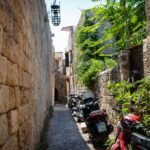
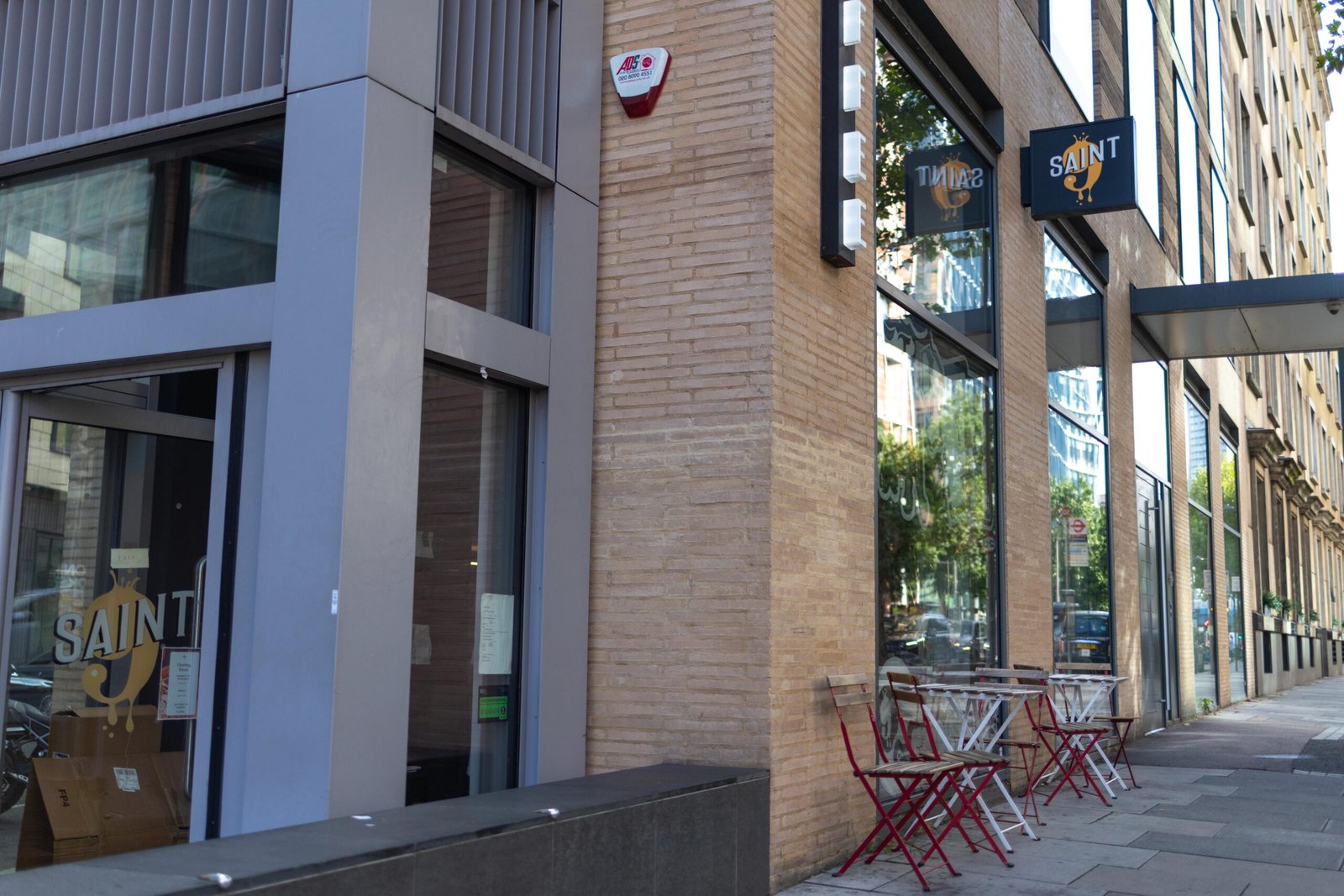
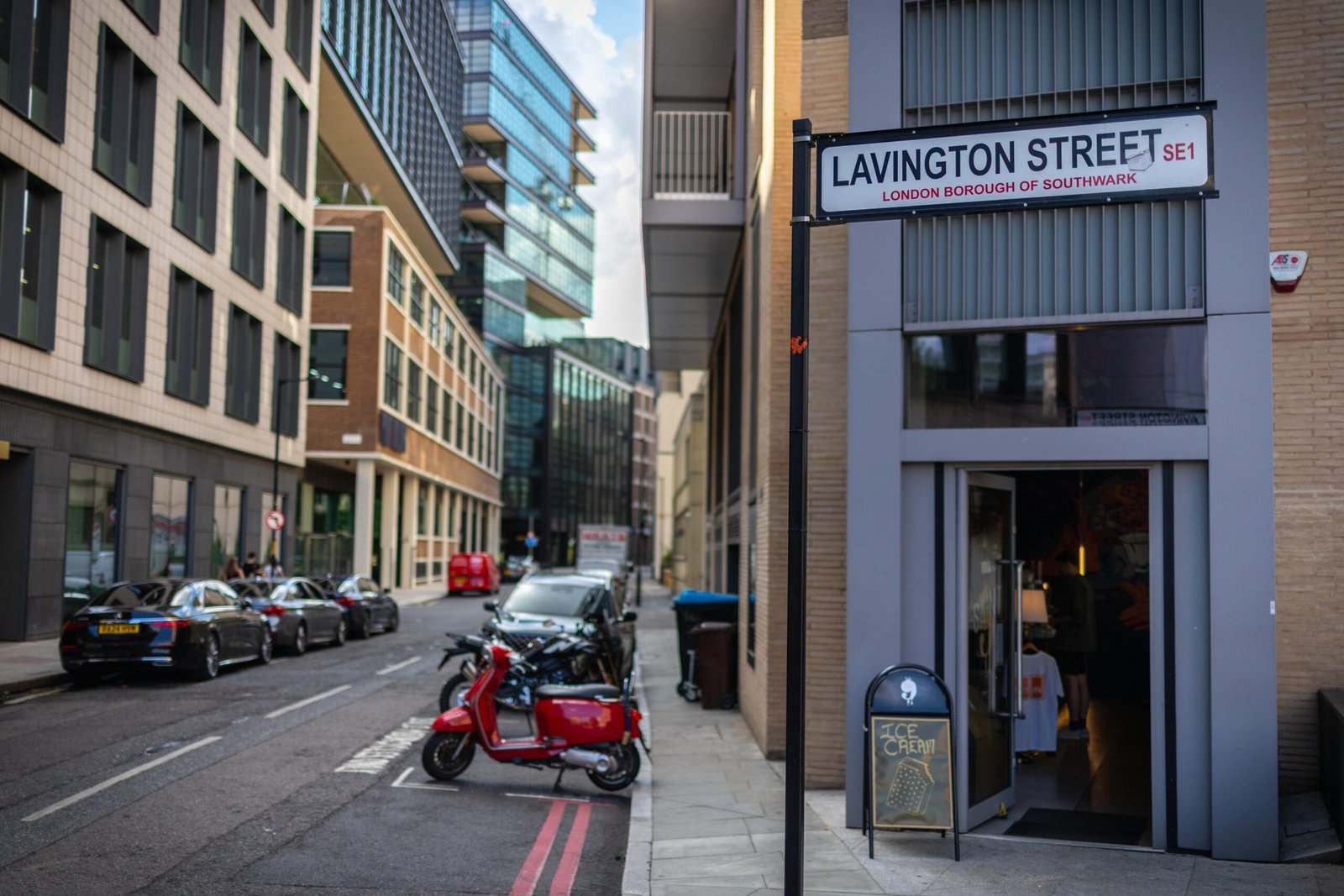
Saint Nine sits on Southwark Street, surrounded by offices and hotels, and its subtle exterior branding doesn’t give too much away. I park up in the dedicated bike bay on Lavington Street and from there you can see right through the window to the all the action behind the counter.
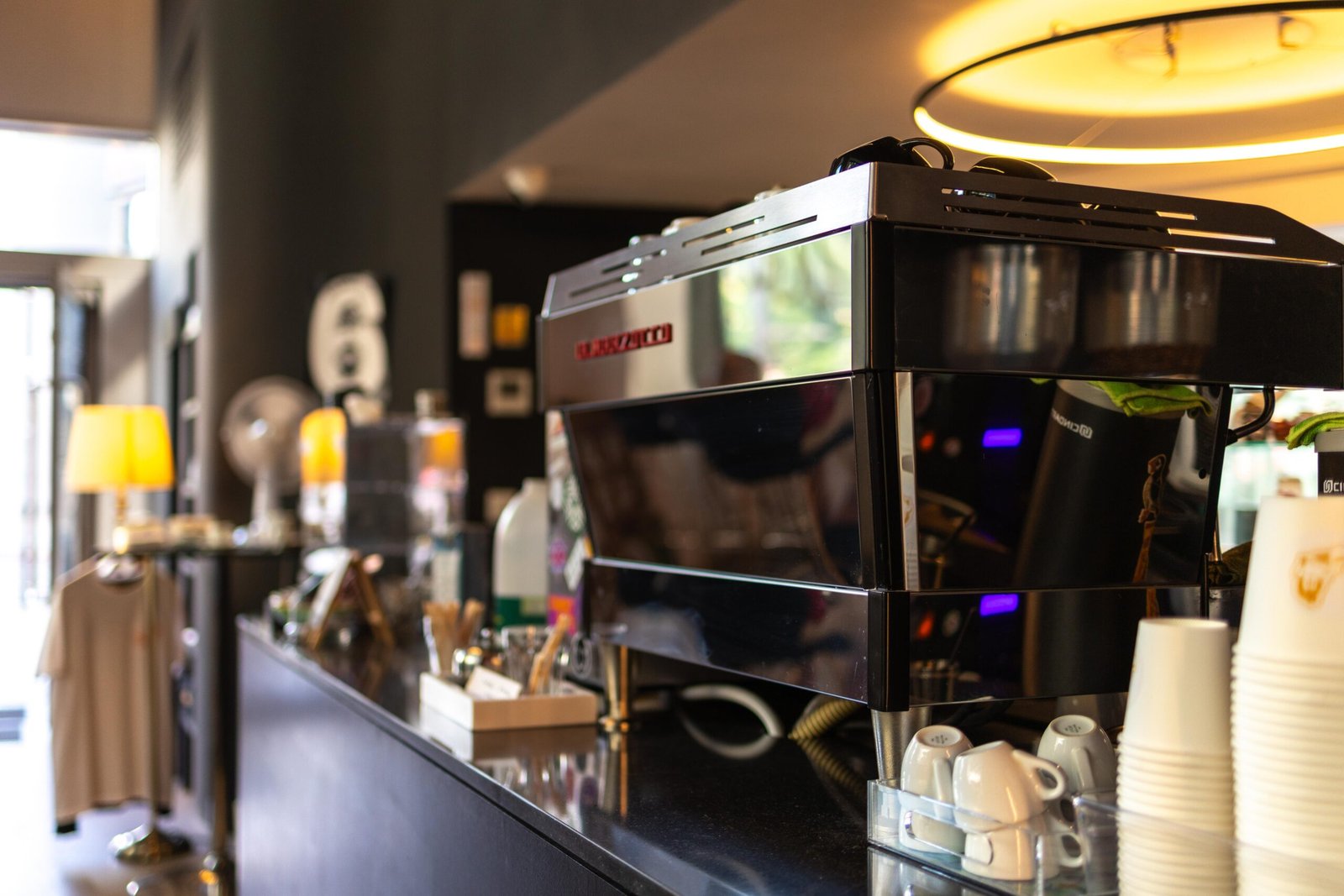
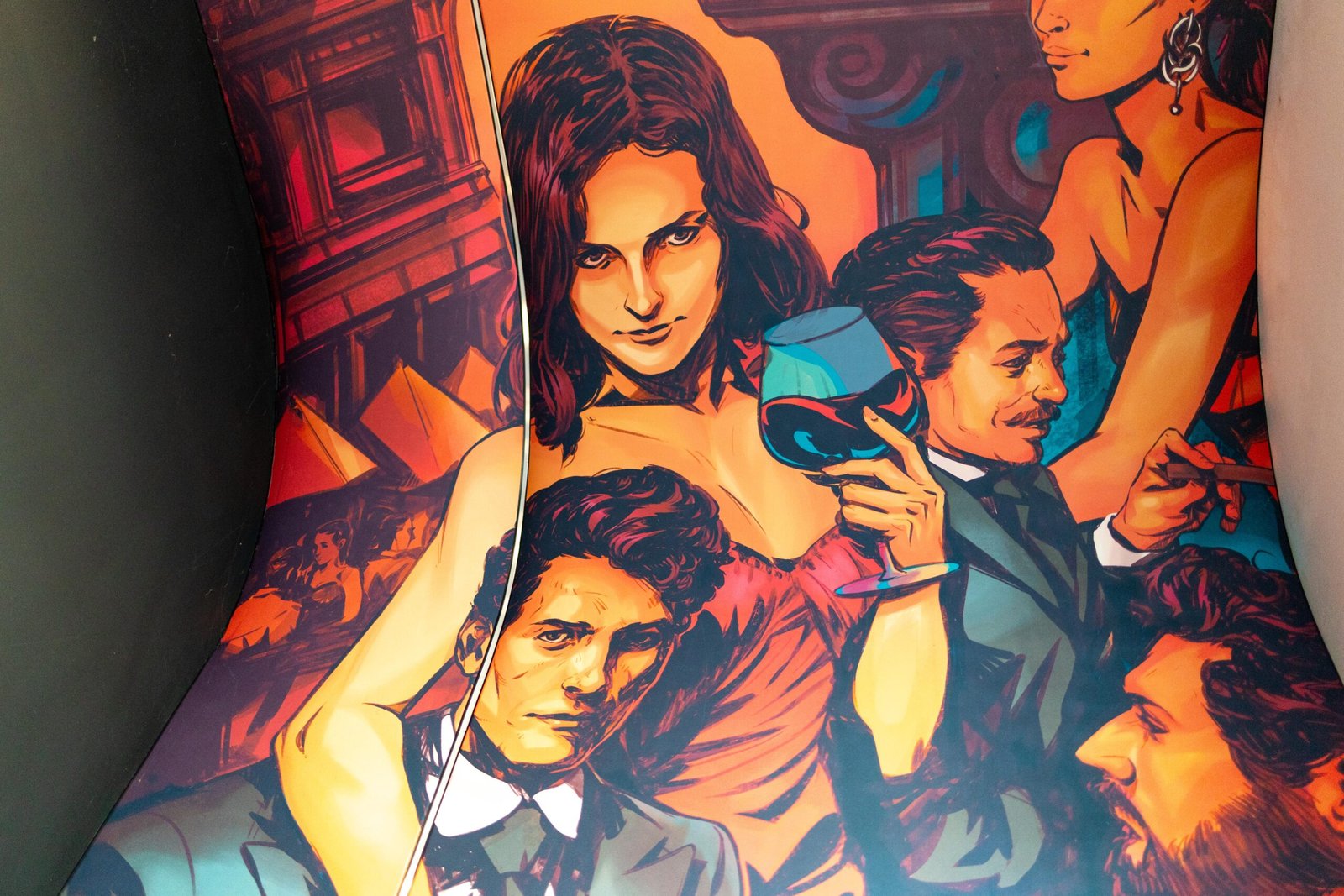
Inside, the shop occupies a narrow, high-ceilinged room. One wall carries an abstract mural in deep reds and blues, and the counter runs along the opposite side beneath a gold-lettered menu board. The pastry case offers a small selection of staples. Plain and almond croissants sit alongside pain au chocolat, cinnamon buns and slices of lemon cake, with a few cookies on offer too.
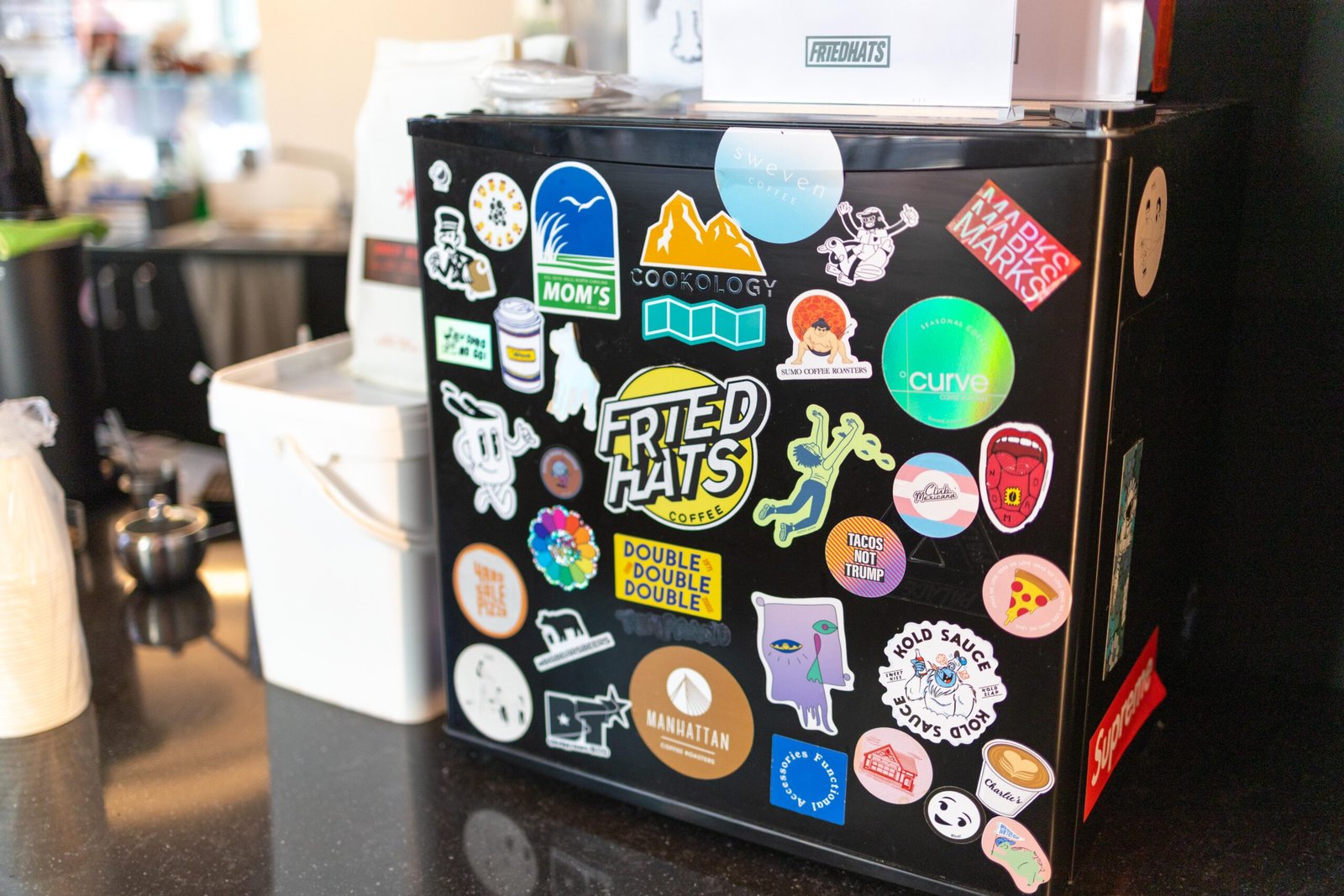
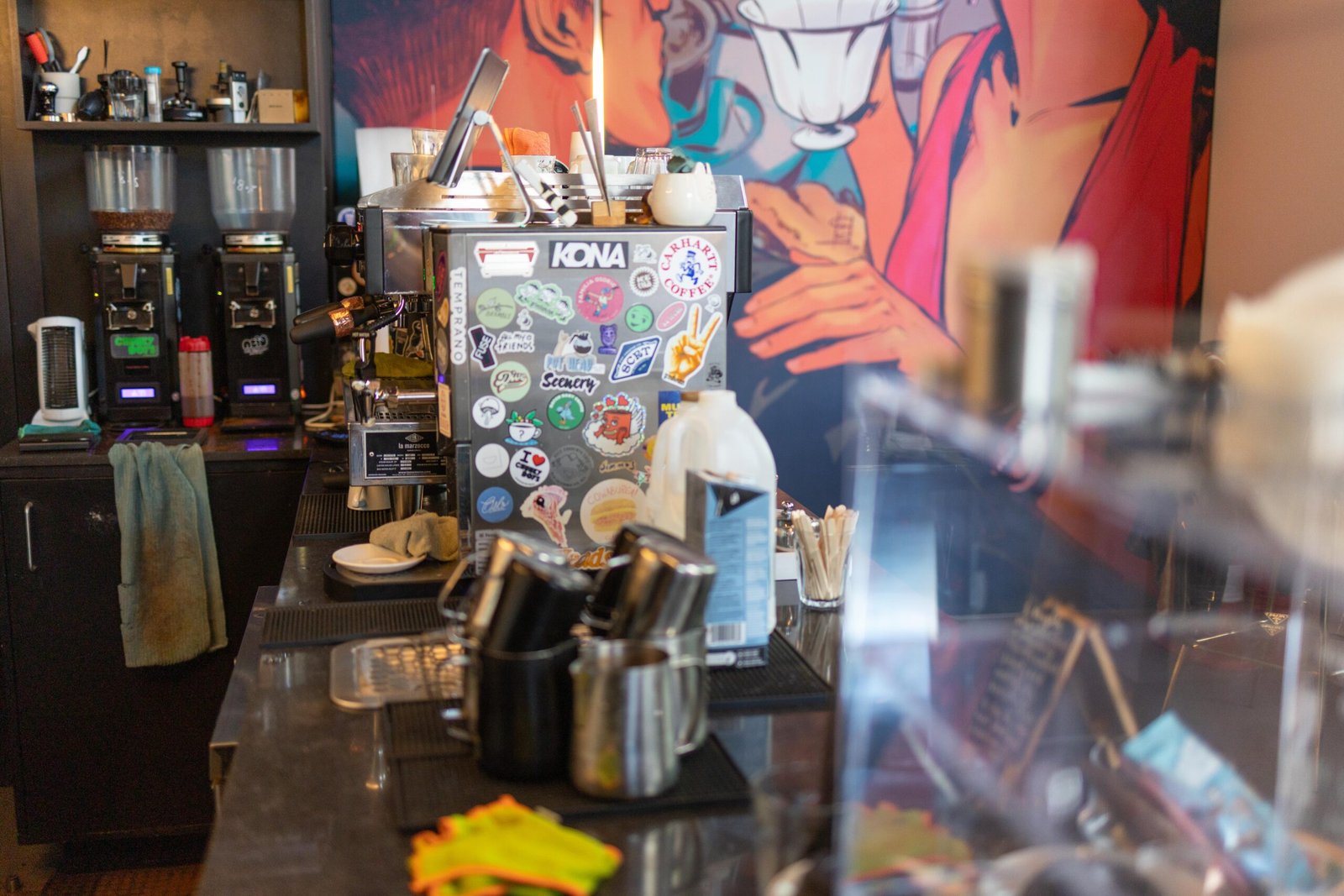
The layout is tight and intimate, with tables arranged in a single line against the window. It doesn’t feel cramped though, there are personal touches to spot all around such as the multi-stickered fridge and polaroids near the till. And there’s a steady beat coming from the sound system above and I can hear what I think is 7 Mädchen from Paula Harmann.
I sit down with Laith, the owner and founder, to discuss the challenges of opening at the worst possible moment. We talk about how the name came about and the mural its artist has never seen in person. We also get into the realities of running a shop that operates only five days a week.
Opening a Month Before Covid
Laith signed the lease on Saint Nine in February 2020, a deal negotiated the previous year in a completely different market. Within weeks, everything changed. “I had two things to worry about. I was on an entrepreneur visa… plus I had to deal with Covid,” he said. The shop eventually opened in August 2020, and business was slow from the start.
Southwark is an office district, and offices were empty. He launched with a team of three, then had to put himself and his staff on furlough as restrictions tightened. “I had to shut down in November, open in December, shut down in December, and reopen the year after,” he said. It took three years, which he still describes as “crazy,” before the business finally found its footing.
He told me all this while constantly scanning the room, watching customers as they left. He kept exchanging quick glances with his team behind the counter, making sure they were comfortable and had what they needed. The shop runs like a hive, and it is hard to imagine Laith taking any of that activity for granted.
Where the Saint Nine Name Came From
Long before Southwark, Laith and his cousin ran a shop in Toronto called Nine Bars, on St Clair Avenue East. The name came from the pressure needed to pull an espresso shot. She oversaw the food, he focused on the coffee. The origin of “Saint Nine” goes back to one afternoon there. “I was having a conversation with a regular,” he said, “and an old man walks in carrying a cane. As soon as this old man walks into the shop, a bird flies in and lands on the menus.” The regular, Warren, took in the scene and told him his next shop had to be called Saint Nine. “Fast forward, and the day I was going to work on the first logo for Saint Nine I see Warren on a random street in Toronto,” Laith said.
These coincidences convinced him he was on the right track, and that’s how Saint Nine began.
A Mural Its Own Artist Has Never Seen
Gabe created the mural that wraps the back wall of the shop. Laith first met him years earlier, when Gabe was a regular at Nine Bars in Toronto. “We spent so much time together,” Laith said. “I’d be in the shop while he’d be on his tablet.” When Laith took over the Southwark space, he asked Gabe to design something for the wall. The final piece draws on an Italian setting, inspired in part by The Talented Mr. Ripley. Gabe and Laith worked it all out remotely, refining the design entirely through photos and phone calls rather than in person, before printing it onto fabric. Installing it correctly took four attempts.
Despite being central to the shop’s identity, Gabe has never seen the finished mural in person although he does feature in the artwork himself. He is still based in Toronto and has not made it to London since it went up. “Hopefully one day he can walk in and see it,” Laith said.
Why Only Eight Seats
The shop’s small footprint wasn’t a limitation Laith worked around, it was the plan from the start. “I like small shops,” he said, “because they are intimate and it brings people closer, and I actually want people to interact.” In his experience, bigger shops swallow people up. Smaller means more focus, and for Laith, that’s the entire point.
Sourcing and Selling
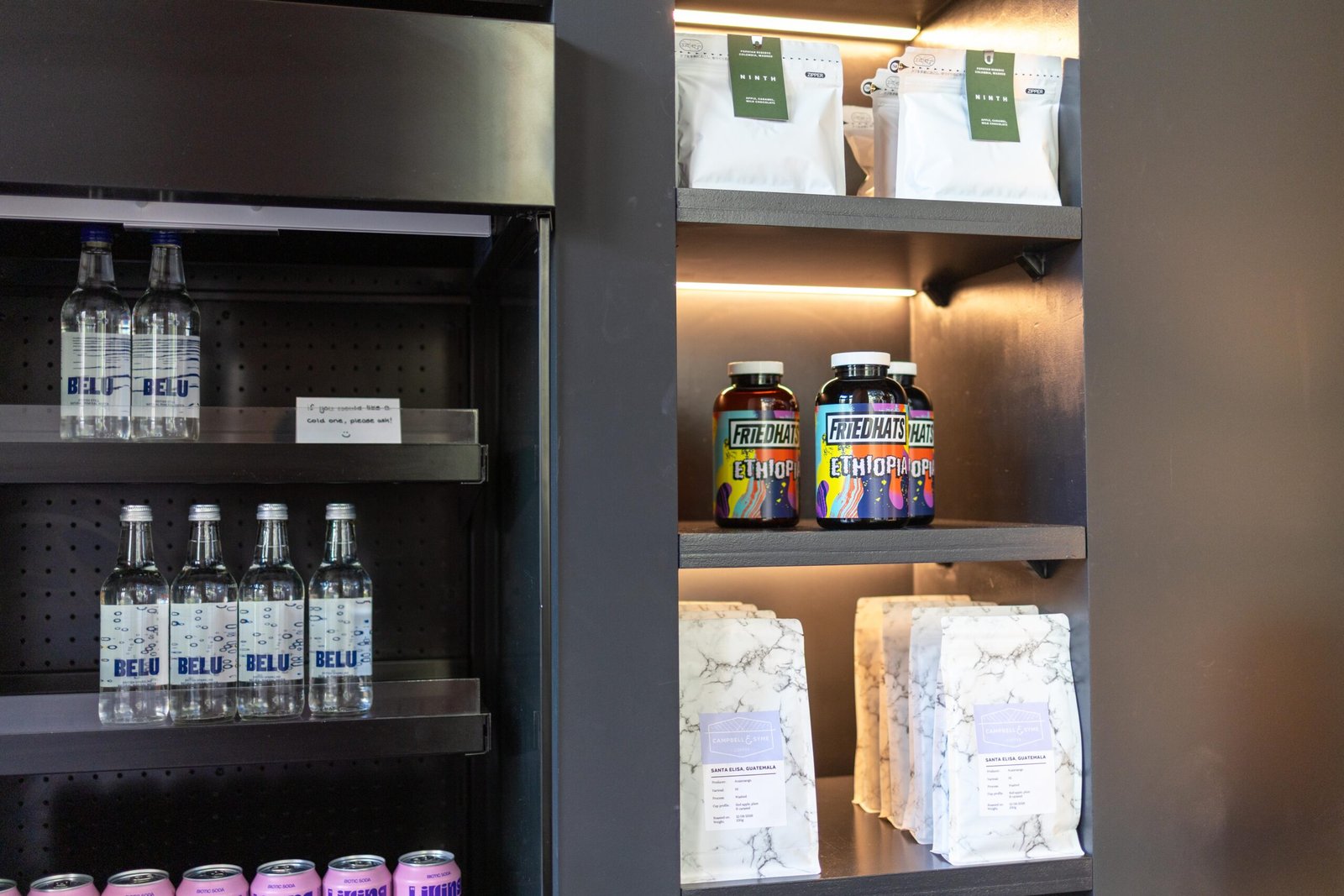
Saint Nine started out working with Assembly, Round Hill, and North Star. These days, Laith leans heavily on his own network within the London coffee scene. “We have an exclusive coffee from Scenery…they roast every week for us,” he said. I could see that Ninth, the shop’s own-label coffee sits on the top shelf in the retail area.
But he’s always on the lookout for what works. Many of his coworkers are freelancers themselves, and he trusts their opinions on what’s worth trying. Visiting other independent coffee shops is part of the job as much as running his own. “I’ve been to 100 shops in London over the years,” he said, “and I love to go out, support, and see what’s out there.”
That habit shapes how new coffees end up on the shelf. Recommendations tend to arrive through the network rather than through cold outreach, roasters he already trusts, people whose palates he respects.
The Coffee That Captures It
Reviews of Saint Nine tend to single out the cappuccino and the filter coffee, but Laith’s own answer is more specific, and comes with real conviction behind it. Flat whites are the actual bestseller, he told me, batch brew close behind. Asked what single drink best captures what the shop is actually about, though, he didn’t point to a specific item on the menu. He pointed to the espresso itself. “I worked very hard on espresso,” he said. “If you’re a specialist, everything else builds from there.”
He’s exacting about it too. New coffees get tested repeatedly before he trusts them, sometimes three cups in, still learning how a bean behaves. “It’s like when you buy a new car,” he said, “you have to test it, see how it runs. Usually on day two is when things really start to click.” Nothing goes out to customers until he’s confident it’s right.
An Extension of Home
Laith opens and closes the shop himself, every single day. “I love what I do,” he said. “It’s about the connection with the people.” That extends to how he treats his own team, trying to make their working lives easier, understanding what they actually need rather than just directing them. Rap music plays daily, a deliberate touch that’s become part of the shop’s identity.
Getting to know customers matters to him just as much. “Everyone has a story,” he said, and he wants first-time visitors to feel like regulars from their very first visit. But that giving comes at a cost he’s built the business around managing. Saint Nine closes entirely on weekends, no trading at all, and stays quiet on Fridays too, since much of the office crowd nearby works from home by then. “I get my energy from people,” Laith explained, “and this is why on the weekends, when we’re closed, I like to recharge. My job is all about giving. I have to be in a good place to be able to give.”
Proof It’s Working
Laith recently started writing down the moments that have stuck with him over the years, aware that memory alone tends to lose the details with time. One comment in particular has stayed with him. A customer once told him it would be worth flying into London just for his coffee. But “there’s no room for complacency at all,” he said. Six years in, people still go out of their way to visit, sometimes from the other side of the city, sometimes further. Disappointing them is the one thing he refuses to do.
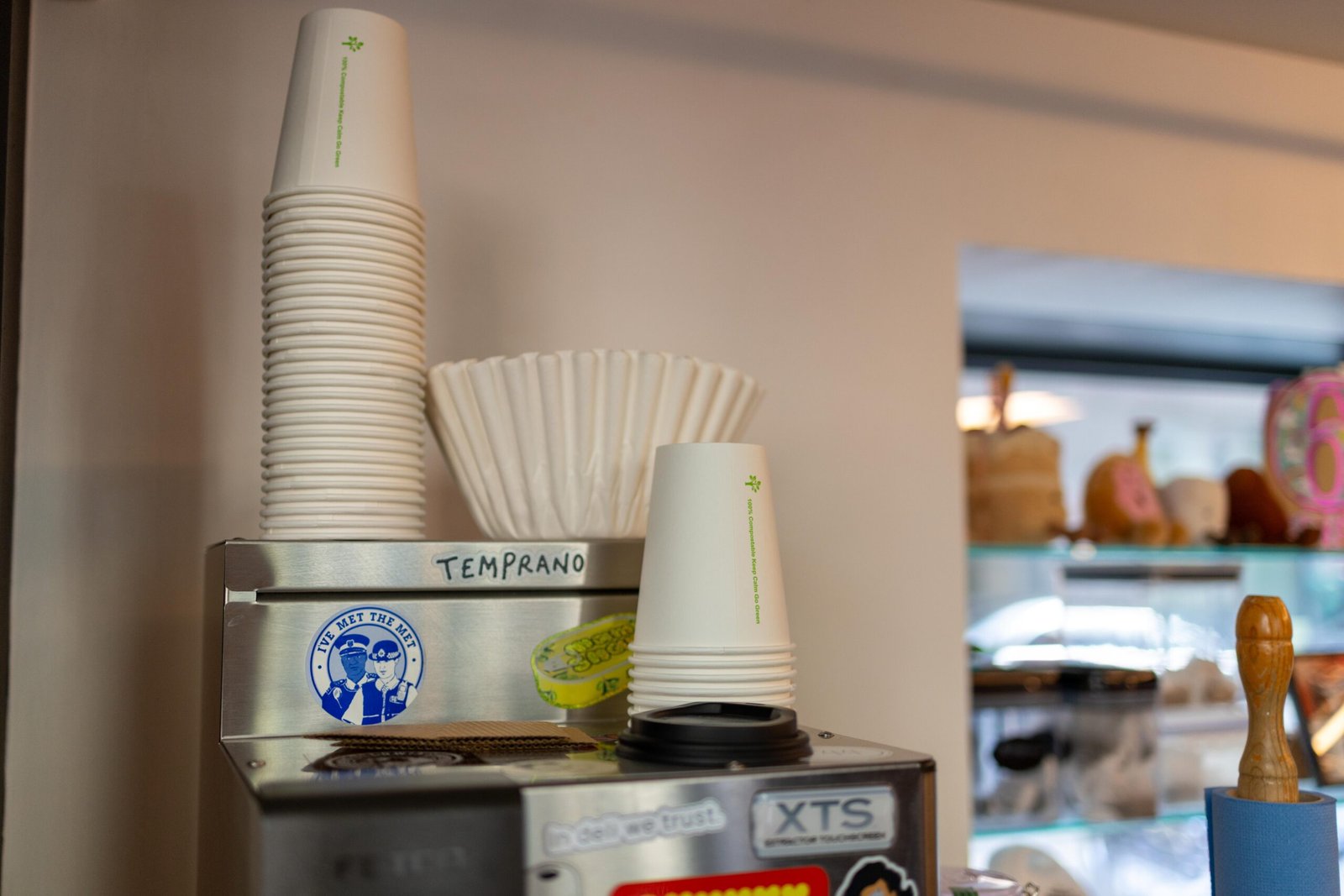
Some of his favourite proof is smaller and stranger. A police officer who’s been a regular since opening day parked outside the shop on his motorcycle. One co-worker pointed out that the police were outside. “He’s a friend of mine,” he told her. Sure enough, the officer came in and, knowing of Laith’s love of stickers, handed over a police-branded sticker for his collection. Laith later showed me his ‘I’ve met the Met’ sticker, like his others, placed neatly on the shop’s equipment.
The Cab Driver Who Keeps Coming Back
Then there’s the black cab driver who visited on the day of our conversation. He’d come in originally after Saint Nine picked up an award nomination. He’d made it his mission to visit every nominated shop on the list himself, treating the whole thing like a personal research project. He and Laith hit it off immediately. Now the driver runs walking and driving tours around London. He makes a point of bringing his groups to Saint Nine specifically, folding it into the same itinerary as the city’s more obvious landmarks. That same day, he’d dropped off a group of American visitors who all sat down together in the shop.
For Laith, none of it comes down to a single transaction. “You always have the opportunity to write the ending to any interaction,” he said. Even when something goes wrong, a wrong order, a bad batch, he’ll remake a coffee as many times as it takes rather than let someone leave unhappy.
What’s Changed
Six years in, the challenge has shifted from surviving to scaling. “You plan for the worst case scenario,” Laith said, “but you don’t plan for when things take off. How do you keep up with that level?” Some days the shop is empty, and then suddenly it isn’t, and consistency through both extremes is the thing he watches closest.
Relationships with nearby businesses have deepened in ways he didn’t expect either. One office nearby has kept a running tab with the shop for three years, settling their coffee costs monthly rather than per visit. He’s also thinking more seriously about what else the brand could become beyond the counter itself. Merchandise, coffee events, pour-over tastings, ways to extend what Saint Nine represents without diluting the coffee at its centre.
For the shop’s sixth anniversary, he brought in a special coffee from Friedhats, a roastery based in Amsterdam. Getting hold of it, he told me, had always been a dream of his.
I realise I’ve taken enough of Laith’s time. It feels right to wrap up the interview and let him return to the counter, where he seems most at ease. His approach to running the shop is quietly compelling. He is always present, working the machine, managing the room, and keeping his team in good spirits. When he isn’t focused on pulling an espresso, he is deep in conversation with one of his regulars. Sometimes he steps outside to greet someone he has spotted across the street.
Saint Nine | 67 Southwark Street, London, SE1 0HX | Open until 4:30pm, Mon-Thur, Friday closes at 2pm | Motorcycle parking: free on Lavington Street | Instagram: @saintninecoffee