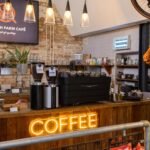
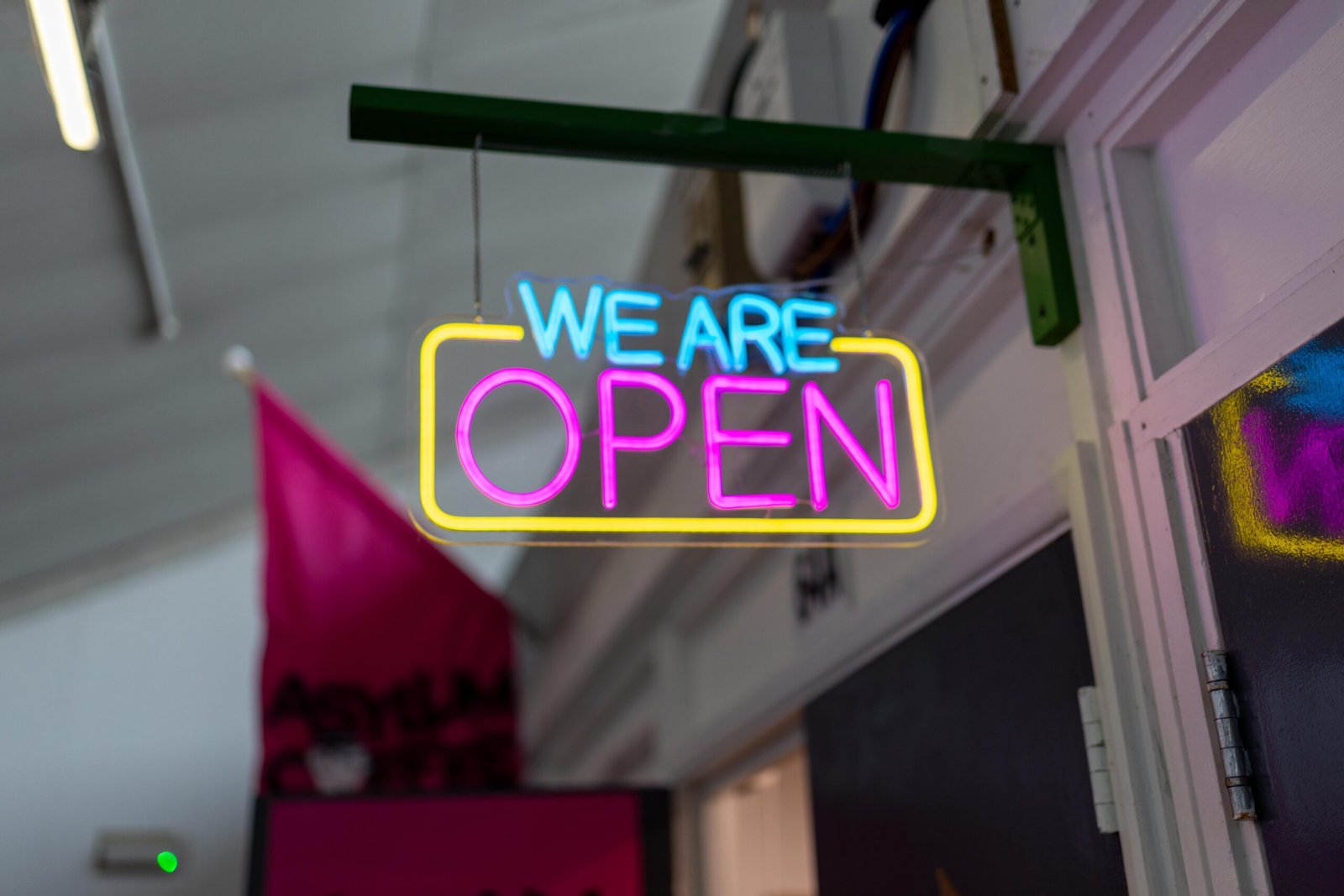

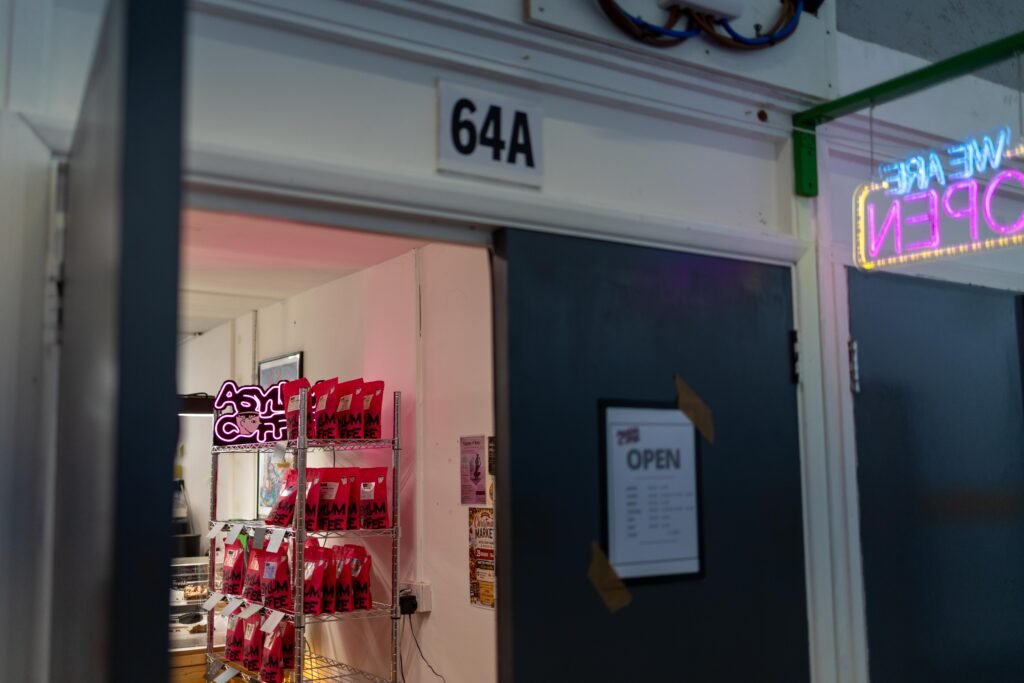
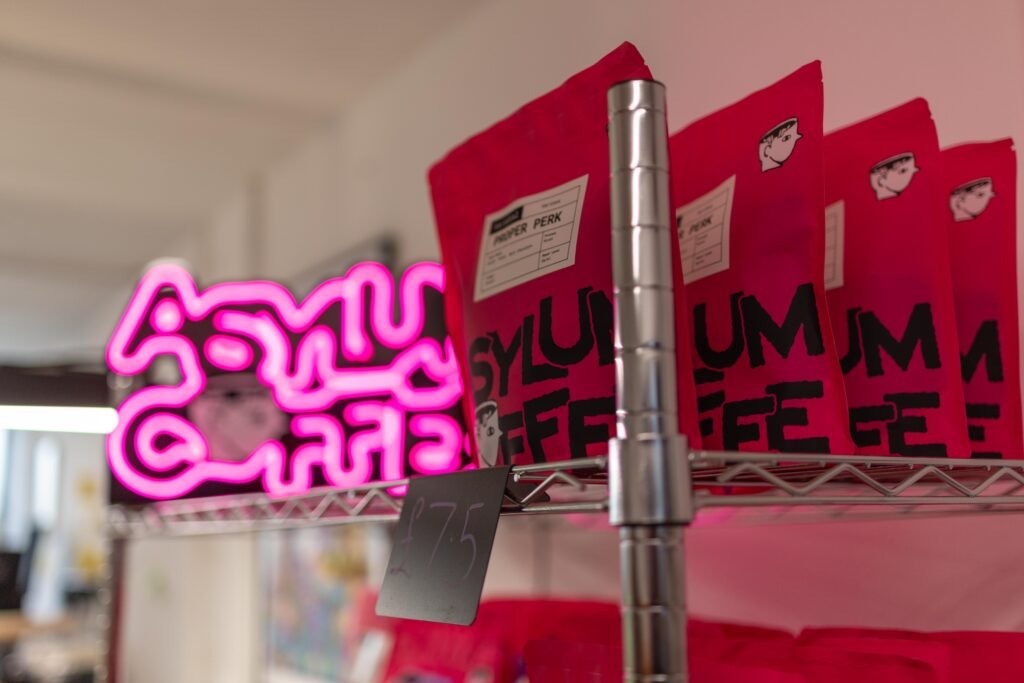
You wouldn’t accidentally stumble into Asylum Coffee unless you were looking for it. It is in an industrial estate in Swindon, far from the high street cafés and passing foot traffic. Look past the unusual surroundings, and you will be rewarded with a specialty coffee shop wrapped in bright pink branding.
When I visited, customers were arriving for takeaway coffees, bags of beans and a chat with owner and roaster Thisawat Laohachaiyot, who prefers to be called Note. The coffee list reads like a world tour, with beans sourced from Costa Rica, Colombia, Ethiopia, Indonesia and Thailand, and Note roasts every one of them himself.
My first impression of Note was of a man entirely absorbed by coffee. He appeared completely in command of the little shop, greeted customers with seemingly endless patience and carried himself with the quiet confidence of someone doing exactly what he wants to be doing.
By the end of our conversation I realised the unusual location, the bright pink branding and even the name all make perfect sense once you understand the person behind them.
Note moved to the UK from Thailand about three years ago, having previously run a restaurant and coffee shop there. Asylum Coffee opened its doors on 1 September 2025, but the journey that led to it started much earlier, with a pandemic, a mentor, and a family decision that would take him halfway around the world.
From Bangkok to Wiltshire
I asked Note what the journey was between Thailand and Wiltshire. “I think it all started during Covid,” he said. “My wife wanted to move to Swindon, and we said, well, we need to do something. And the only thing I could think about at that time was coffee, because that’s something I’m interested in.”
At the time, coffee was more of an interest than a profession. He had owned a coffee shop and restaurant in Thailand, but building a roasting business would require a completely different level of expertise. That was the beginning of what he describes as “years and years of planning”. There was just one problem.
“When we discussed moving back, I didn’t really have the knowledge of coffee,” he told me. “So I needed to start from zero, actually.” What pulled him towards roasting was something much more familiar. “I got interested in roasting because it’s similar to cooking,” he said. “And I love cooking in general.”
Later, when talking about flavour, roasting styles and how different cultures experience coffee, it became clear that Note thinks like a cook as much as a roaster.
Fortunately, he already had a way into the industry. While running his coffee shop in Thailand, he had hired a consultant to help set up the coffee side of the business. “At that time he was the number one Coffee Roaster Champion,” Note said.
When the move to the UK became a reality, he went back to him with an unusual proposal. “I said, look, I’m planning to go to the UK and I want to do something with coffee. So I asked him if I could work for him for free.” The consultant became his mentor and Note spent the next year working alongside him.
“I told him from the beginning, don’t teach me anything,” he said. “I just want to absorb and to be in the atmosphere of coffee making, the production environment.” At that stage he still did not know where he fitted into the coffee world. “There are so many things that I could do, let’s say barista, roasting or coffee sourcing, and I didn’t know at that time.”
Instead, he helped wherever he was needed, watching, learning and gradually working out what interested him most. “And then I realised that, okay, I would like to do roasting.”
After the move to the UK, he spent the first couple of years working for other coffee businesses, learning the British market from the inside while quietly assembling the equipment that would eventually become Asylum Coffee.
Why Swindon?
Note had done his homework long before he arrived in the UK. “About five or six years ago I started to do some research about the market in the UK,” he told me. “What kind of coffee, what styles of coffee people here like, and also our potential competitors and the roasteries in this area, including Bristol and London. And I did a lot of coffee tasting.”
Bristol initially seemed the obvious choice. “It’s a big city,” he said. In the end, family settled the question.
“My wife’s whole side, her family, friends and relatives, they all live in Wiltshire, in Swindon particularly. So we decided that when we moved to the UK it would be better to stay close to family. That’s why we settled in Swindon.”
Three years on, Note speaks warmly about the support he has found locally too. “I feel I got a lot of strong community support from my customers,” he said. “Swindon has very strong community support. Once they like your coffee, they start to come here, and the brand loyalty is very high.”
For a business tucked away on an industrial estate and operating well outside the kind of location property agents would describe as prime retail space, that loyalty makes a real difference. “If they like it and the price is right, they will keep on buying and supporting a local business,” he said.
“The current economic situation is not great for any kind of startup or small business,” he admitted.
The Hidden Shop
The shop I visited was never part of the original plan. “My initial plan was to open as a roastery and supply roasted beans to coffee shops, and to sell online for people who make coffee at home,” Note said. The problem was convincing people that Asylum Coffee indeed roasted its own coffee.
“The big struggle is people don’t really believe that you are an actual roaster, because everything is online,” he said. “You can have your own brand, but they don’t know that you are actually a coffee roaster.”
His solution was to give people somewhere to find him. “I needed to rent another unit,” he said. “So people can come and have a chat with me, and we can talk about how we roast coffee, so they can see that I’m a genuine coffee roaster. I would say it’s actually the front of the business.”
The unit was originally intended to function as a coffee lab, a space dedicated to testing and tasting coffee. Customers, however, had other ideas. “People just kept coming in asking for coffee,” he said. Demand grew organically.
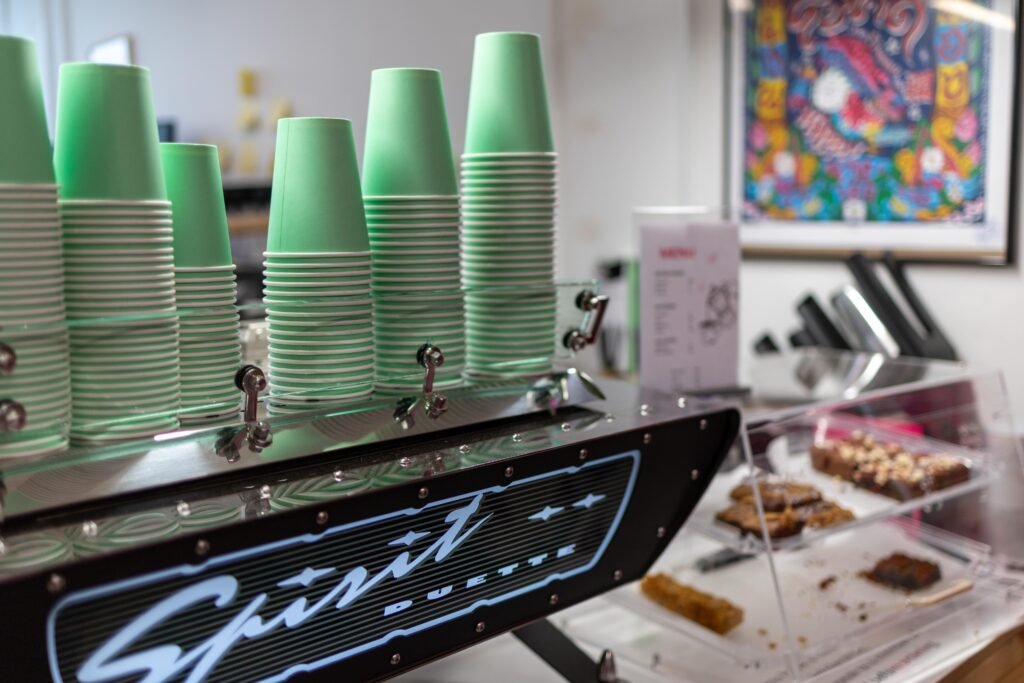
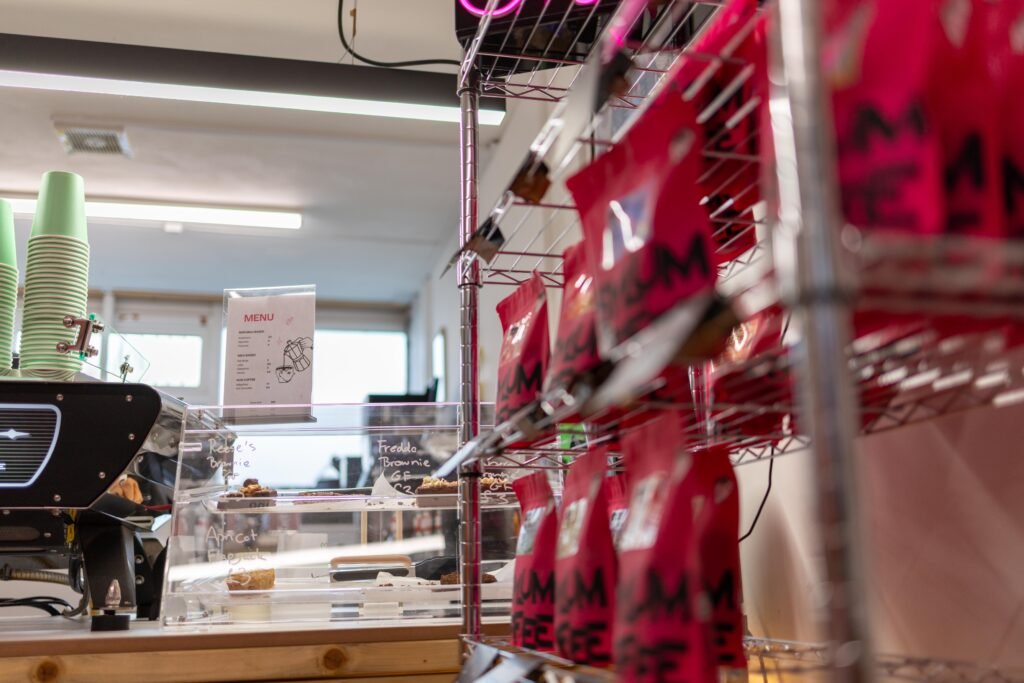
Gradually the lab evolved into the compact coffee shop I found on my visit, with a handful of seats, a steady flow of regulars and shelves lined with bright pink bags of coffee.
When I suggested that it felt a little like a hidden gem, Note laughed. “I didn’t do it on purpose,” he said. The explanation was considerably less romantic. “It’s only because everywhere else in Swindon is just too expensive for me.”
Hidden or not, customers from Swindon and beyond are finding it. On the day that I visited, a customer had come in from Geneva after searching for somewhere good to drink coffee in Swindon, and others had arrived from Slovakia and America. “It was crazy,” he said.
Getting to Grips With the British Palate
What interested Note most wasn’t simply where people bought their coffee, but how differently they seemed to experience it. When I asked what was different about the way people in Thailand and the UK think about coffee, his answer began with a polite observation about British customers.
“People in the UK have a very high level of tolerance,” he said. “They are more flexible, and more forgiving in terms of coffee. People are just drinking coffee, whether it’s bitter, whether it’s weak. The UK people don’t really complain much.”
For a coffee roaster, that creates a challenge. “So for me it is very difficult to get genuine answers and feedback,” he said. His solution was to taste his way into the market before he arrived, drinking as much British-roasted coffee as possible and trying to understand the flavour profiles people gravitated towards.
What emerged was a theory that brought him back to something he had spoken about earlier in our conversation: cooking. “For coffee and styles of cooking, it goes hand in hand,” he said. “In Asian culture we use a lot of wok and high heat and do a lot of stir fry. That style of cooking is quite light, with more flavour, and that is something I translate into the styles of roasting.”
By comparison, he sees traditional British cooking as rooted more in ovens, roasting and slow cooking. “English cooking is a lot of cooking in the oven, and kind of slow cooking,” he said. “It’s quite different, and it translates into the taste buds of the people, in my opinion.”
The result, he believes, is that many British coffee drinkers naturally gravitate toward richer and heavier flavour profiles. “Anything that is on the heavier notes, a little bit smoky or a little bit burned, people tend to like it,” he said before offering his own explanation. “I think it represents warmth because of the weather.”
Why Call It Asylum Coffee?
For Note, finding the right name was a year-long process. “I wanted something bold, something very catchy, something people would recognise straight away,” he said. “I spent one year just trying to think of the name, and I couldn’t think of any name that would be catchy enough.”
Then one day the answer appeared. “I said to myself, how about Asylum Coffee? It’s easy to remember, it’s catchy.”
Even then he wasn’t entirely convinced. “At the time I was a bit sceptical because, you know, asylum seeker, and I am a foreigner living in the UK,” he said. “I don’t want people to assume that’s my situation. You know, are you an asylum seeker, setting up a business here?”
It is a concern he clearly thought about carefully, which is why he is always quick to explain what the name means to him. “Asylum Coffee means a place to calm myself down,” he said.
The explanation became more personal as he continued. “The only thing I talk about is coffee,” he said before laughing. “My wife can confirm that the first conversation every time is coffee.” Then, in a sentence which sums it all up, he added: “So it’s kind of a sanctuary for me.”
And the bright pink colour that has become synonymous with Asylum Coffee? “It’s from my daughter,” he told me. “I asked her what kind of colour she would like, and she said pink.” And it gives him plenty of room to have fun with the rest of the brand. Asylum’s coffee subscriptions are marketed as being “sentenced to good coffee”.
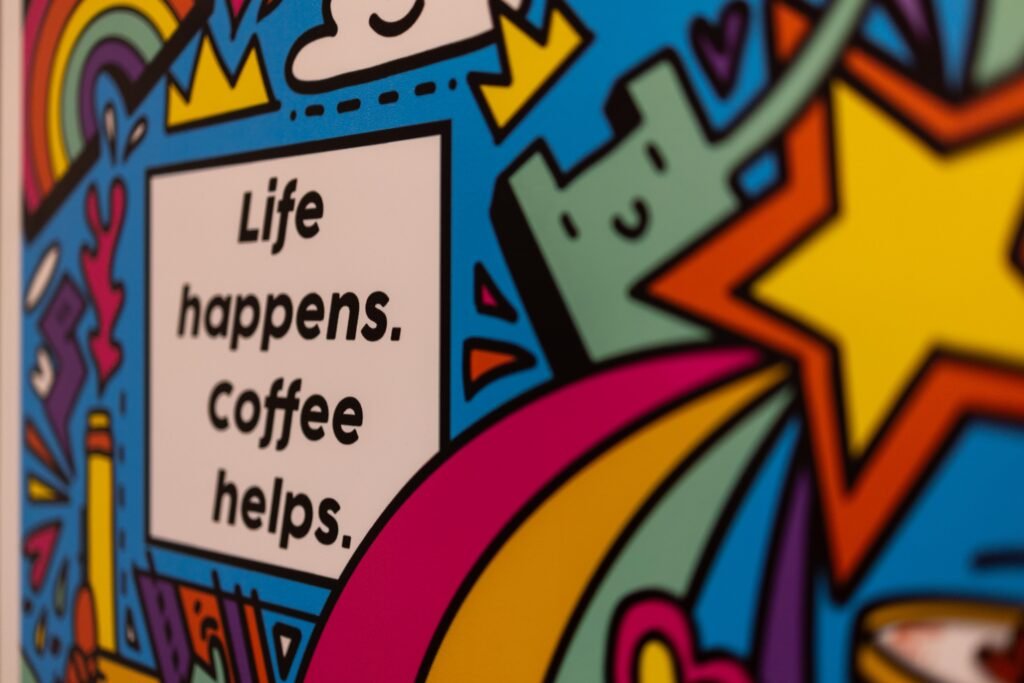
“I project the brand itself as very easy-going,” he said. “Something a little bit crazy and nothing serious.”
Note clearly gets a kick out of the design process, and it is not exactly a chore for him. “The packaging and the labels are quite random,” he said with a smile. “I’m always excited to come up with the new design for the label.”
Knowing the Farmer
Every bag of Asylum Coffee lists its origin, processing method, altitude and roast level. “I want to be transparent for the beans to be 100 percent traceable,” Note said.
Note knows many of his producers by name, and the way those relationships began says a lot about how he approaches coffee. “It all started because I just want some good coffee,” he said. “I’m very, very particular about the coffee bean quality and the consistency of the beans.”
One of his major sourcing projects focused on his home country. By this point he was already living in the UK and wanted to showcase Thai coffee to British customers. Rather than relying solely on importers or recommendations, he decided to see the farms for himself.
“I flew back to Thailand, back to Bangkok, and then took another flight to the north of Thailand and just drove around,” he said. “I tried to have contact with the owners, to see the farm and how they grow the beans, and how we were going to import them into the UK.”
He began with a list of around ten farms spread across northern Thailand and his goal wasn’t simply to taste coffee. “I wanted to see the farm,” he said. “How do they grow the beans?”
One producer stood out from the rest: Sirinya Farm. “I think I drove about three hours up the mountain from the airport,” he said. “Just to see them, talk to them, see the process, and see their enthusiasm and their passion for coffee.”
That enthusiasm ultimately made the decision for him. “That’s why I chose Sirinya Farm.”
The Two Coffees Note Is Proudest Of
I was curious to see which coffees stand out for Note. “One is my first ever Geisha coffee,” he said. “Geisha is a rare variety of coffee that I’m really proud of, and this one is from Costa Rica. It is one of the most complex specialty coffees that I’m offering at the moment.”
The second comes from Indonesia and reflects his fascination with producers who are willing to experiment. “This coffee producer is in the top eight in Indonesia in terms of coffee bean producers,” he said. The coffee comes from an experimental plot on the producer’s farm, and Note lights up when describing it. “The experience you get is very, very crazy in terms of the flavours, and also the aftertaste and the mouthfeel,” he said. “It’s very interesting.”
Six and a Half Days a Week
Running a coffee shop and a roastery at the same time makes for a long week. Note treats the Swindon shop as his office. It opens from 8am until 2pm, Monday to Saturday, and on Tuesday and Thursday it opens again from 4.30pm until 6.30pm. “Closed on Sunday,” he said, “unless there are some events going on in the building and they request some coffee, and I will come in.”
When the shop closes, the second half of the working day often begins. “If I don’t have to do the school run, I go to the roastery in the evening, about three to four times a week,” he said. “It depends on the amount of orders.”
In the early days, the workload was even heavier. At the time, he was roasting on a machine capable of producing just 1.5kg per batch. “I went down most every day and roasted with a smaller roasting machine,” he said. “In one hour you can do about four batches, so the output was only about six kilograms per hour.”
Upgrading to a larger machine has eased the pressure somewhat. “Now it’s slightly better because I moved to a bigger roasting machine,” he said. “It takes less time, and more time to spend with family.”
Even so, the numbers are striking. By his own calculation, he spends “six and a half days a week focusing on the business, about 12 hours per day”.
It is here that his wife enters the story. Note describes her as his moral support. “She’s very positive. That’s one thing I love about her,” he said. When sales are slow, she tells him it will get better the next day, and when the long hours pile up she carries on and focuses on their daughter. Everything else is on him. “Setting up the business, logistics, accounting, everything is all on me.”
She did not always get advance notice of the equipment, though. “I told her the concept that I would like to do something with coffee when we moved to the UK, and that was it,” Note said. “It seems to always work that you need to buy equipment first before letting her know, because you can’t return it. And I always tell her it’s for the business.” Building Asylum Coffee may be largely a one-man operation, but it is not something he is doing entirely alone.
Grind Size Over Expense
Asylum Coffee is more than a shop and a roastery. Note also offers training, from home brewing sessions through to professional barista skills, alongside consultancy for businesses looking to open their own cafés.
When I asked what mistake people most commonly make when starting out, his answer wasn’t about technique. “I would say it’s the grind size,” he told me. “Grind size actually affects the flavour of the coffee.”
The misunderstanding, he believes, starts with equipment. “People tend to have this perception that for good coffee you need to invest in a good, expensive espresso machine, which is not true,” he said. “What is more important is that you invest in a good grinder instead of an espresso machine.”
Which grinder he recommends depends entirely on how much coffee someone plans to make. “If you are going to be producing, let’s say, ten cups per day, I would assume you might be making for other people as well, so I would suggest an electric grinder,” he said.
For most people, however, he sees little reason to overcomplicate things. “But if you are going to be making two to four cups per day, I still use a hand grinder, because it is more long lasting, it’s low maintenance, and it produces very good flavours of coffee.”
Coffee, Nature and People
Asylum Coffee has an ongoing project with Sirinya Farm, where part of the profit from selling the farm’s coffee goes back to the village around it in Thailand. “A part of the profit will be given back to that community, his village,” Note said. “It goes towards some lamp posts, some electricity, some irrigation, and kids’ education.”
Sirinya Farm is currently the pilot project. “If it works, we are going to do the same project for other countries, and from the farms that we buy the coffee from.”
“My dream is that one day I would be able to invite people who are interested to come and have a coffee farm experience,” he said, “and see what it looks like when they get support from the project.” He hopes customers will be able to witness the impact for themselves.
On the back of his coffee bags is the idea he runs the business by: appreciate coffee, nature and people. “I think these three factors have to go hand in hand in my ethos,” he said.
Looking Down the Road
After a year with the shop open, Note’s ambition for the next twelve months is pretty straightforward. “I would love to see myself roasting more coffee,” he said.
There are bigger plans too. Next summer, Asylum Coffee is heading out on the road.
“We’re going to do some roadshows,” he said. “We’re going to be going to more events next year. For this year I’ve had a lot of requests and invitations to go to coffee festivals, and I just can’t, because it’s the start of the business and I need to focus on these parts first.”
That should change next year. “But next year I have already confirmed an event, so I will be there,” he said. “I’m trying to set up a coffee cart so we can go to some events.” Then there is the van, which will be wrapped in pink. “Bright pink, with the big bold Asylum Coffee logo on it,” he said while laughing.
The challenge, of course, is that one person can only be in so many places at once. “Once I hit the road, I need to have someone to come and run the coffee shop,” he said. Note has a few people in mind. “I’ve got a few good friends from my old workplace,” he said. “Who knows?”
For now, though, Note seems content focusing on the things that got him here in the first place: roasting coffee, talking about coffee and learning more about coffee. And if a bright pink van eventually starts appearing at coffee festivals across the country, don’t be surprised. It sounds as though Note has been planning that journey for quite some time.
Asylum Coffee | Unit 64a BSS House, Cheney Manor, Swindon SN2 2PJ | Mon, Wed, Fri, Sat 8am-2pm; Tue and Thu 8am-2pm and 4.30pm-6.30pm; Sun closed | Motorcycle parking: Free just outside | Instagram: @asylum.coffee | Details checked: October 2026