
It was my second visit to The Mixing Shed Café, tucked away near Saffron Walden. As always, the roads leading here did not disappoint. There’s long stretches of straight roads with countryside views for miles and a good mix of hard turns to keep things interesting. On this visit though, I had come to learn more about the story behind the café itself.
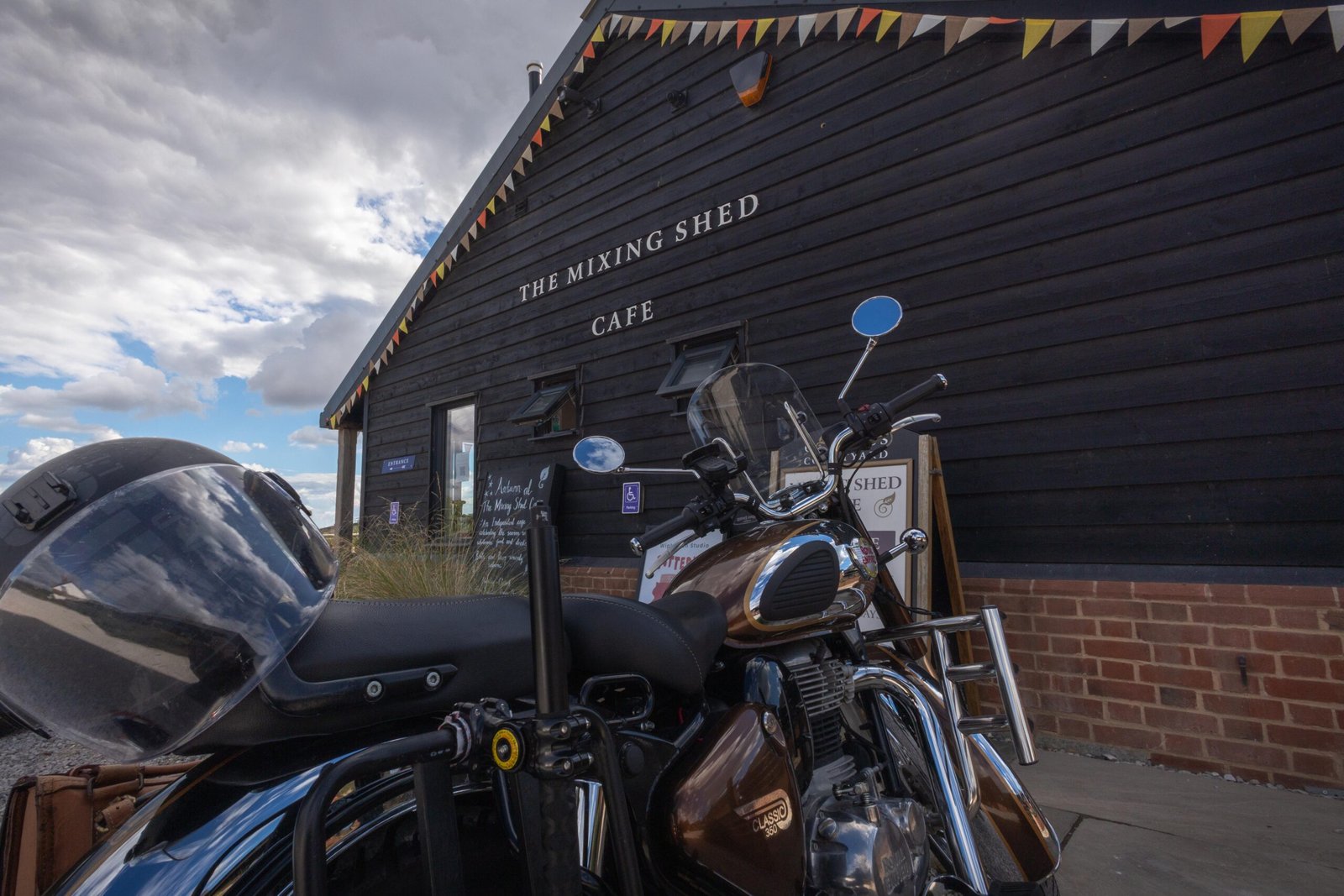
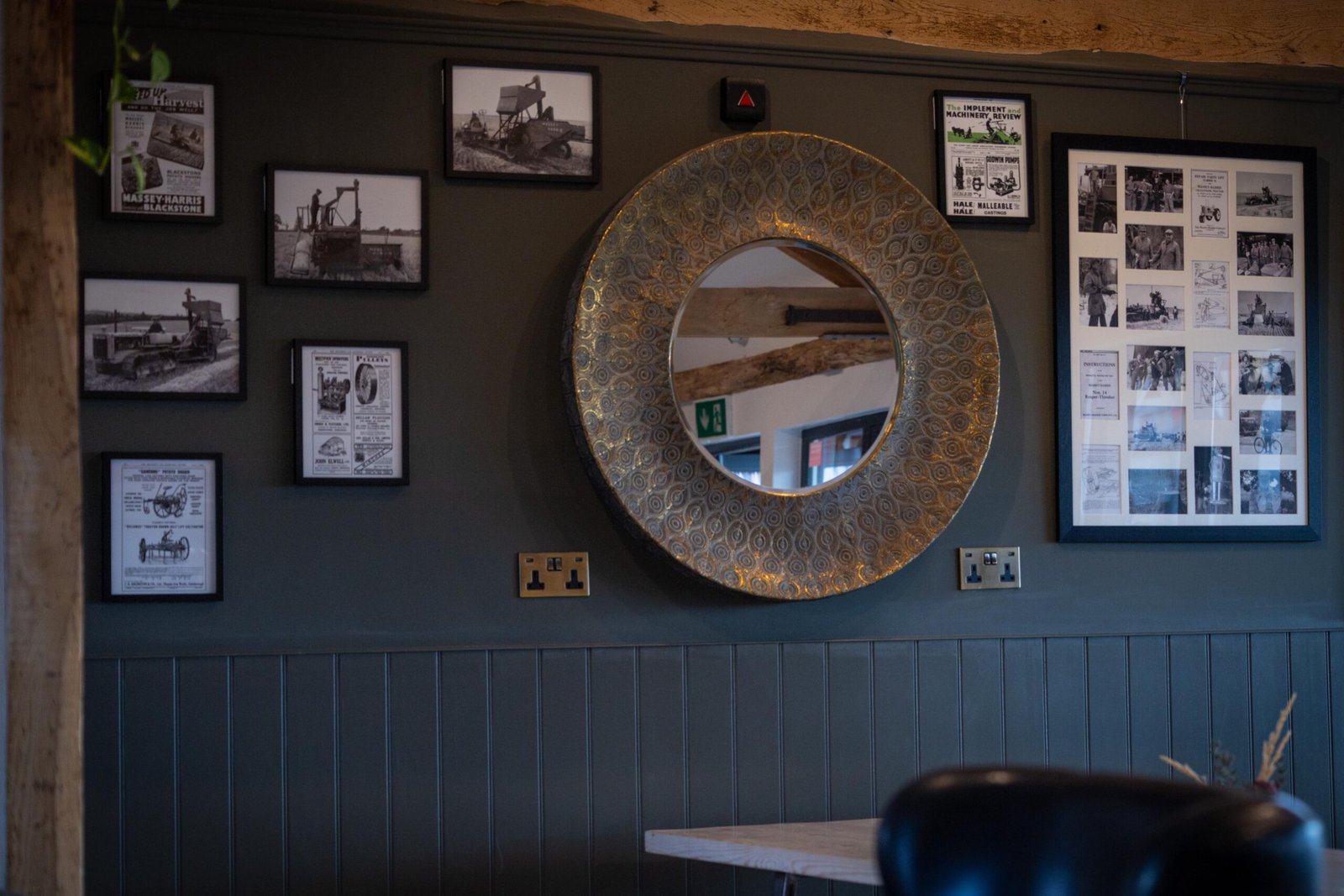
I pulled up and parked in the same spot as last time. Nestled within a beautifully converted farm building, The Mixing Shed combines rustic countryside character with contemporary comfort. Its timber-framed exterior, spacious outdoor seating areas, and warm interior of exposed oak beams and subtle industrial touches create a welcoming atmosphere. Displays of local history connect visitors to the site’s agricultural roots.
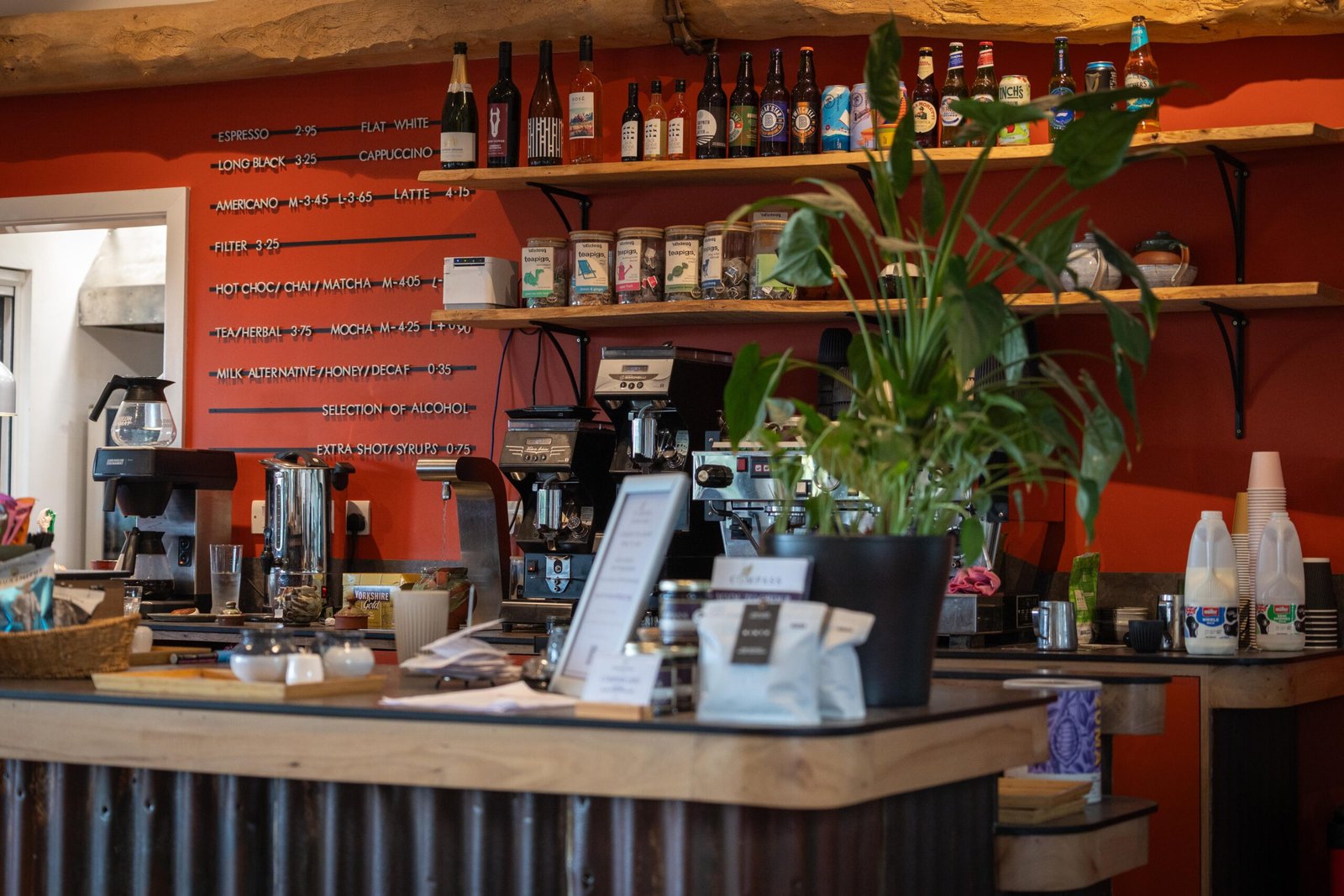
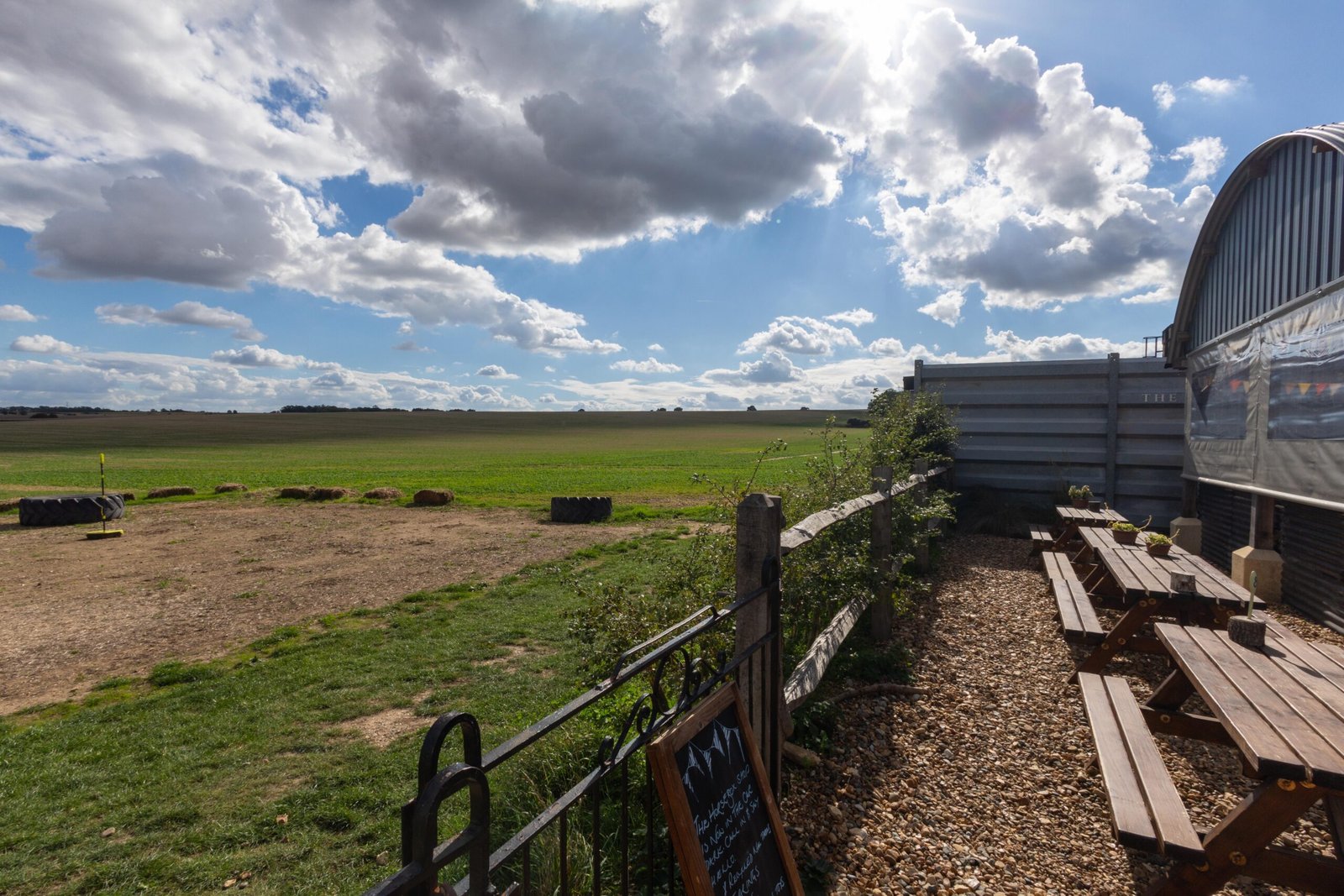
The café forms part of Compass Courtyard, a site that was a working bullock yard as recently as fifty years ago. There is now a smart collection of independent businesses here that includes The Loaf Tin Bakery and Wightman Gallery and Pottery Studio.
Reflecting on the inspiration behind the name, Compass Courtyard founder Kate Duke told me: “As long as there is a spark of compassion in our hearts, there is no wrong direction to turn. That’s what I believe, and that’s why I called it Compass Courtyard. It’s a place that’s worth a pause, I hope.”
A Farm, Not Always a Café
That sense of purpose is woven into the story of the buildings themselves. Long before anyone imagined a café here, the farm buildings stood slowly deteriorating. “The farm has been in the family for 100 years,” Kate explained. “It was falling to bits and derelict.”
For years, there was little that could be done. Without a reliable rural internet connection, renovating the old buildings was simply not commercially viable. A modern business needed the ability to take bookings, process card payments and communicate with suppliers, and the infrastructure was not there.
Ironically, it was the Covid pandemic that helped change the site’s fortunes. As improved rural broadband reached the area, an opportunity that had lain dormant for years suddenly became achievable.
“With Covid came rural internet connections,” Kate said. “That turned the opportunity around.” What had once been a collection of neglected farm buildings could finally be reimagined, becoming the thriving destination that visitors see today.
Where the Name Comes From
Naming the café was about more than finding something distinctive. It was to help keep the site’s agricultural roots visible and respected. “The Mixing Shed was where the feed was mixed,” Kate explained. “We really wanted to make it clear that farming is the heritage we are proud of, and it seemed respectful to the buildings and the site to honour that tradition.”
The name carries a second meaning too, one that reaches beyond agriculture. “It’s a space which we want people to mix and connect in, in an old-fashioned café style.”
The expectation is that the small businesses here do the same. “At the Compass we have a policy of collaboration not competition,” Kate said. “All the businesses here know it from the start, and the big egos aren’t attracted to that.”
“There are a lot of really good people here who work hard and know their customers. We are staunchly independent and always will be.”
The Coffee Behind the Counter
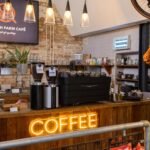
Every cup served at The Mixing Shed comes from Ninth Coffee Roasters, a partnership rooted in a relationship that predates the roastery itself.
Kate knew Ninth’s founder, Arron, from the early days of his coffee career in Saffron Walden. That was before the business officially launched. What began as a passion for specialty coffee and home roasting eventually became Ninth Coffee Roasters. It’s a small-batch roastery founded by Arron and Callum in late 2022. Based in Saffron Walden, Ninth sources coffees through importers who work closely with producers and farms. Each roast is designed to highlight the distinct characteristics of its origin.
“He had been an excellent barista, and he was passionate about roasting, very knowledgeable about coffee, and could trace his beans back to farm, some of which he has visited over the last couple of years,” Kate said.
That commitment to provenance and quality shows in what arrives in customers’ cups. The coffee regularly draws praise not only from local regulars but also from visitors from countries with deeply established coffee cultures.
“We are so often complimented on our coffee, even from visitors from Australia and New Zealand.”
For Kate, that kind of feedback simply confirms what she has long believed. She has watched Arron develop from a talented barista into a respected roaster, and seen the consistency of the coffee Ninth produces. She sees no reason to look elsewhere.
“I can think of no reason to change something so good.”
Cooking From Scratch
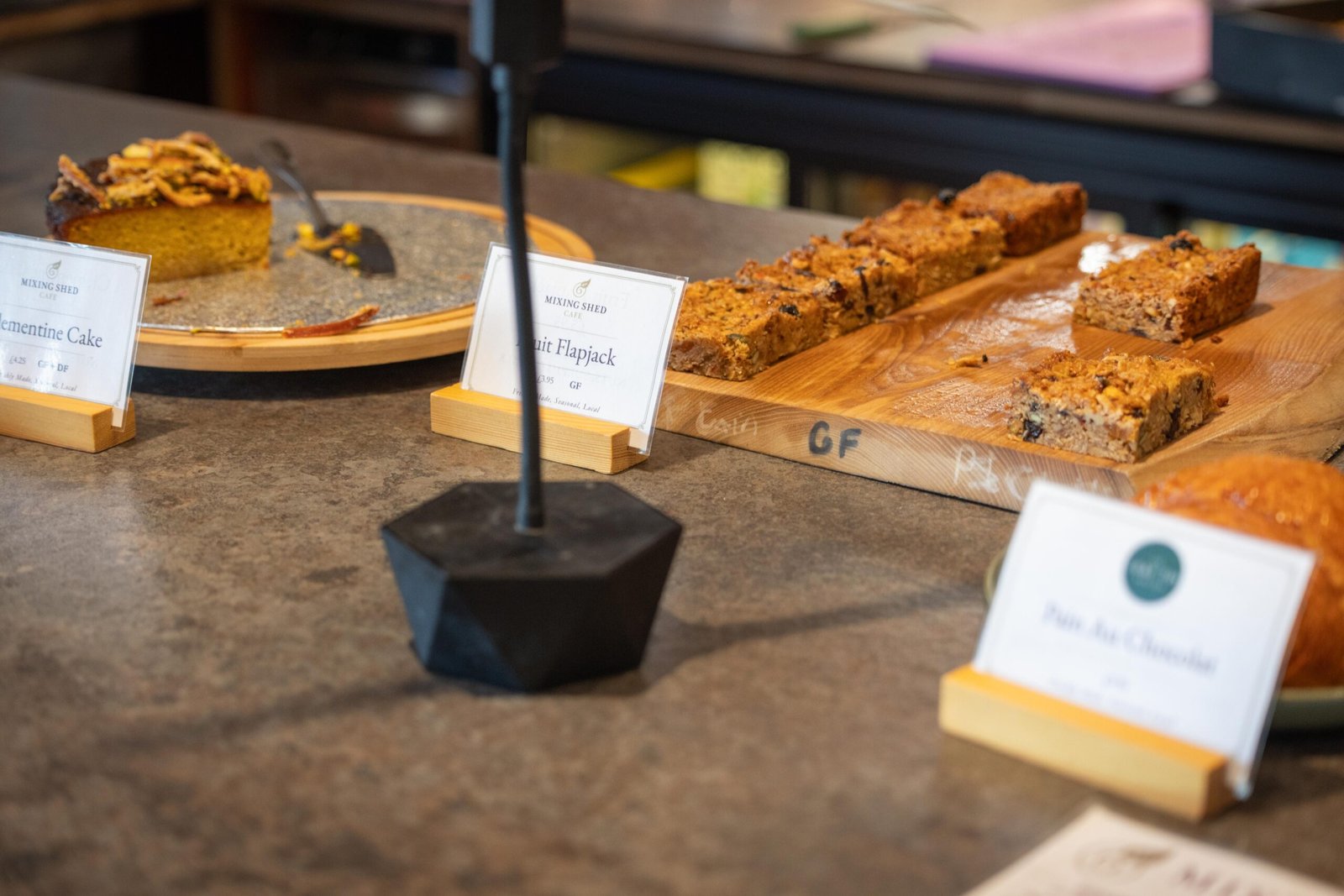
The kitchen operates on much the same philosophy as the coffee: keep it fresh, keep it honest, and focus on quality over unnecessary complexity. Everything is made fresh on site, and the lunch menu changes a couple of times each week. That offers enough variety to keep regular customers interested, without losing sight of the dishes people genuinely enjoy.
“We try to make it healthy and affordable, and serve a variety of tastes and medical conditions,” Kate said.
Sustainability is woven into those everyday decisions. The kitchen composts most of its food waste. It’s a practice that feels particularly fitting on a working farm, where little goes to waste. Rather than chasing fleeting food trends, the menu evolves in response to the people who use the café most often.
“So yes, the vibe is essentially local,” Kate said. “We don’t advertise much, and our community is very important to us.”
What People Actually Order
Ask Kate what the most popular order is on a typical weekend and, surprisingly, she does not have a straightforward answer. The café attracts a broad mix of customers, from local families and groups of friends to walkers exploring the countryside and cyclists stopping off mid-ride. That makes it difficult to single out one standout dish.
There are some clear favourites, however. Smashed avocado on sourdough consistently ranks near the top of the list. Its popularity comes with a touch of irony for someone so conscious of sustainability, though.
“Unfortunately smashed avocado on sourdough features highly,” Kate said, “because it’s travelled the furthest to our plates, but we have a huge number of avocado stones in our compost, so maybe one day they will prove fruitful.”
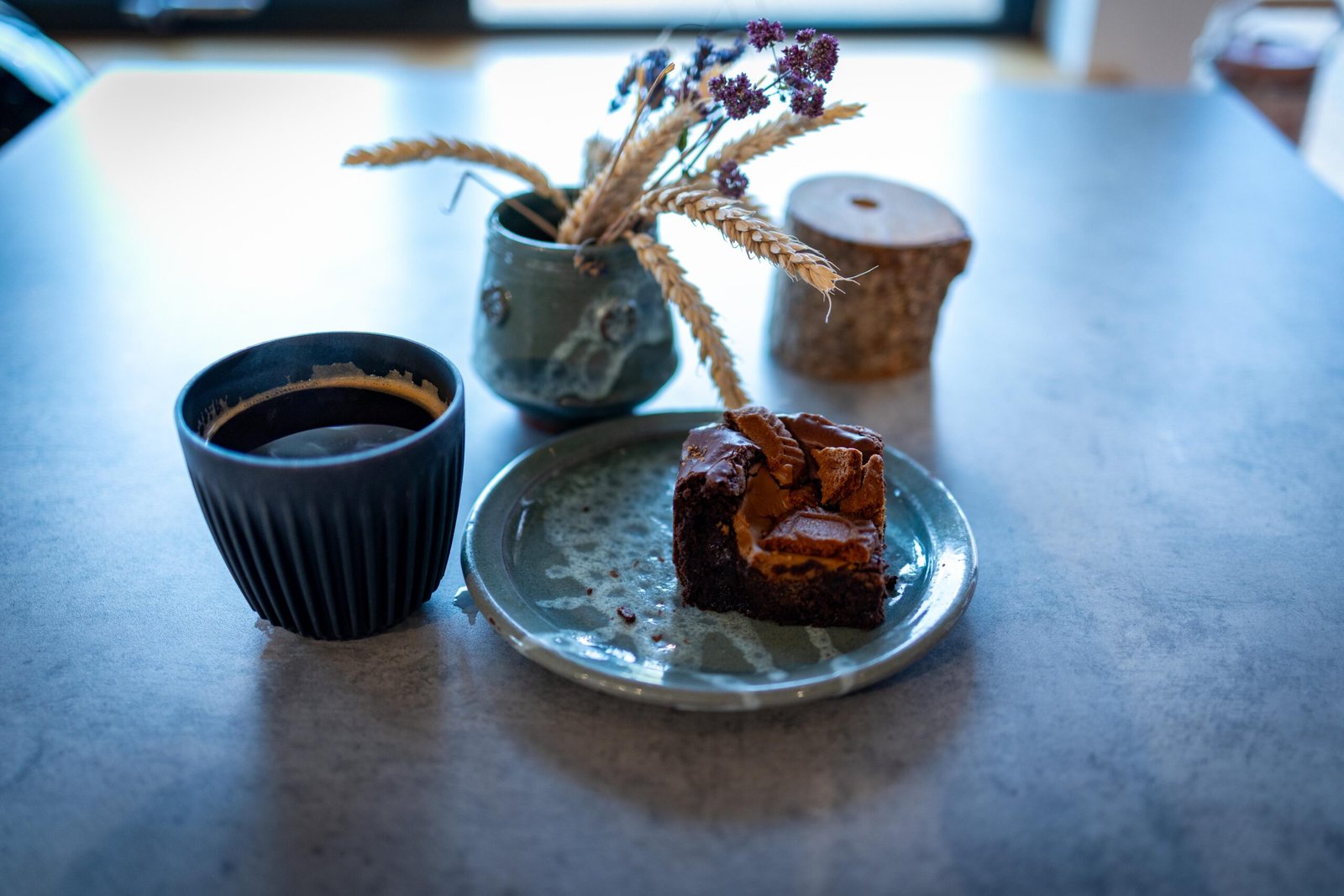
For those seeking something more substantial, the Full English Breakfast remains a reliable bestseller. It’s served until midday, and made with meat sourced from local butchers in Saffron Walden. It’s particularly popular with walkers and cyclists fuelling up for a day outdoors. Sunday roast dinners have earned a loyal following of their own. Many riders arriving on two wheels prefer the simpler combination of a carefully brewed coffee and a slice of homemade cake.
Yet if there is one item that comes closest to being the café’s signature success, it might be its homemade sausage rolls. “We always run out of our homemade sausage rolls,” Kate said, before laughing at the difficulty of choosing an overall winner. “Tricky question!”
Perhaps that is the real answer. The Mixing Shed’s appeal is not built around a single dish. It comes from variety and consistency, and a menu broad enough to serve everyone. Dedicated cyclists, coffee enthusiasts and families gathering for a leisurely weekend breakfast all find something here.
Cyclists, Bikers, and a Dog in a Top Box
Cyclists make up a significant share of The Mixing Shed’s passing trade. That’s helped in no small part by the café’s sponsorship of Cambridge University Cycling Club.
“They are good at social media,” Kate said, crediting the club with bringing many of the two-wheeled visitors who discover the café while exploring the surrounding countryside.
But it is not just pedal-powered machines that find their way into the courtyard. Motorcyclists are regular customers too, and one particular gathering remains among Kate’s favourite memories since opening.
“One of my favourite days was when we had a group of Classic Bikes turn up, including a small dog in a top box, at the same time as a collection of Royal Enfields,” she said.
The sight was especially meaningful because of Kate’s longstanding connection to the iconic British motorcycles. Growing up, Royal Enfields were a fixture of family life, even if most of them rarely made it onto the road.
“Which are a personal preference of mine, because I was brought up with a dozen Enfields in bits in boxes around the house,” she said. “My brother only ever had one running at a time, and I will never forget the smell of spark plugs in the oven when my parents went away.”
The Middle of Everywhere
The Mixing Shed occupies a spot on the B1039 between Royston and Saffron Walden, tucked into the point where north-west Essex, South Cambridgeshire and Hertfordshire converge. It is undeniably rural, but Kate has never subscribed to the idea that it sits in the middle of nowhere.
“I think of it as the middle of everywhere rather than the middle of nowhere,” she said.
Visitors arrive from across three counties, whether for coffee, breakfast, a cycle ride stop-off or a Sunday lunch. It makes the café feel far more connected than isolated.
Despite its countryside setting, the business hasn’t faced many of the staffing and supply challenges often associated with rural locations. Recruiting has rarely been a problem, and Kate is quick to challenge assumptions about the local workforce. “There is a shortage of jobs, not enthusiasm to work around here.”
Supplies are generally reliable too, with only the occasional pressure around the Christmas period when delivery schedules become stretched.
The bigger challenge tends to come from something far less predictable. Road closures, whether planned or unexpected, can quickly disrupt access for customers and suppliers alike.
Busy or Quiet, She Loves Both
Asked whether she prefers the quieter stretches or the weekend rush, Kate refuses to choose between them. The calmer moments appeal to her for a simple reason: they create space for connection. “I like it best when I have time to stop and chat,” she said.
Yet she is equally energised by the buzz of a busy service. There is a different kind of satisfaction in watching a team pull together as orders stack up and the queue grows.
“There is nothing like the rush of trying to get on top of clearing a queue,” Kate said. “All the team start buzzing about, and the adrenaline starts going.”
What’s Coming Next
Compass Courtyard is now turning its attention to what comes next. The café has become an established destination in its own right. Now the wider site is beginning to develop a programme of events built around three themes: arts, business and community.
Some ideas are already taking shape. Monthly Sunday roasts will continue to bring people together around the table. Quieter winter afternoons are set to be filled by a chess club hosted in the café itself. Creative workshops, including wreath making and painting sessions, are also planned, creating new opportunities for people to meet, learn and make something together. On the business side, the Granary will provide a space for locally based professionals and entrepreneurs to connect through networking events.
A new newsletter has recently launched, and the team is updating the events section of the Compass Courtyard website as plans evolve. “This autumn we are just beginning to find our feet,” Kate said.
It is a measured response from someone who has spent years building something steadily rather than rushing it. More announcements are expected as the programme develops. The ambition is already clear: to make Compass Courtyard as much a community hub as a collection of independent businesses.
Before You Visit
For anyone planning to visit with a larger group, Kate does have one request. Send an email in advance. “Nothing sadder,” she said, “than a group of soggy leathers sitting outside in the rain.” The comment neatly captures the café’s approach. Thoughtful, practical and centred on looking after people.
It is easy to see why Kate describes the location as the “middle of everywhere”. Compass Courtyard is not just a collection of restored farm buildings. It’s a place where heritage and modern rural life meet. Sometimes the most successful reinventions come not from abandoning the past, but from finding a new way to build on it.
The Mixing Shed Café | Unit 7, Compass Courtyard, Clanver End, Wendens Ambo, Saffron Walden CB11 4UL | Closed Mondays, Open Tues-Sun 9-5pm | Motorcycle parking: free just outside | Instagram: @themixingshedcafe