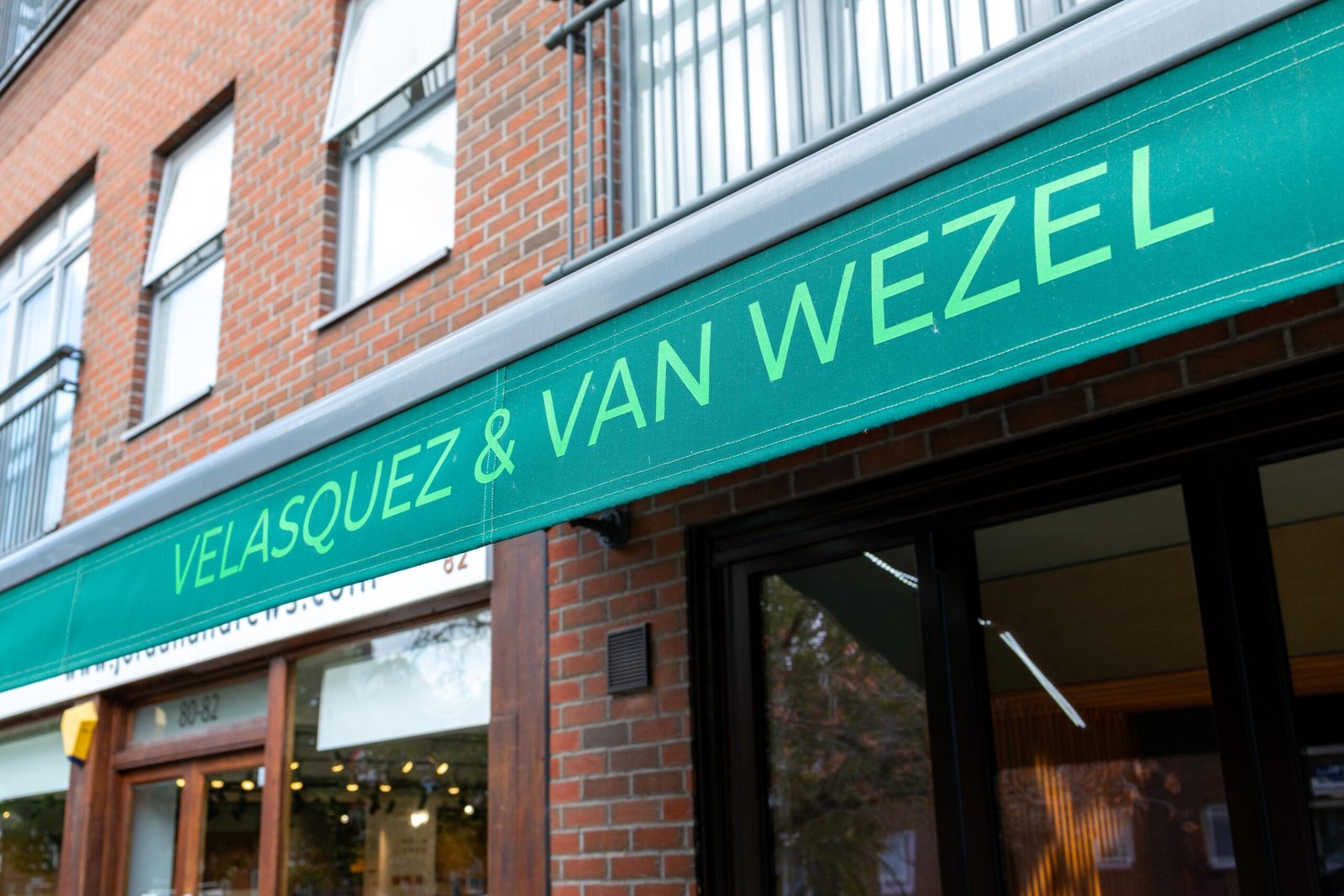

The trip down through north London to Crouch End took around an hour from St Albans, helped along by calmer weather and a welcome return to a bike with more presence than the scooter I’d been using the week before on a coffee run through Rhodes. After finding free parking on Elder Avenue, I walked the short distance to Velasquez and Van Wezel, one of two specialty coffee shops in the neighbourhood.
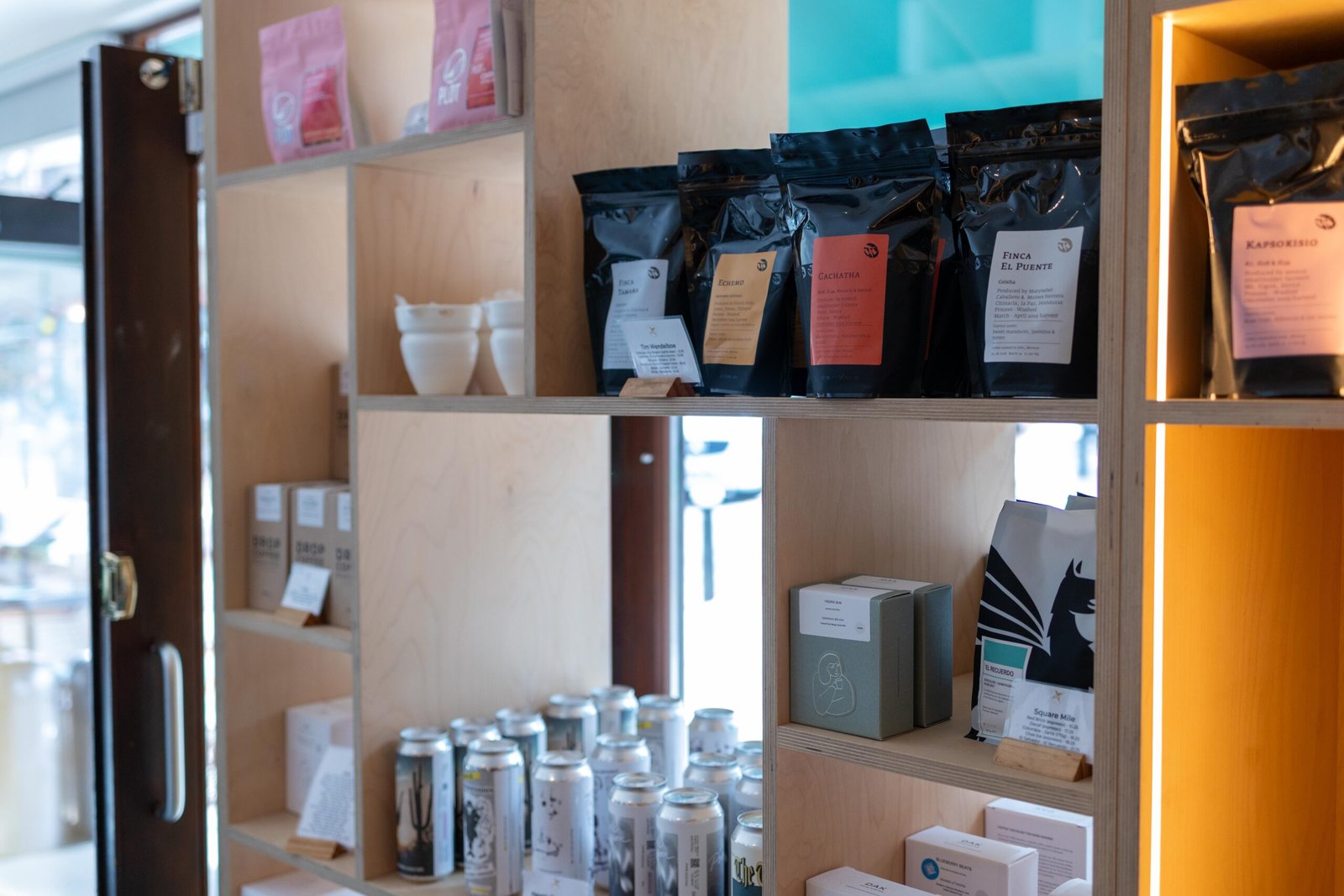
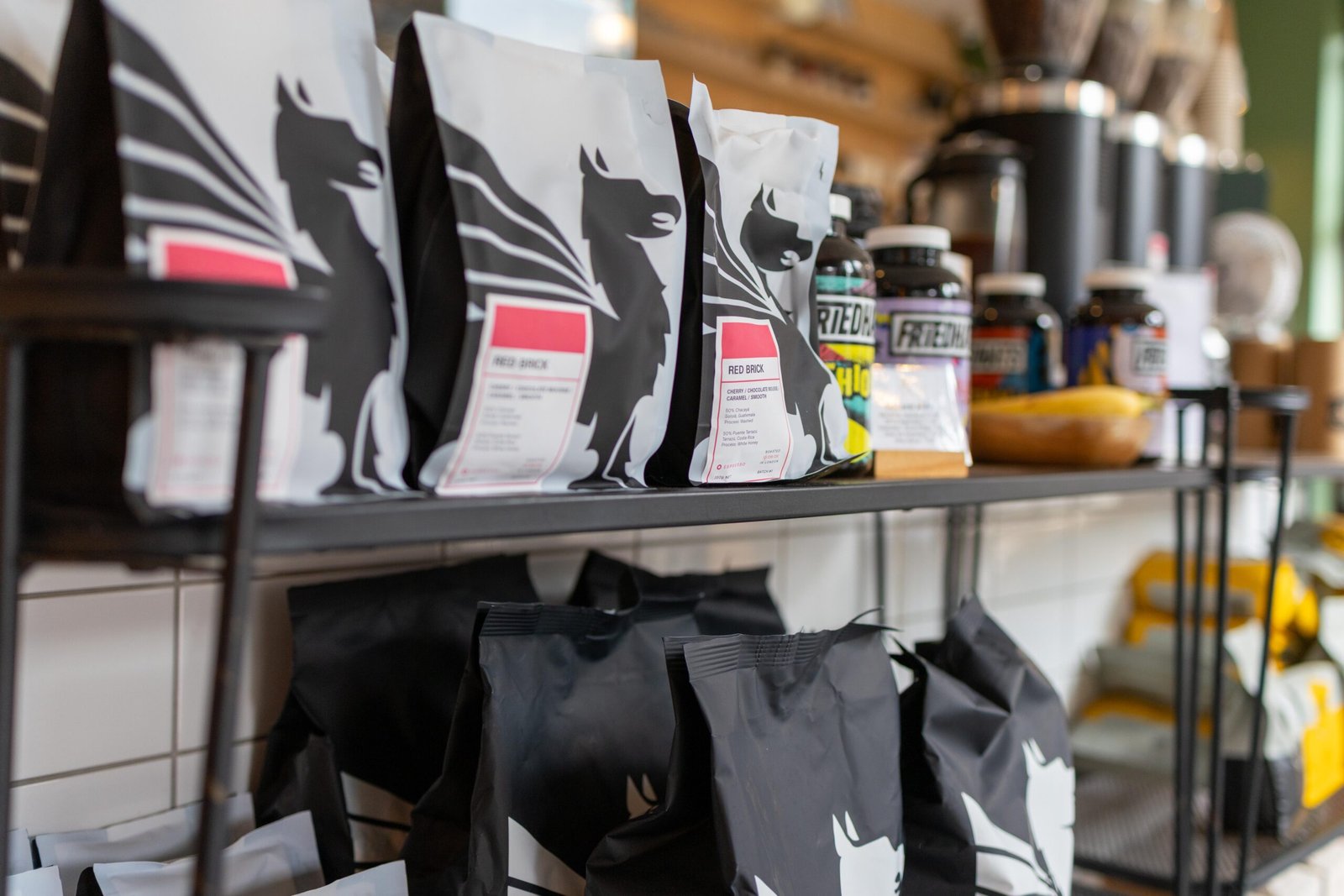
Near the entrance, plywood shelves form a retail wall, lined with Square Mile’s black bags and single-origin lots such as Finca El Puente and Gachatha, each marked with its own tasting notes. Their house blend, Red Brick, sits apart on its own shelf, packaged in black and white with the distinctive griffin silhouette that repeats across their other retail lines.
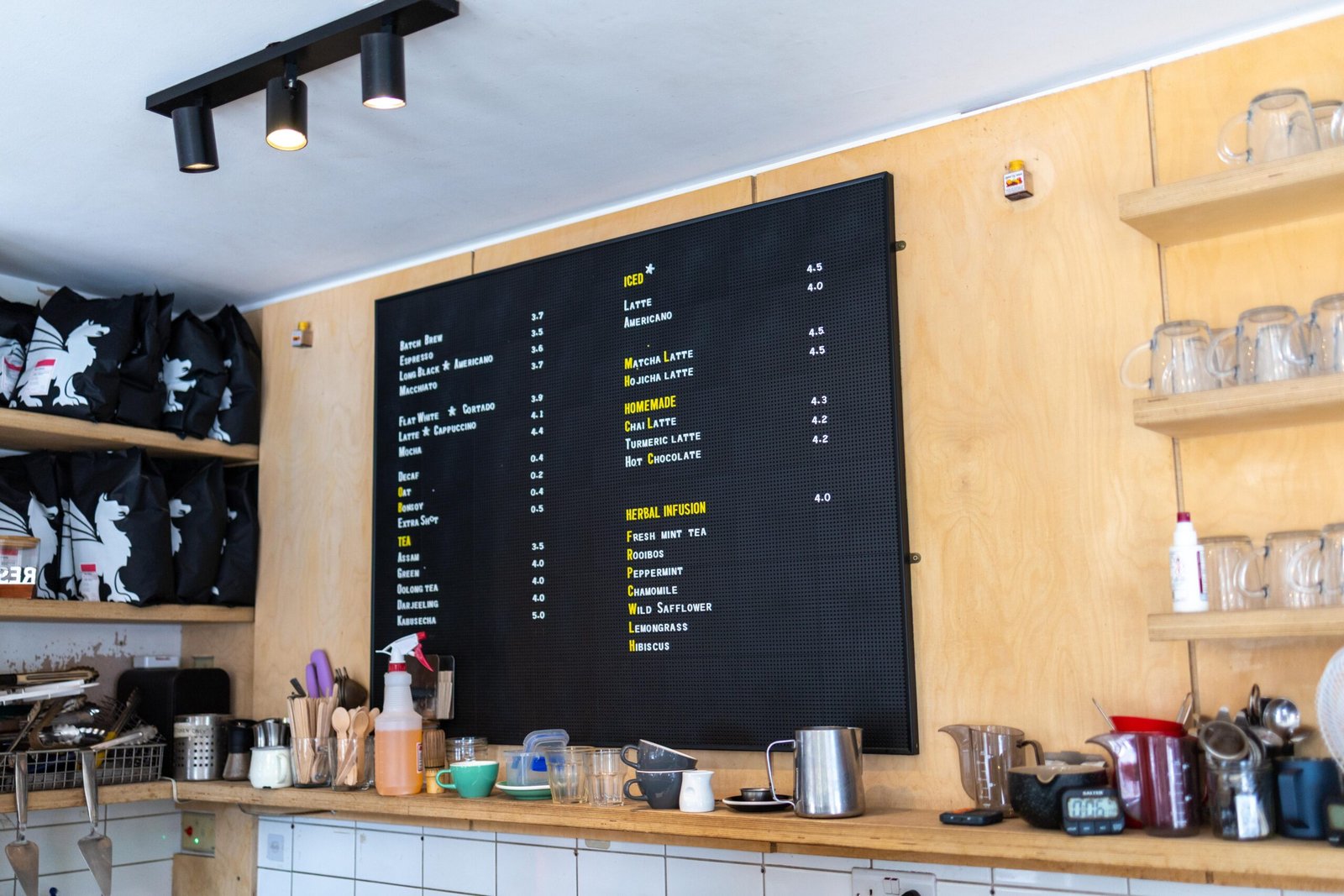
Behind the counter, the menu board shows that it isn’t just about coffee here. Batch brew and espresso appear alongside a full tea list, matcha and hojicha lattes, and herbal infusions ranging from chamomile to wild safflower.
Inside, I met Martin van Wezel to see how he and his business partner, Oscar Velasquez, built one of Crouch End’s most established coffee bars, how post-Brexit shipping failures pushed them into sourcing from Europe’s leading roasters, and what a decade on the same corner has taught him about longevity in a competitive market.
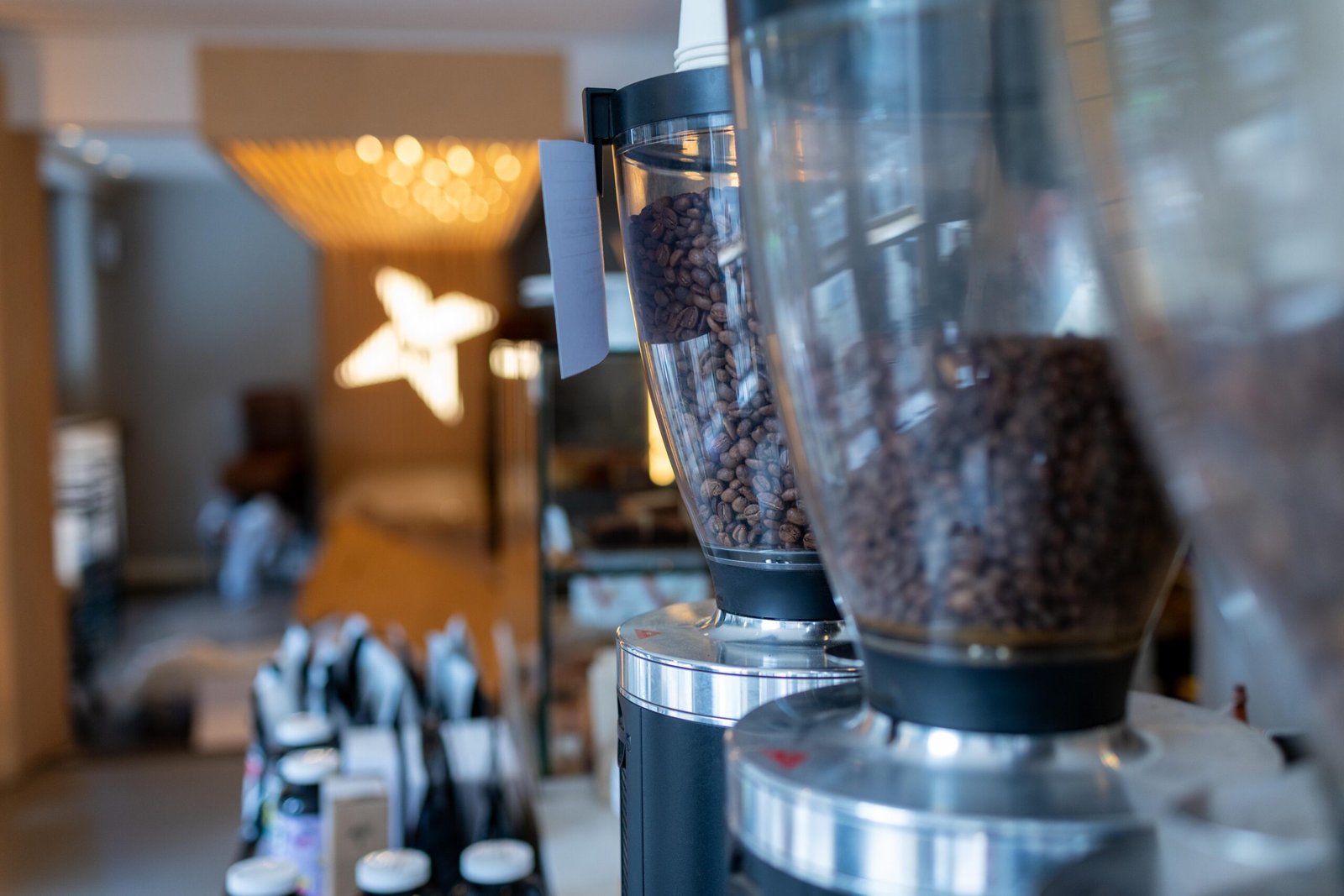
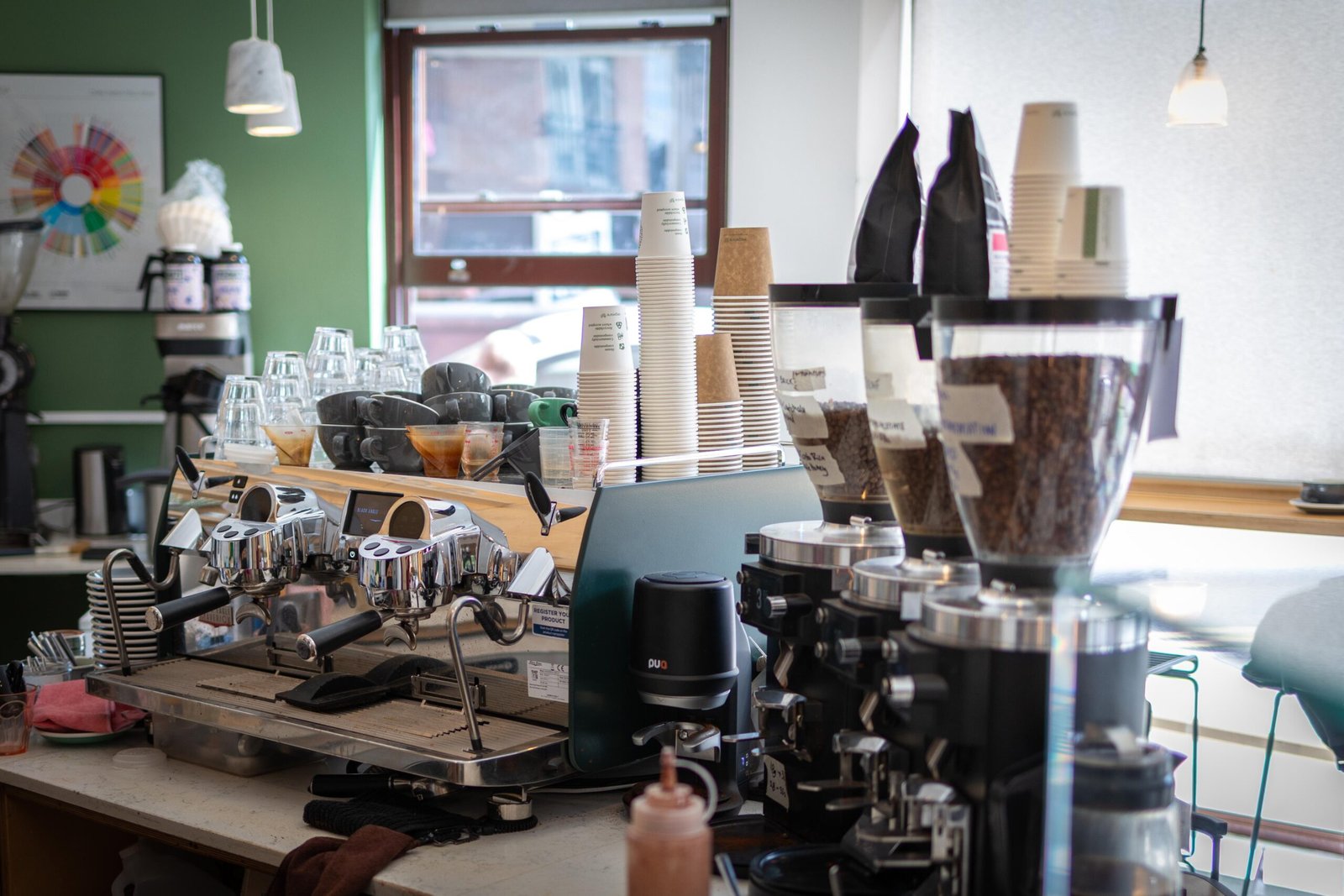
The shop was busy when I arrived. A new floor had just been laid, and part of the seating area was temporarily closed while improvements were underway. Martin and I found space at the high-chair counter across way from the Victoria Arduino Black Eagle machine, a spot where the noise occasionally cut through his soft-spoken delivery.
How Martin and Oscar Met
Martin and Oscar were both living in Queen’s Park, west London, when they met. Oscar, originally from Colombia, was already working in specialty coffee. He started in an early London coffee shop, spent a short stint at a bakery that had little interest in coffee, and eventually moved to Artisan in west London. Martin was in a corporate market-research role. “We were exploring different coffee places and specialty coffee, discovering it together,” he said. Their shared curiosity sparked the idea of opening a shop, and it also revealed how well their skills aligned. “Oscar’s more coffee focused. I’m more general business, general management, running the shop, getting things done.” Martin’s background in call-centre management, staffing, and training turned out to be transferable skills and a perfect fit for what the day-to-day running of a café required.
A Grandfather’s Corner Shop
Martin is Dutch, and coffee runs in his family. “My granddad sold loose coffee beans out of tins in the family corner shop,” he told me, “very old school. You could smell the coffee, but it was dark roast, not something we’d go with now.” His own first taste of coffee came earlier than that, by accident, at a neighbour’s house as a child. “I remember when I first drank coffee, by a neighbour, by mistake or not, I don’t know. She didn’t have kids, and we were there for the afternoon, and she made me coffee.” When he later moved to the UK, the first thing he bought was a filter coffee machine, standard kit in any Dutch household, at a time when the UK’s own coffee culture was still years behind.
Finding Crouch End
Martin and Oscar relocated to north London and spent close to a year searching for the right site, at one stage weighing three possible locations at once. The space they eventually chose was a new build at the time, on land that had previously formed part of a flooring shop. The landlord owned the entire block and had developed it in stages, first the two floors on either side, then two more above.
What Martin and Oscar secured was a prominent corner position with outdoor seating that is unusual for the area, and a spot on a junction that makes the shop difficult to overlook. “Not many places in Crouch End have got outdoor seating space,” Martin said. The location sits slightly off the main high street, and he admits there was early uncertainty about whether people would make the extra walk. They did, and the shop has since drawn footfall toward the neighbouring businesses as well.
Ten Years and Counting
Ask Martin what has changed most since opening, and the answer is that structurally very little has. It’s what he’s learned to value that has shifted. “What I’ve learned more is the importance of focusing on quality and customer service, believing in high-end quality products,” he said. He hadn’t expected, though, to become part of a real community. “I never thought I’d become part of a community. I’d lived in cities most of my life.” That sense of connection deepened during Covid, when the shop became something closer to a lifeline for regulars. “People are still thanking me today that we were open for them, that we were the only people they were talking to face to face. They’d go to Waitrose, but you’re not talking to anyone in Waitrose.”
He credits being outside central London with helping the business survive that period, since many central shops without serious financial backing simply could not. He is also candid that government support for small businesses during that window made a difference, even if not every part of the response worked as well as it could have.
Hours have shifted too. The shop originally stayed open until 5pm, now closing at 4pm instead. “In the UK, after 4 o’clock, not much happens. People will sit there, but they don’t bring any business.” It still takes an hour and a half to close everything down correctly, even with the earlier finish.
The Brexit Silver Lining
One of the more unexpected turns in the shop’s story came because of Brexit rather than in spite of it. Before the UK left the EU, several European specialty roasters shipped directly to individual customers in Britain. Once new bureaucracy made that unworkable, those same roasters began sending stock to Martin and Oscar instead, effectively turning the shop into a local distribution point. “We were kind of the first ones, during Covid and Brexit, working out together how this is now going to work,” Martin said.
The relationship went beyond convenience. Because Martin and Oscar were already travelling regularly to the Netherlands and across Europe, building direct connections with roasters, they ended up introducing several Dutch brands to the UK market for the first time. Some of those roasters are now being watched closely by other well-known specialty shops.
Sourcing and the Rotating Shelf
The shop’s retail shelf changes constantly. New batches arrive every two to three weeks, sourced through coffee festivals, direct conversations with roasters, and samples sent to Martin and Oscar. Nothing goes on the shelf without being tested. “It’s got to be in our line, a quite light roast,” Martin said, although the final decision can be influenced by something as basic as how the packaging looks once it is displayed. A small group of Dutch roasters has become a permanent presence, while the rest rotates as batches age or new arrivals come in.
Traceability is a priority for Martin because vague labelling offers little useful information. “I don’t want to see a pack that just says this is Colombian coffee. That could mean so many things.” Despite Oscar’s own roots on a coffee farm in the Andes, the shop avoids leaning into a Colombian theme. “There’s a lot of good stuff coming out of Colombia, but there’s also good stuff coming out of some of the African countries, Central America, Indonesia. It’s nice to keep it mixed.”
Martin has visited farms in Colombia himself and speaks about the experience with real energy, recalling farmers inspecting individual trees and the sheer amount of manual labour involved in picking and sorting by hand. “It’s just mind blowing. We’re not realising here the amount of work that goes into it.”
Beyond Coffee
Coffee remains the priority. “Coffee is by far the most important thing,” Martin said. Food still plays a role, with tea, high-end cakes, sandwiches and a seasonal brunch menu for families who want more than a drink. “I think you can hardly have a coffee shop without pastries. People like to have a bite on the side.” Cyclists have become a core part of the shop’s customer base, training through the week before heading into Hertfordshire at weekends. Wanting a decent bake alongside a coffee after a long ride is something I can relate to. Martin sees real potential for more of the motorcycle crowd to discover the place too, and he is clearly open to that.
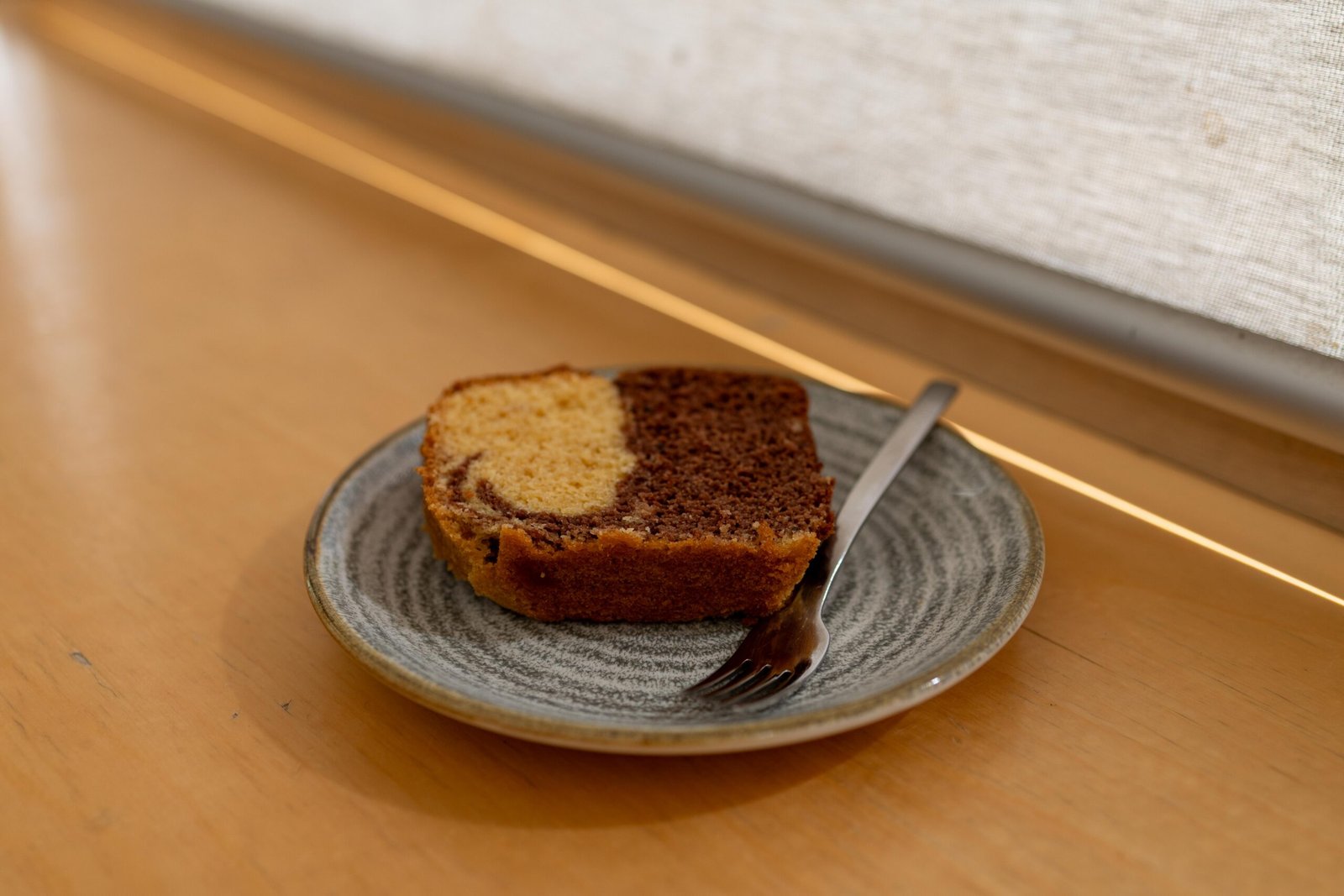
One dish has become a real signature: Martin’s banana bread. It is simple, but popular enough that he is constantly baking more. He makes it himself, along with chocolate and vanilla versions, because the shop has no kitchen and is limited in what it can cook on site. Everything else comes in ready-made. When the banana bread runs out, people notice. Sadly, it had all run out before I visited, but I managed to get a shot of one of the other popular cakes.
Community Over Competition
Despite operating in a crowded specialty-coffee landscape, Martin does not frame other shops as rivals. Owners from elsewhere often visit at weekends as what he calls “explorers,” checking out the space much as he and Oscar do when they travel. “We’re checking out other places, seeing what works.” He is quick to attribute the shop’s success to staying focused on what they do well rather than trying to out-compete anyone directly. “I think we’re really being recognised for focusing on the coffee, and that’s what people come for.”
What’s Next
Ten years in, marked on the nineteenth of September with a small celebration, Martin is thinking carefully about what comes next without rushing into decisions. He wants to get more out of the online shop, which already sells to customers across the UK and links neatly to the in-store retail selection. Beans that sit a little longer on the shelf often end up in the batch brew, keeping waste to a minimum. Physical expansion remains an open question, and one he has not settled on. “Maybe two shops, three shops works. Anything beyond that, quality drops.” With around twenty staff already on the payroll, he is wary of the operational strain that additional locations would bring.
The online side offers clearer room to grow, but Martin is candid that it is not where his own expertise naturally lies. Working out the right way into it is still very much a work in progress.
What to Actually Order
Asked what a first-time visitor should order, Martin does not reach for a rehearsed answer. It depends on what is running as the guest coffee that week, since there is usually something interesting on rotation, whether a filter, an espresso or whatever is currently exciting the team behind the counter. His own ritual includes a filter coffee and he lights up when saying there is a lot to explore with those. “You know, I drink cortado every day, that’s just sort of comforting and it works. And then I drink a filter coffee…it’s a bit like wine tasting, seeing what works.”
In a city where cafés come and go, Velasquez and Van Wezel has become something steadier: a place shaped by the people who use it, and a reminder that longevity in London often comes down to more than good coffee. It comes from belonging.
Velasquez and Van Wezel | 78 Park Road, Crouch End, London, N8 8JQ | Open until 4pm, seven days a week | Motorcycle parking: free parking available on Elder Avenue | www.velasquezandvanwezel.co.uk | Instagram: @velasquez_vanwezel