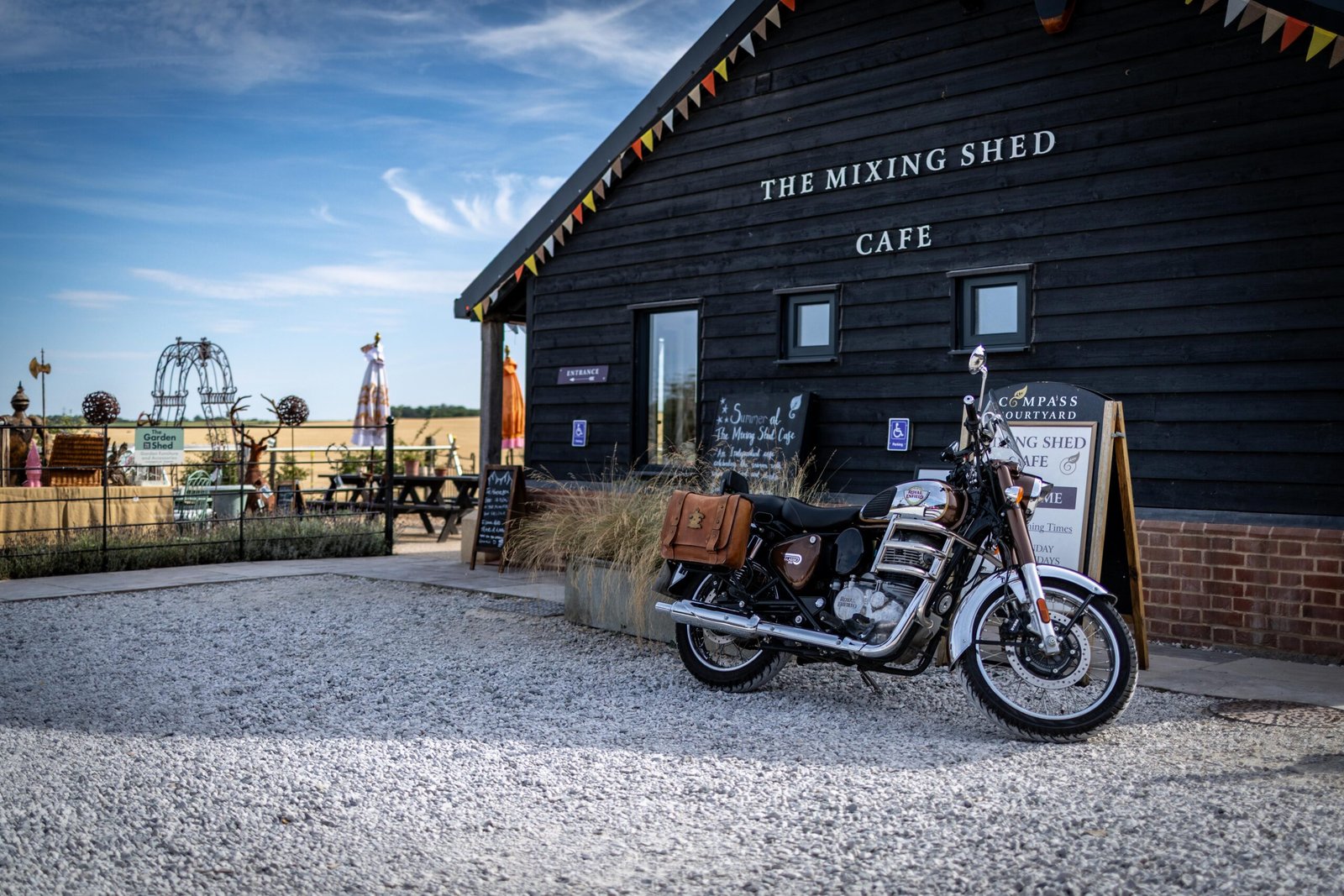

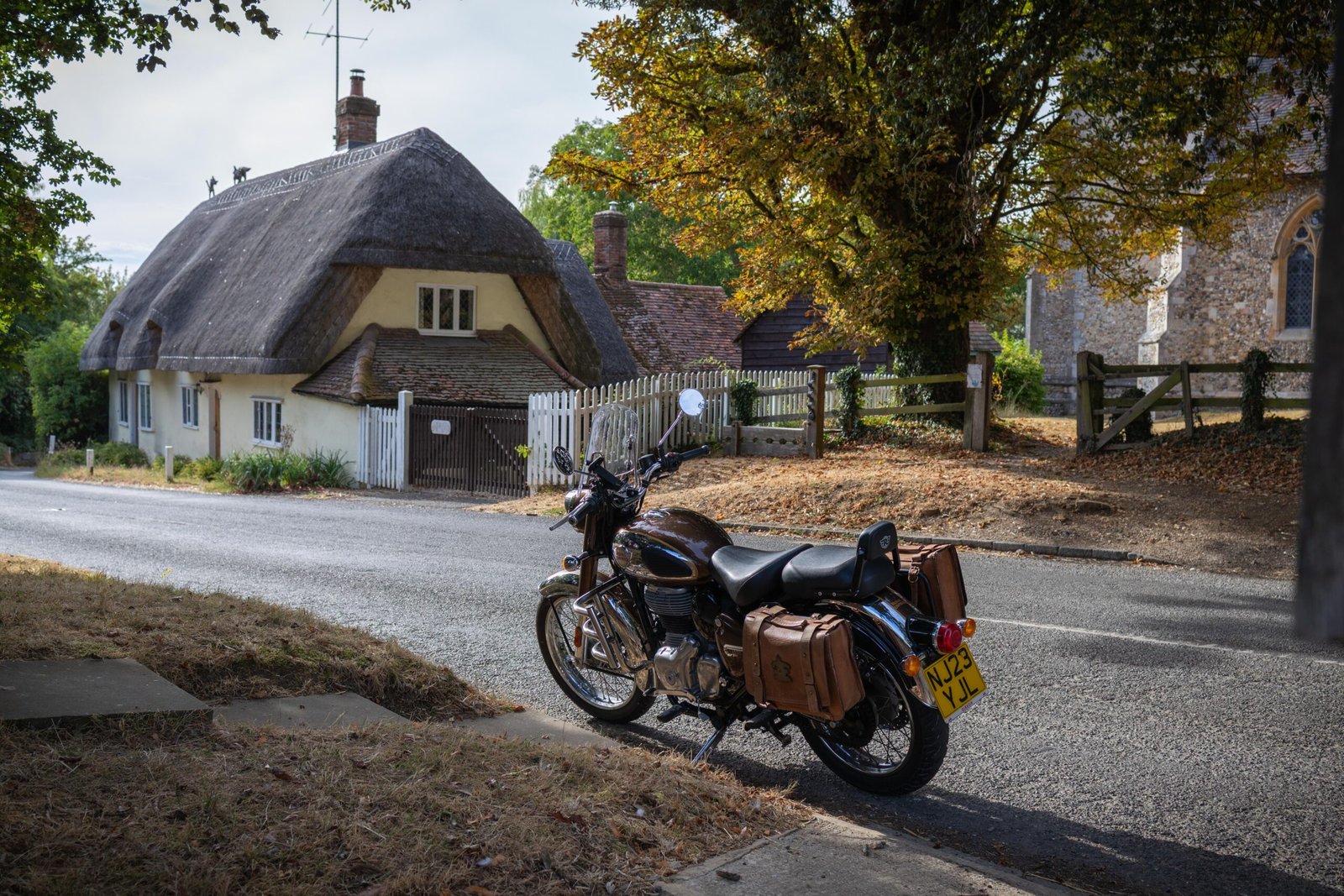
I’ve taken a long ride out today, to the Mixing Shed Café. It’s a recommendation from a friend, and at three hours round trip on small roads it’s the perfect length of ride for some thinking and reflecting. I’ve just finished Sober On A Drunk Planet and it got me thinking. For this one I’ve brought my daughter with me. She’s just turned twelve and she’s here more for the promised matcha and brownie than the ride. A bit of us time, with the right amount of bribery to make it happen.
The Ride to the Mixing Shed
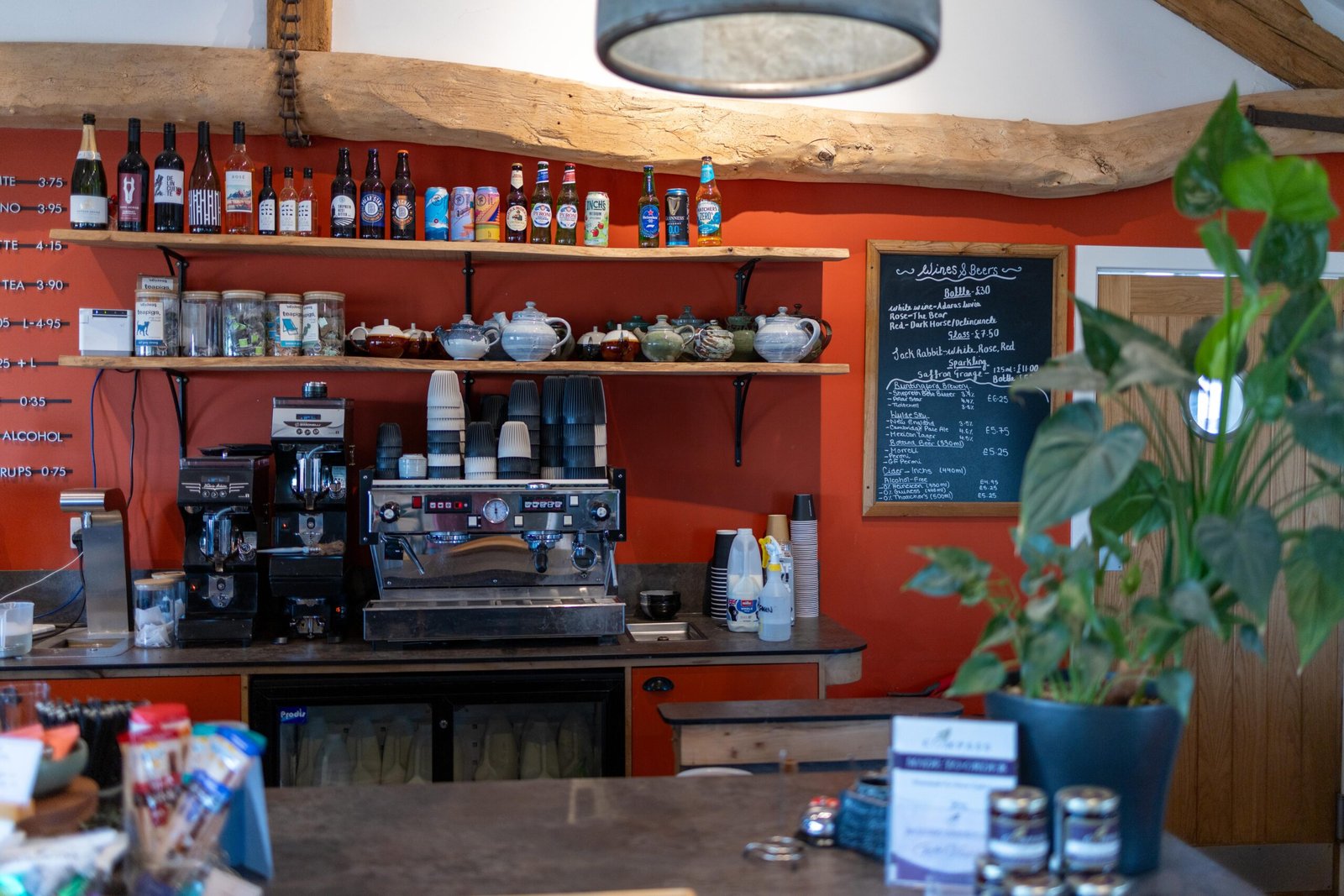
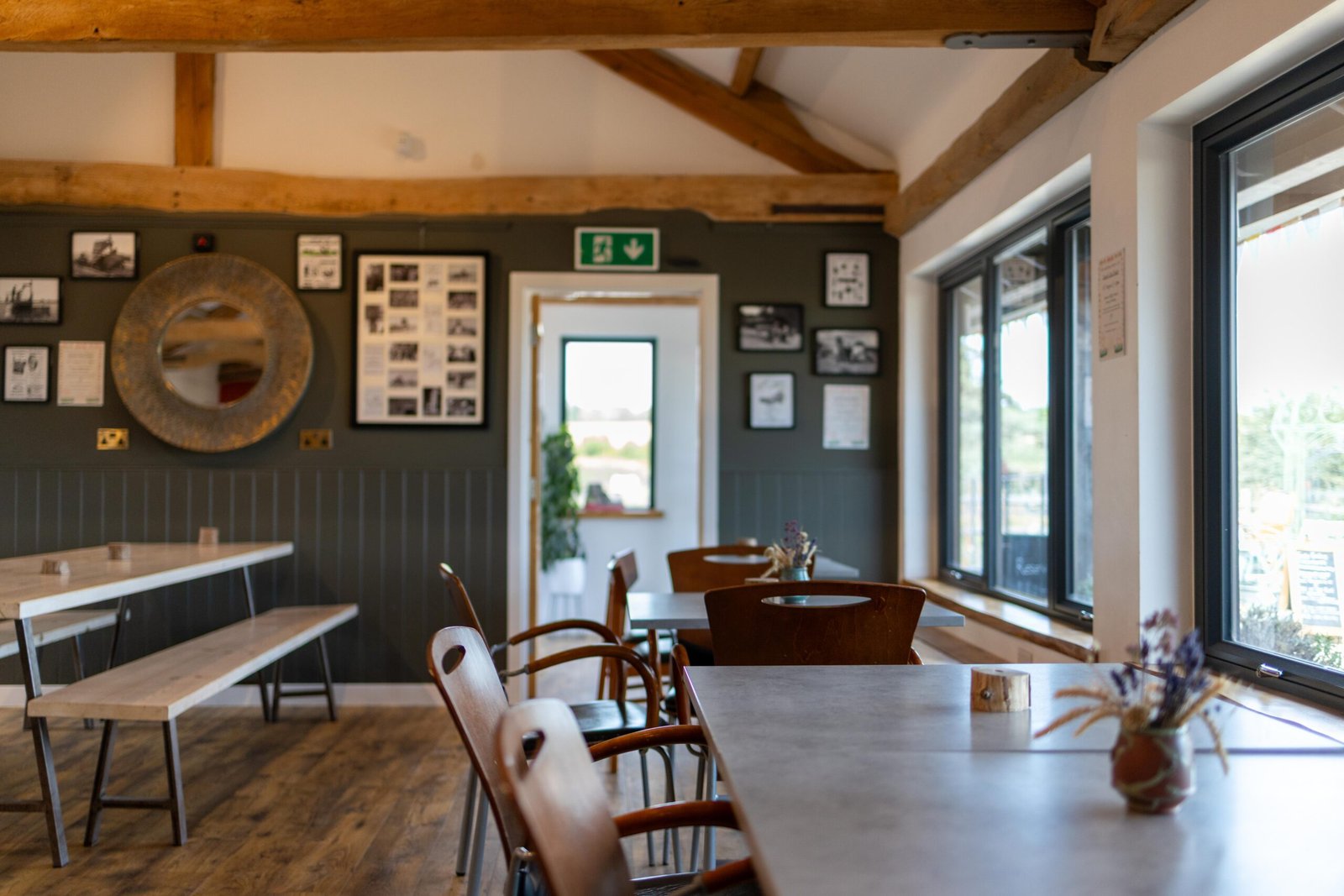
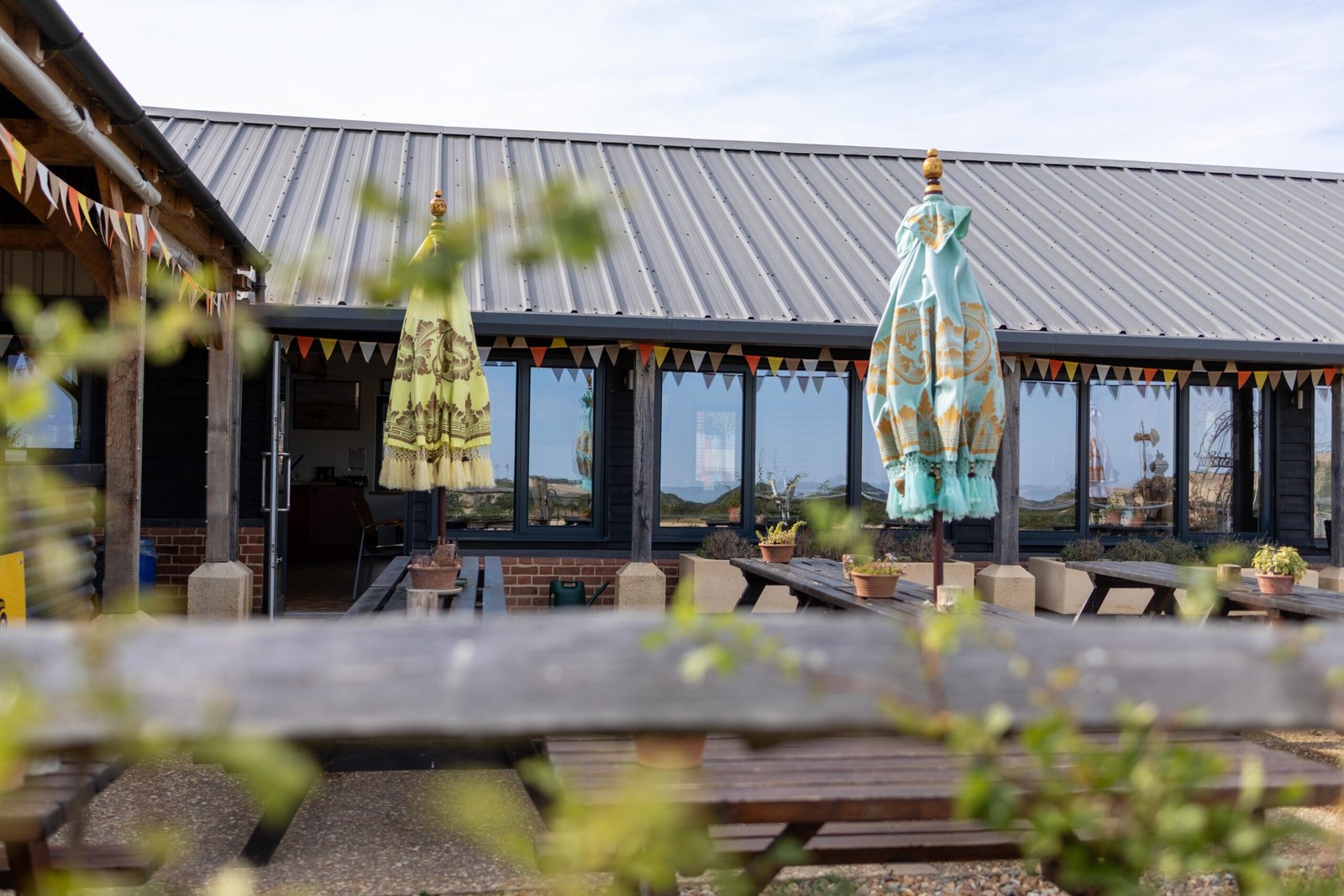
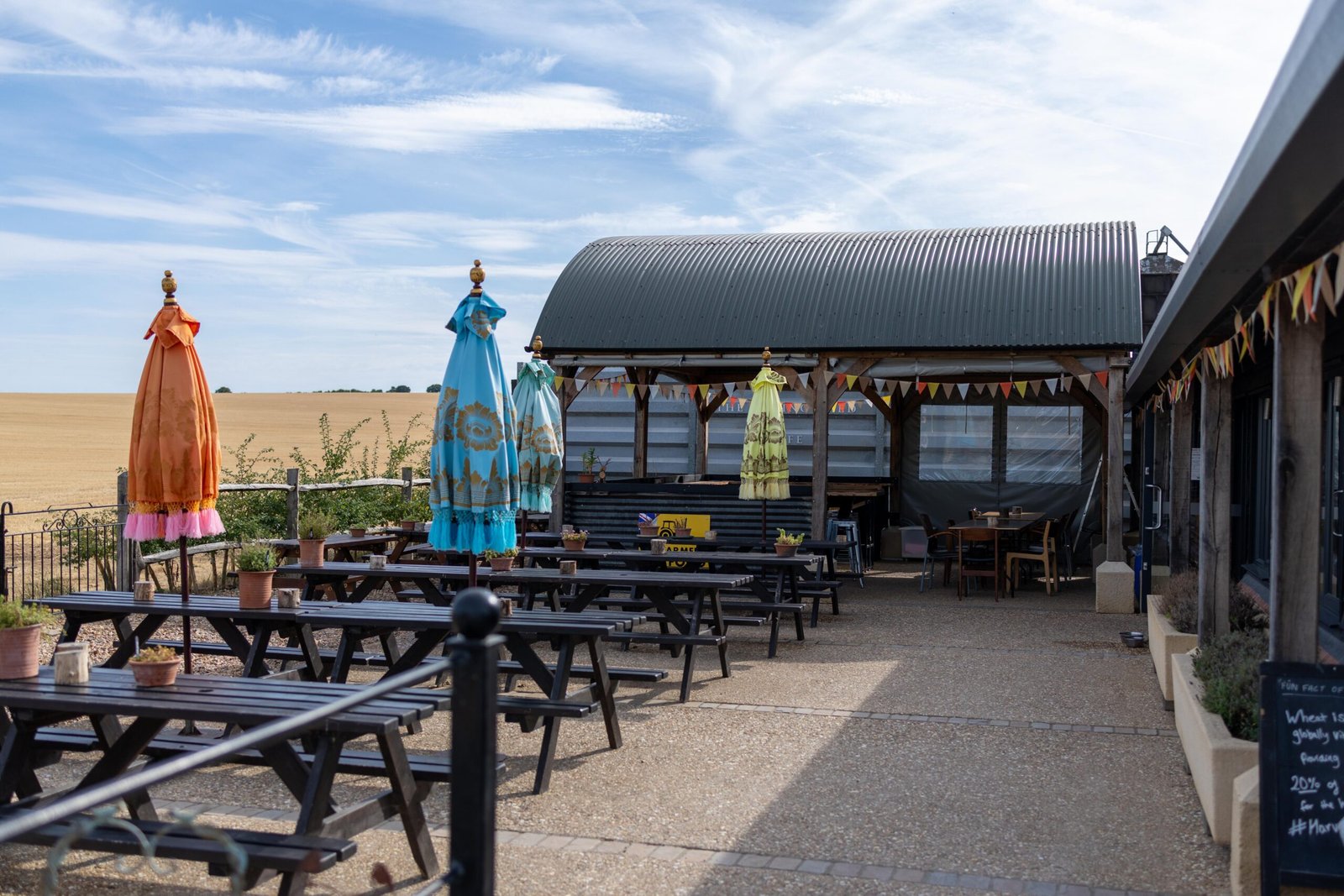
The Mixing Shed sits inside Compass Courtyard, a small converted farm complex tucked in the corner where Essex, Cambridgeshire, and Hertfordshire meet. It stands on a public bridleway with fields running out in every direction. The building is exactly what the name suggests. It was the old spot on the farm for mixing and preparing animal feed, sheltered from the weather while the rest of the yard worked around it. Original beams still run across the ceiling, a David Bowie print hangs by the specials board. The chalkboard itself goes well beyond the usual specials, hanger steak, charcuterie boards, toasties, a carrot and coriander soup.
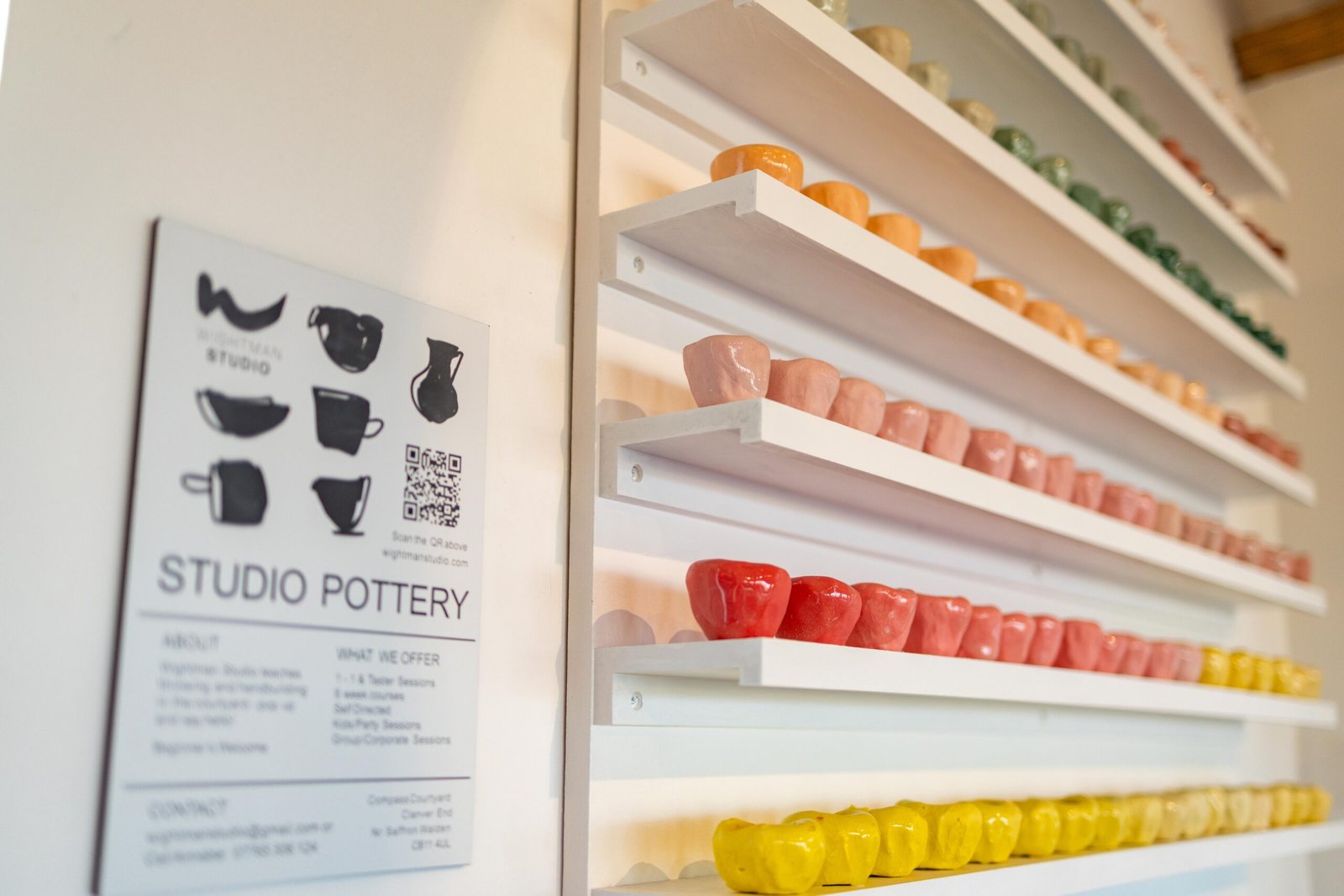
Next door, Wightman Studio runs pottery classes out of the same courtyard. A wall of hand-thrown pinch pots in reds, yellows, and blues sits just past the till, more gallery corner than café wall. These days it runs on beans from Ninth Coffee Roasters and scratch-cooked seasonal food. The relaxed, take-your-time atmosphere suits the setting. Dog friendly, cyclist friendly, open Tuesday to Sunday.
The Book: Sober On A Drunk Planet
Sean Alexander’s Sober On A Drunk Planet isn’t a memoir in the way most quit-lit tends to be. It’s built more like a case, argued point by point across eight or nine separate strands, physical, financial, emotional, social, career. Each one lands a little differently depending on where you are in your own sobriety. I picked it up a few weeks back out of curiosity. I wanted to see how the genre’s moved on since I first went looking for answers back in 2018.
January 1st, 2019 is the date I count from. I’d been having the conversation in my head for years by that point. It was the same one Alexander describes almost exactly. Every Sunday morning, you tell yourself that this coming week is the one where you finally sort yourself out, then do exactly what you always do anyway. He calls it insanity, quoting the old line about doing the same thing over and over and expecting a different result.
Physical Health
Alexander spends real time on what alcohol actually does to the body. He lays out plainly what reclaiming your energy and your body actually looks like once the fog lifts. Reading it, I thought back to something I did myself in the very first month off alcohol. I took before and after photos. This was part of the journey I was on with Anne Grace’s alcohol experiment at the time. I remember being amazed at the difference. My face wasn’t bloated and my complexion was clearer.
I’ve been vegetarian for more than twenty years, long before I stopped drinking. That part of my life didn’t change. What did change was the energy behind it. Once I stopped drinking, I had drive left over at the end of the day to think about eating right. Not just eating vegetarian, but eating well. That’s stayed with me since. I’m far more proactive about my own health now than I ever was in my twenties or early thirties. I don’t think that’s a coincidence.
Financial Freedom
I’ve written about this one already, so I won’t repeat myself at length. Alexander’s chapter on cost deserves credit for how plainly it lays things out. Not just the round itself. The taxi home, the food you buy drunk, the food you buy the next day just to feel human again. Seeing it as a receipt rather than a vague sense of guilt does something that guilt alone never quite manages. It was one of the more unexpected surprises of stopping for me too. It wasn’t the saving itself, but how much I’d truly never accounted for until it stopped happening.
Happiness
This is the theme I think about most when I’m actually out riding. Alexander frames it as finding joy without chemical enhancement, which sounds almost clinical written down. The reality of it is much simpler than that phrase suggests. For me, it’s been about reconnecting with things I used to enjoy before drinking took up so much room. Motorcycling is the obvious one. I rode as a teenager, long before any of this. Somewhere in the years in between it just stopped being part of my life. Getting back on a bike wasn’t a sobriety milestone exactly. It just became possible again once drinking stopped taking up the time, money, and energy that used to go elsewhere. That’s most of what this site is actually: a direct product of having that joy back, with nothing else attached.
Relationships
Alexander writes about repairing and deepening relationships as one of the quieter, slower rewards of stopping. It’s the kind that doesn’t show up in a before-and-after photo or a bank statement. I think that’s right. It’s also the hardest one to write about specifically. So much of it happens in small moments rather than one clear turning point. Being present, actually present, in conversations and plans rather than half there, adds up over years. It’s hard to point to directly, but impossible to miss once you notice it.
Career Growth
The book makes a case that sobriety sharpens focus and drive in ways people don’t expect going in. Reading it, I recognised the shape of that in my own career journey. Alexander’s argument on ambition ties directly into this. Hangovers quietly erode it over time, because you default to doing nothing rather than starting anything. This site is absolutely part of that story for me. I don’t think I’d have had the sustained energy to build something like this. Not consistently, week after week, in the years before I stopped.
Mental Clarity
This is probably my favourite section of the book. It’s the one I’d have written myself if I had Alexander’s structure for it. He talks about overcoming brain fog and anxiety, and for me that’s most obvious first thing in the morning. A brew, no hangover attached to it, sets the whole day up. I’m firing on all cylinders in a way that just wasn’t available to me for years. It’s such a simple thing, coffee, quiet, a clear head. It’s easy to undersell how much it actually matters. Alexander’s point that even a “mild” hangover you’re barely conscious of still costs you something the next day rang true. I don’t think I fully understood how much I was losing to that. I only learned it once I’d gone long enough without it to notice the contrast.
Society Perception
One of the more useful parts of the book, and one I hadn’t expected going in, is Alexander’s willingness to name how thoroughly pro-alcohol culture functions. It works quietly, everywhere, without most people ever really questioning it. It’s not preachy about it, more observational. It shows the way drinking gets treated as the default setting for celebration, commiseration, relaxation, and pretty much everything in between. Meanwhile, sobriety gets treated as the thing that needs explaining.
I recognised a lot of my own early sober years in that description. There were the slightly awkward moments of having to justify a soft drink at a bar. There was also the assumption that stopping meant something had gone wrong rather than something had gone right. Nearly eight years on, that’s mostly behind me. But reading it described so plainly was a useful reminder of how normal that friction actually is. It has very little to do with anything being wrong with the person going through it.
Personal Transformation
The last thread running through the book, and the one that ties everything else together, is sustaining the change rather than just making it. Alexander writes that the early motivation that gets someone through the first weeks isn’t the same thing that keeps them going years later. He also writes that the work of staying changed looks different at year one than it does at year five, or eight. I think that’s the most useful thing books like this actually do for someone this far in. I don’t need convincing any more. But reading a clear, structured account of what long-term change actually requires is still worth doing. It is not for persuasion but for maintenance, a reminder of what’s actually worth sustaining and why.
Sober On A Drunk Planet and Being a Parent
The parenting section was a tough read. He makes the point that being a hungover parent is difficult in ways that go beyond the obvious headache and low energy. There’s a self-directed frustration underneath it too, a sense of falling short even when nothing dramatic has gone wrong. He’s careful to say this applies even to people who’d call themselves happy drunks, people who never lose their temper or break a promise. You can still feel like you’re not quite present, even when nobody around you would necessarily say so.
I’ve got two kids, one twelve and one six. Reading that section made me grateful for something I don’t sit and think about often enough. The version of me they’ve grown up with is the clear-headed one. I don’t have to imagine what the other version would have looked like at the school gate, or at breakfast, or on a Saturday morning. They got to skip that entirely.
Looking Back Through the Book
What I keep coming back to, closing Sober On A Drunk Planet, is how useful it’s been to see my own experience from a completely different angle. It spanned so many different parts of life at once: physical, financial, emotional, professional, social. This wasn’t a memoir in the way some of the other quit-lit I’ve read has been. It’s more structured, more argument-led, closer to building a case point by point across eight or nine distinct fronts than telling a single story. But that structure works in its own way. It gives you somewhere to check your own memory against, a kind of external confirmation that the years I spent stuck weren’t unusual, and neither was the way out. It touched more of my life than I usually give it credit for when I think back on it casually.
Why Sober On A Drunk Planet Is Still Worth Reading
Nearly eight years on from January 1st, 2019, it would be easy to stop reading books like this altogether. But that’s exactly why I think books like Sober On A Drunk Planet are still worth picking up, even years into it. Not for persuasion, but for perspective. It’s a useful thing, every so often, to read a clear, structured account of exactly what you walked away from. It also lists everything you got back in its place: physically, financially, in the people around you, in the work you’re capable of, in the clarity of an ordinary morning. Nothing about it feels like looking backward with regret. It feels more like checking the map against the actual distance travelled, and being reminded, plainly, in someone else’s words rather than my own, of how far that distance actually is.
If you’re early in this yourself, or even just sober-curious and not sure where to start, this is a solid pick. It won’t tell you anything you don’t already suspect. But sometimes having it laid out clearly, front to back, physical health to personal transformation, is exactly the thing that makes the suspicion impossible to keep ignoring.
My daughter’s finished her matcha by the time I put the book back in my head for the day, already asking if we can go have a game on the little tetherball set up by the tables. After that, we take the long way home, being in no hurry to end the day. Somewhere past Brent Pelham I think about that line again, checking the map against the actual distance travelled. Nearly eight years, two kids who’ve never known the other version of me, and the afternoons you get to have because of it.