
Twenty miles from St Albans to Letchworth Garden City, via Harpenden, Kimpton, and Whitwell, past Hitchin. I picked the early slot on purpose. This is shaping up to be our fifth heatwave of the year. At twenty-one degrees and just gone nine in the morning, the ride out was cool and uneventful. Empty roads, low sun, nothing to fight. I let Scenic’s free Follow the Line feature pick the route. No rerouting, no hand-holding. Miss a turn and you’re on your own to find your way back to the line. It keeps finding exactly the kind of roads I go looking for, though.
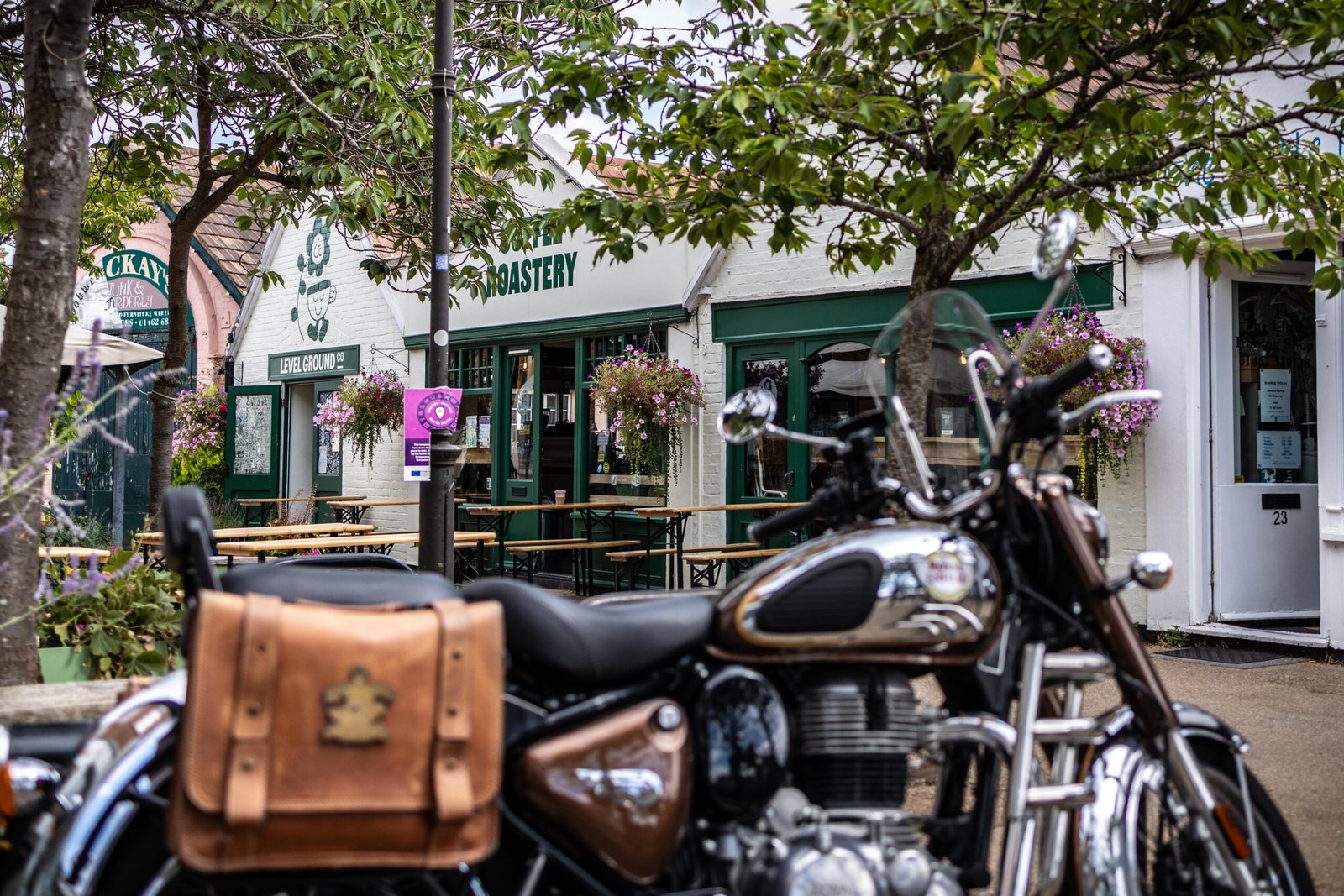
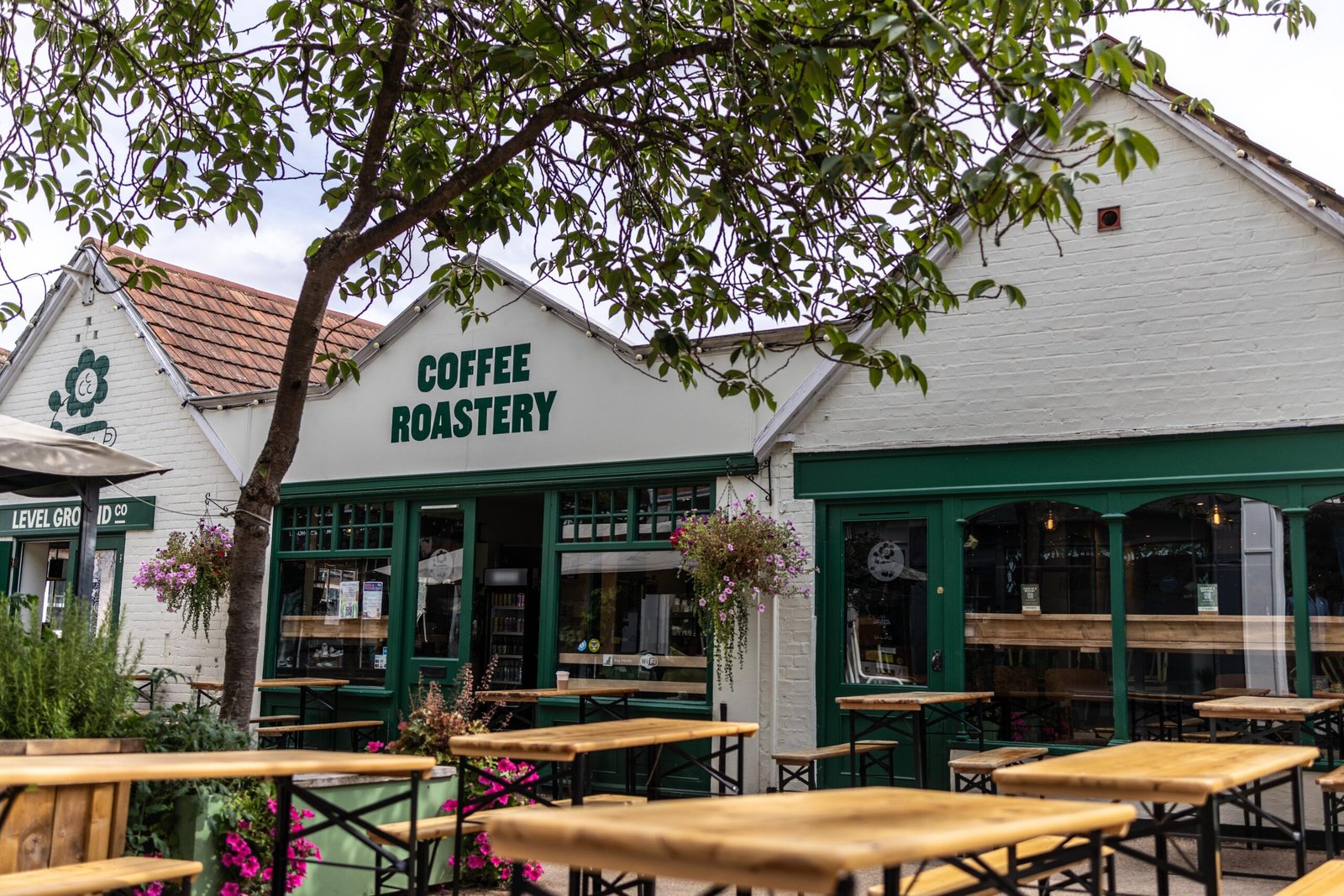
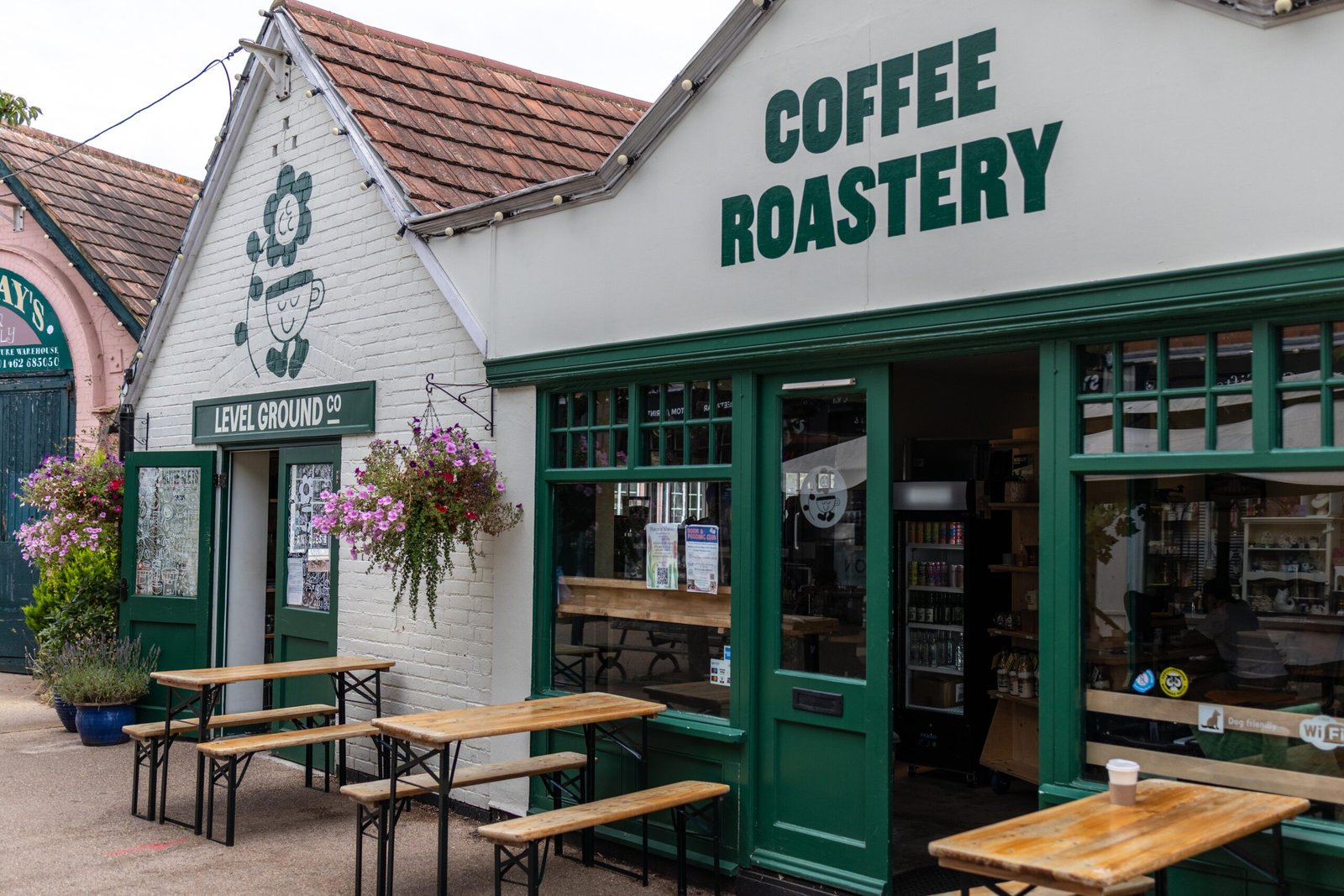
There is a Euro Car Park a short walk from the shop, but I ignored it. I squeezed the bike in close to the outdoor seating instead, parked close against the push bikes. It’s the usual move for making a motorcycle look like it belongs somewhere it technically doesn’t.
Letchworth Garden City does not feel like the kind of place that would produce a specialty coffee roastery. Let alone the only one for miles around. It is quiet, green, built to a slower pace, the world’s first garden city. The idea was that a town could be planned around people rather than traffic. It turns out that same idea works just as well for coffee. Level Ground Co is, for the moment, the only roastery in Letchworth. Almost everything about it, right down to the name on the bag, traces back to the town itself.
Meeting Harry
I sat down with Harry, one half of the business. We talked through how a food-focused café ended up as a roastery. We also got into why there is no Fair Trade sticker on any of his bags. We also got into the story behind Peggy, the horsebox that Harry now calls “probably one of our worst ideas.”
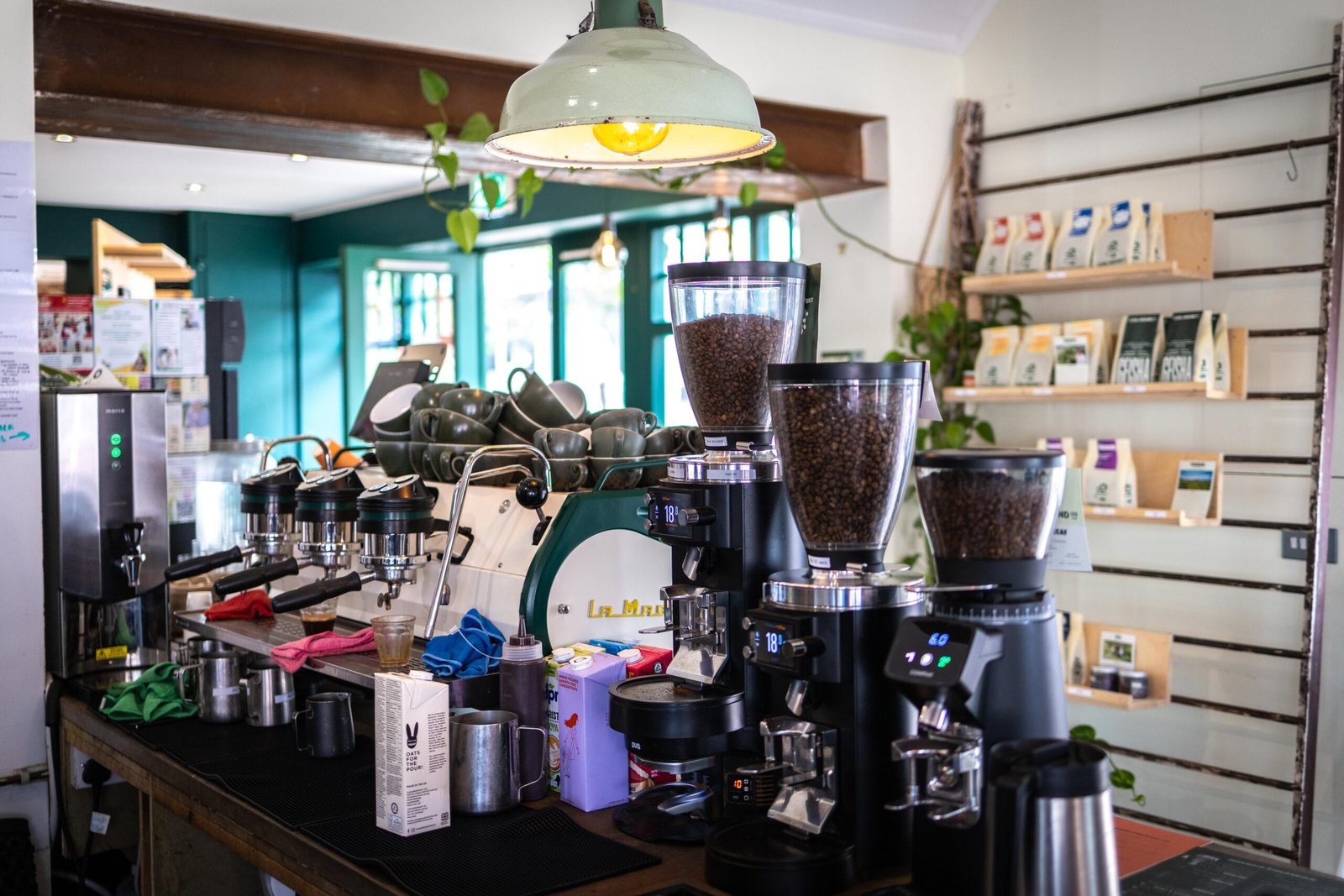
How It Started
Harry and his business partner Paul opened their café in November 2019, and if you had read their original business plan, you would not have found much about coffee in it at all. “That was all about food,” Harry told me. Ready meals, a bakery supply, fresh veg. Coffee was on the menu, but it was not the point.
Then came lockdown, just months after they opened. The café shut its doors. Harry and Paul moved their fruit and veg and bakery stock online, mostly hoping for a handful of local deliveries. “The next day we got, I think, 36 orders,” Harry said. “It just went mad from there.” For a stretch, they were doing better as a greengrocer than they had ever done as a café.
During the one daily walk permitted, Harry and Paul kept a table by the door. They served coffee to anyone passing, the only place in town still doing it. Then the machine broke. With no engineers available, Harry fixed it himself off the back of a YouTube video. In the process, he ended up actually dialling the machine in fully for the first time. What followed became the moment everything changed. “I remember having these two cups and they were like night and day,” he said. “One was awful, sour, disgusting coffee. And then dialled in, I was like, I couldn’t believe how good this cup of coffee was.” That comparison, sour against transformed, is what tipped Harry from someone who liked coffee into someone who could not stop thinking about it.
Chasing Down a Roaster
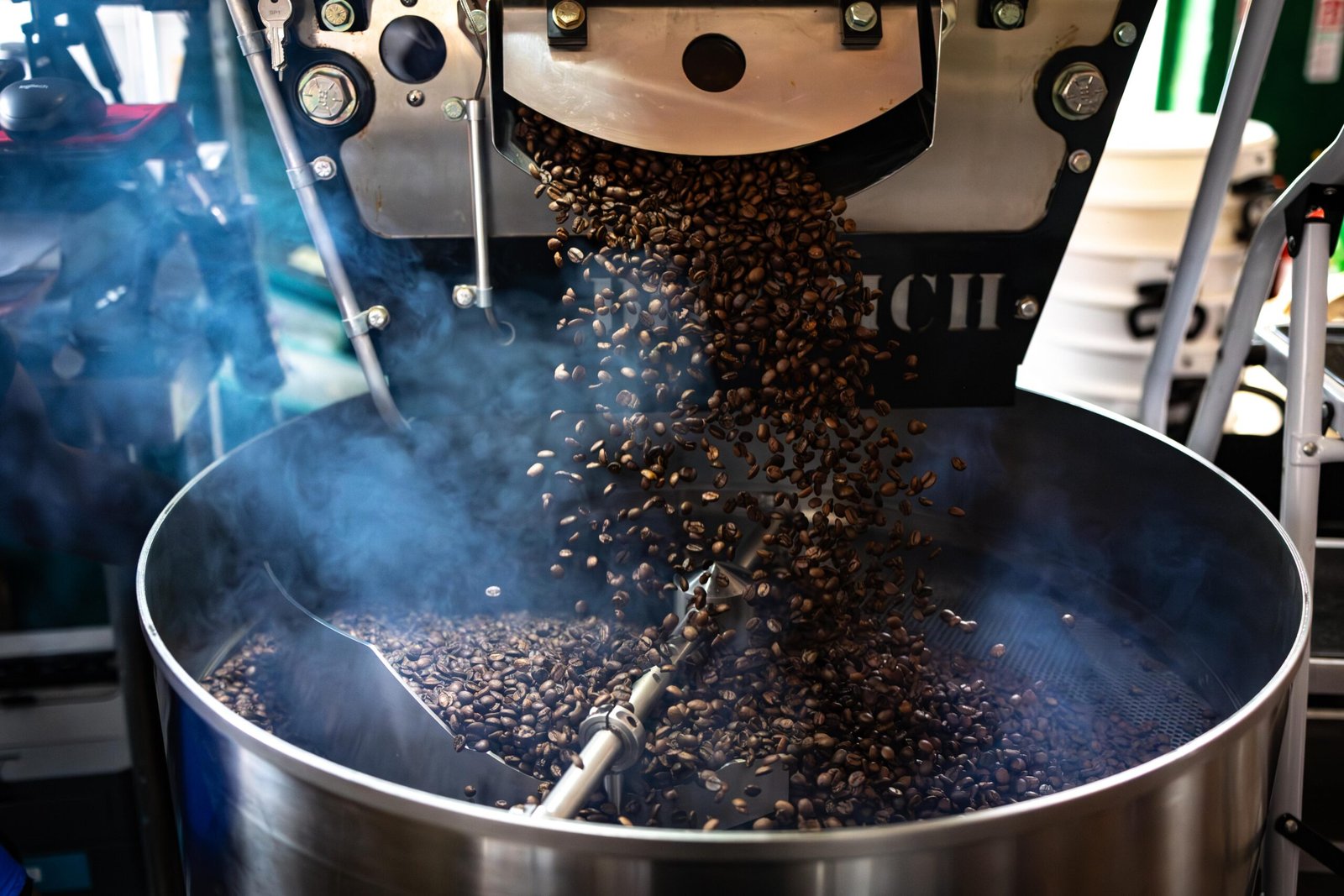
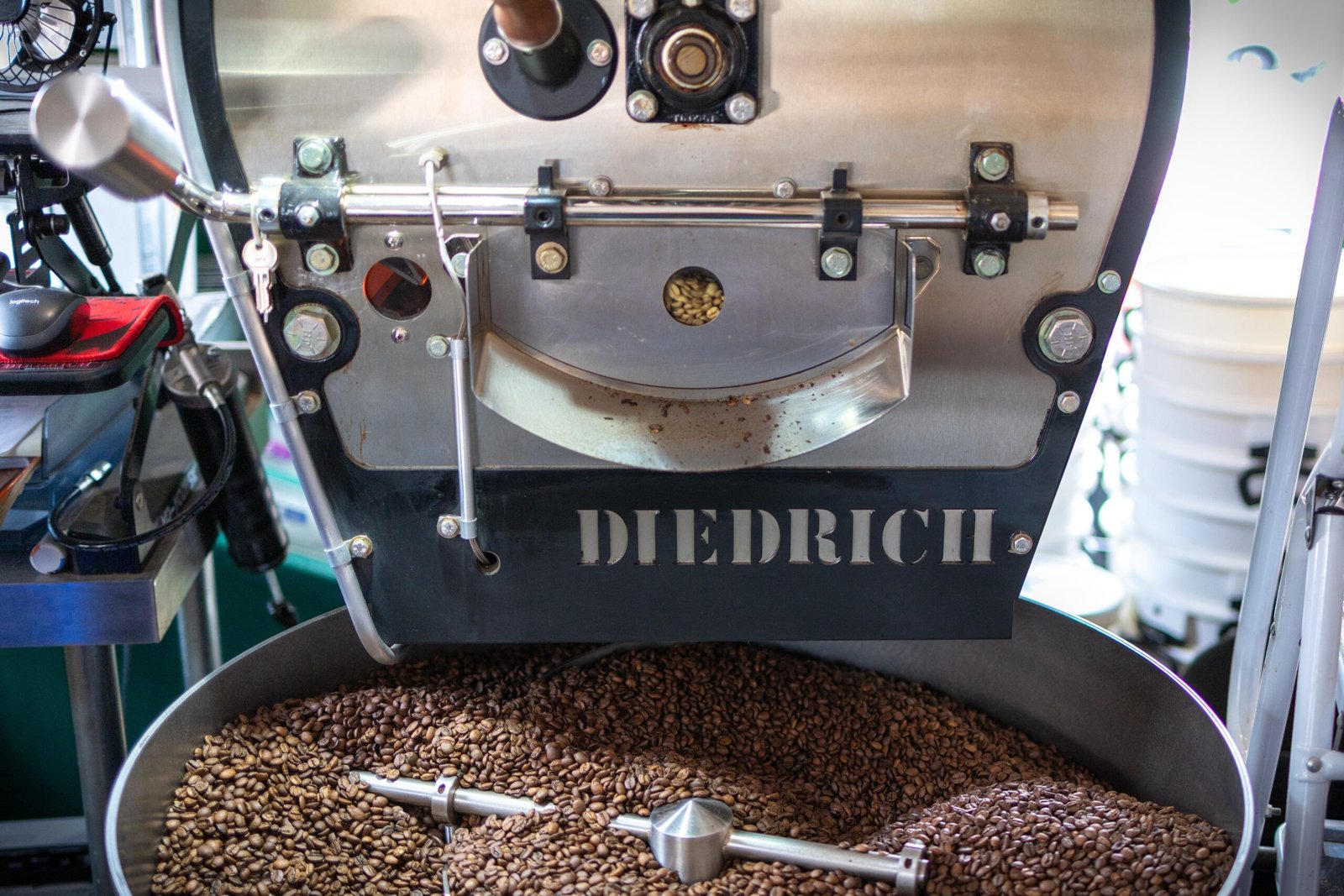
A third unit in the same building became available not long after. Harry and Paul took the lease with roasting in mind from the start. The plan was to buy a second-hand Probat. But the lease negotiation dragged on so long that the deal fell through entirely. Around the same time, Harry was doing a roasting course in London. It turned out the man running it also sold Diedrich roasters, and happened to have one in stock. A refurbished Probat, as it happened, the very machine Harry had been chasing in the first place. “It was like all a weird coincidence,” he said.
The roaster started running on 22 December. Harry has been on what he calls “this mad kind of learning curve” ever since. Even now, buying books on roasting technique regularly turns up things he thought he already understood. “You then read these books and you’re like…okay, we’ve maybe been doing that completely wrong,” he said, laughing. It is a theme that runs through the whole business. An ongoing willingness to be shown he was wrong about something, then fix it.
Why There’s No Fair Trade Sticker
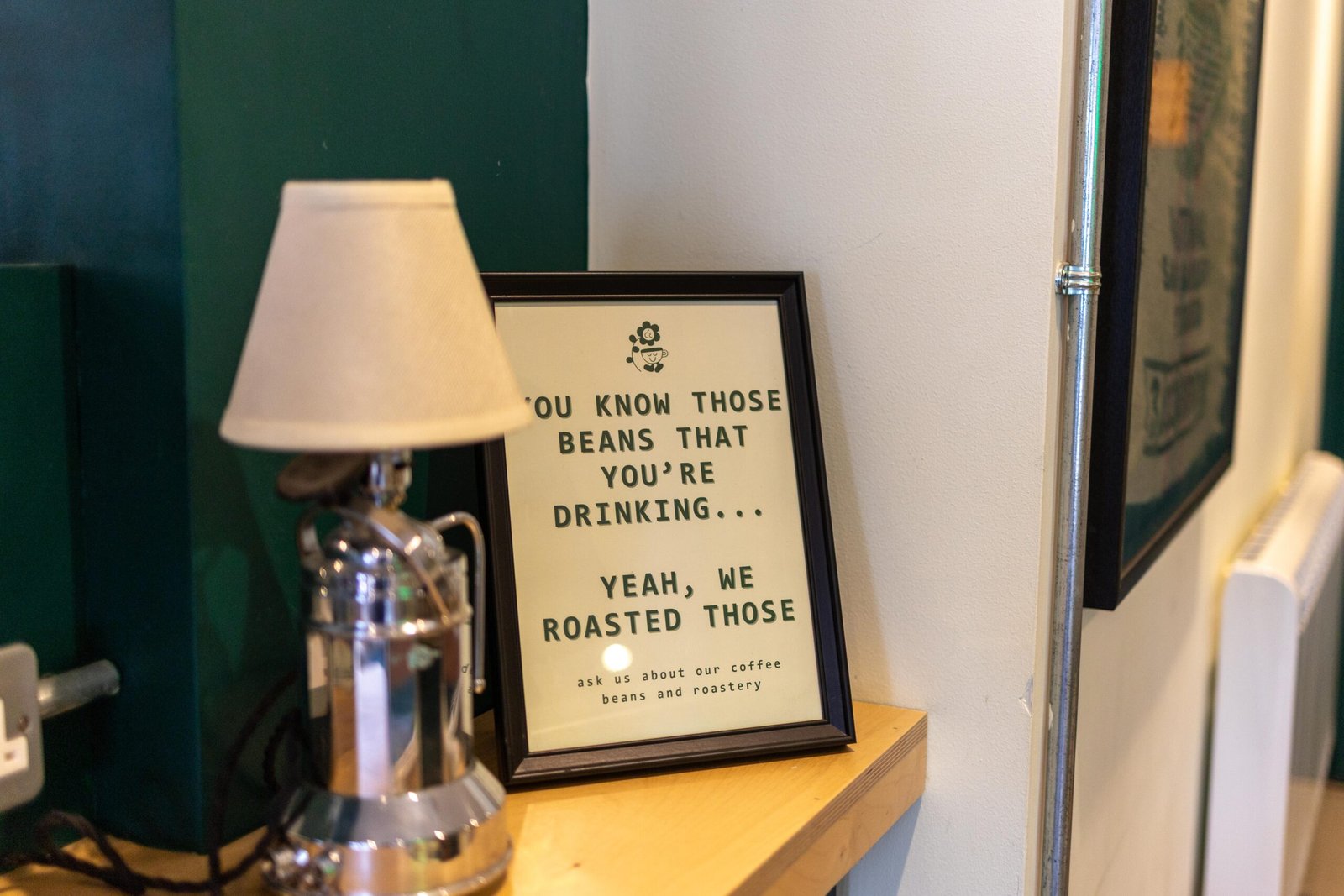
Every bag Level Ground Co sells is specialty-graded, scoring above 80 out of 100. It deliberately carries no Fair Trade certification. It is not an oversight. “If the only thing you can shout about is Fair Trade, then probably the quality isn’t quite there,” Harry said. His reasoning comes down to the maths. Fair Trade premiums on commodity coffee are comparatively small. Buying at specialty grade means paying eight, nine, sometimes twenty or thirty times the spot price for outstanding coffee.
That premium changes what happens back at the farm. Traceable, high-value lots come with real investment in the growing community, from graduate programmes to schools built with the proceeds. “There’s just such a better story that we can tell as a business,” Harry said, though he was quick to add a caveat most roasters would rather leave out: “You could argue probably that farmers aren’t paid enough still, even at the specialty price. I think it’s almost a bare minimum to do that.”
Sourcing runs through a small number of green bean importers Harry has built relationships with over time, including Dr Wakefield & Family. The house espresso, a Brazil natural, is bought in bulk and locked in months ahead, currently into the middle of next year. That gives the farm certainty about what is coming. Everything else on the shelf is chosen to be as varied as possible. Follow a Costa Rican and a Colombian with something from Kenya or Ethiopia. Importers send an offer list. Harry and the team sample five or six coffees at a time, and only the ones that earn their place make it into a bag.
The One Coffee He Hasn’t Forgotten
One coffee has stuck with him since he started. At a cupping session in London, a coffee from what he thinks was Ethiopia was on the sheet. The sheet simply described it as tasting of blueberry. “I just thought…it’s never going to taste like a blueberry,” he said. “And it just tasted like someone had squeezed blueberries into a cup.” It remains the coffee that first convinced him just how far flavour in coffee can actually travel.
Named After Letchworth, One Coffee at a Time
The name Level Ground Co is not just a nice phrase. It is a play on LGC, Letchworth Garden City, the world’s first. Harry landed on it after a long brainstorm with a friend that produced, in his words, some of the worst combinations imaginable, and the naming convention stuck for everything that followed. The house blend takes its name, Number 26, from the building’s own address. Another coffee took the name Cowslip, after the road Harry grew up on. Another, Hignett, after the architect behind one of the town’s landmark buildings.
When Harry had a son, the timing lined up with the business’s first ever Christmas coffee release, and it felt obvious to name it after his first Christmas. “It just kind of felt right that it was his first Christmas,” Harry said, before admitting the follow-up did not work quite as neatly. “We were saying afterwards…can I really call it second Christmas? But yeah.” These days the coffees are more often named for where they were grown. But that early run of hyper-local, personal names says a lot about how tightly Level Ground Co ties into the town it operates in.
Peggy, and Lessons Learned the Hard Way
Not every idea has worked. Around two years ago, Harry and Paul took on a second location, a prep kitchen, and a horsebox coffee trailer all in the same stretch of time. “It was just like too much, too quick,” Harry admitted. The horsebox, later named Peggy by the employee who ran it, was fully kitted out with a strong espresso machine. Its heating element was down-rated so it could run off a generator, rather than draw more power than a standard setup allows. It made excellent coffee. It also taught Harry exactly how brutal mobile coffee can be.
Big events, like Radio One’s Big Weekend, delivered strong days. But those were rare, and the in-between events were unpredictable. Harry would tow Peggy to a site for a 6am start, unload, run it until 11pm, then pack down again, sometimes to find the whole day had taken in only around £200. “It’s just a really difficult game, mobile coffee,” he said. His advice to anyone considering it is blunt: look at something you can drive there yourself and set up quickly, rather than a trailer that eats an entire day before a single coffee gets poured.
The Community Café That Couldn’t Quite Work
For around a year and a half, Level Ground Co ran a second café inside Letchworth’s Spirella Building in partnership with the charity Create Community, offering barista work experience to people who had been long-term unemployed. Roughly seven people went through the programme. It should have worked. It did not, not in the way Harry hoped.
The Spirella Building holds around 800 office workers, but most of them already had coffee machines sitting in their own offices, free at the point of use. Asking someone to pay £3.50 when they had a machine upstairs proved close to impossible. “You weren’t really seeing a net gain at all,” Harry said. The café rarely covered its own staff costs, and eventually it stopped being financially viable to keep going. Separately, Create Community lost its funding and had to close entirely, ending the partnership from the other side too.
A Hard Thing to Talk About
It is a difficult thing to hear a business owner talk through so openly, a good idea that ran into real-world economics and lost. But the instinct behind it has not gone anywhere.
Level Ground Co has since hosted work experience for three students from Fernhill School, all from families where getting any kind of work experience had proven difficult, and Harry described all three as having done well. The team also partners regularly with Best Before Cafe, a local operation built entirely around rescuing surplus food from supermarkets that would otherwise be thrown away. Between them, they have run six or seven supper clubs, sometimes hosted at Level Ground Co, sometimes at the brewery up the road. Proceeds go toward a kitchen garden built at a local school, and children’s lunches during the summer holidays. There is a weekly run club too, and regular community litter cleanups on the common, one of which pulled 36 kilos of waste in a single session.
Cherry Tea and Coffee Grounds
The most inventive piece of Level Ground Co’s environmental thinking is something most coffee drinkers have never heard of: cascara, the fruit of the coffee cherry, usually discarded or composted once the roaster removes the bean. Harry now buys it in, bags it, and sells it as a tea, brewing it as an iced tea through summer to introduce people to it gently. He has learned not to call it cascara on the menu. “If you use the word cherry, it is a coffee cherry, people are like, oh I see it,” he said. Branded as cherry iced tea, it has sold well, helped by the fact it carries roughly a tenth of the caffeine of a normal coffee, appealing to anyone looking for flavour without the full hit.
Beyond that, Level Ground Co takes part in a town-wide scheme collecting used coffee grounds from local cafés for compost at local allotments. That’s alongside the standard commitments to compostable packaging most independents now carry as a baseline. Harry is characteristically honest about the limits of it all. Some of it, like reusing certain bottles around the roastery, was never really framed as an environmental decision in the first place. “I suppose that wouldn’t be something I would shout about,” he said, “but it’s definitely cut down on the amount of bottles and things we’re bringing in.”
Knocking Through
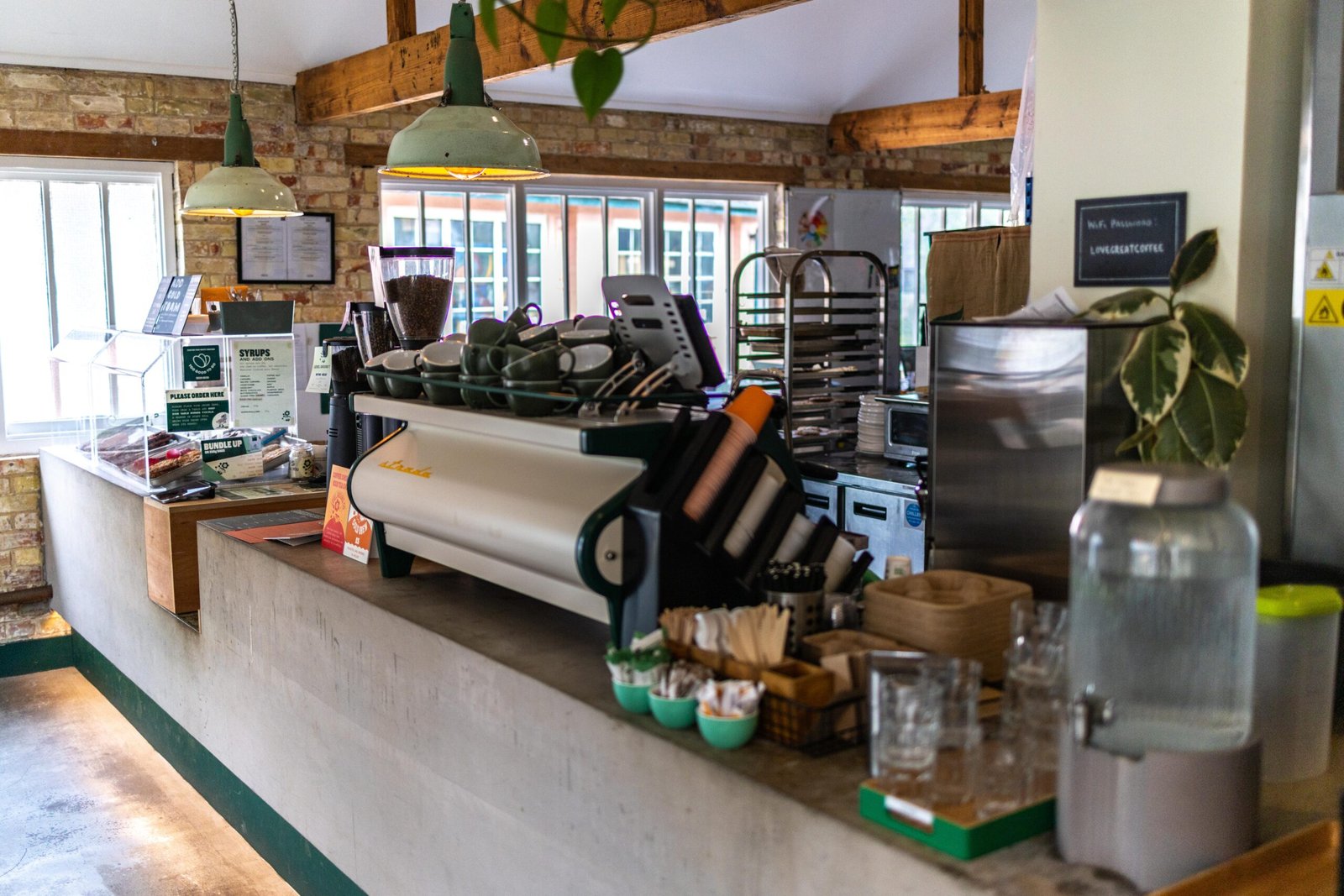
There is a physical change coming too. Before I left, Harry took me through the roasting area and talked me through the layout once the renovation is done. The section currently used for prep gets shut off and folded into the café itself, the counter moves, and the whole space opens up. The thinking behind it is straightforward. Wholesale is where Harry wants to push hardest this year, since it feels like the safer bet in the current economy, and a bigger café gives them room to do both well.
The longer-term version is a second site elsewhere, more coffee-focused, though he is less sure the numbers allow for it yet. It would be stocked with retail equipment, so people passing through could grab filter papers or a hand grinder and get solid brewing advice on the way out. “I like the idea of being a town’s hub for coffee,” he said.
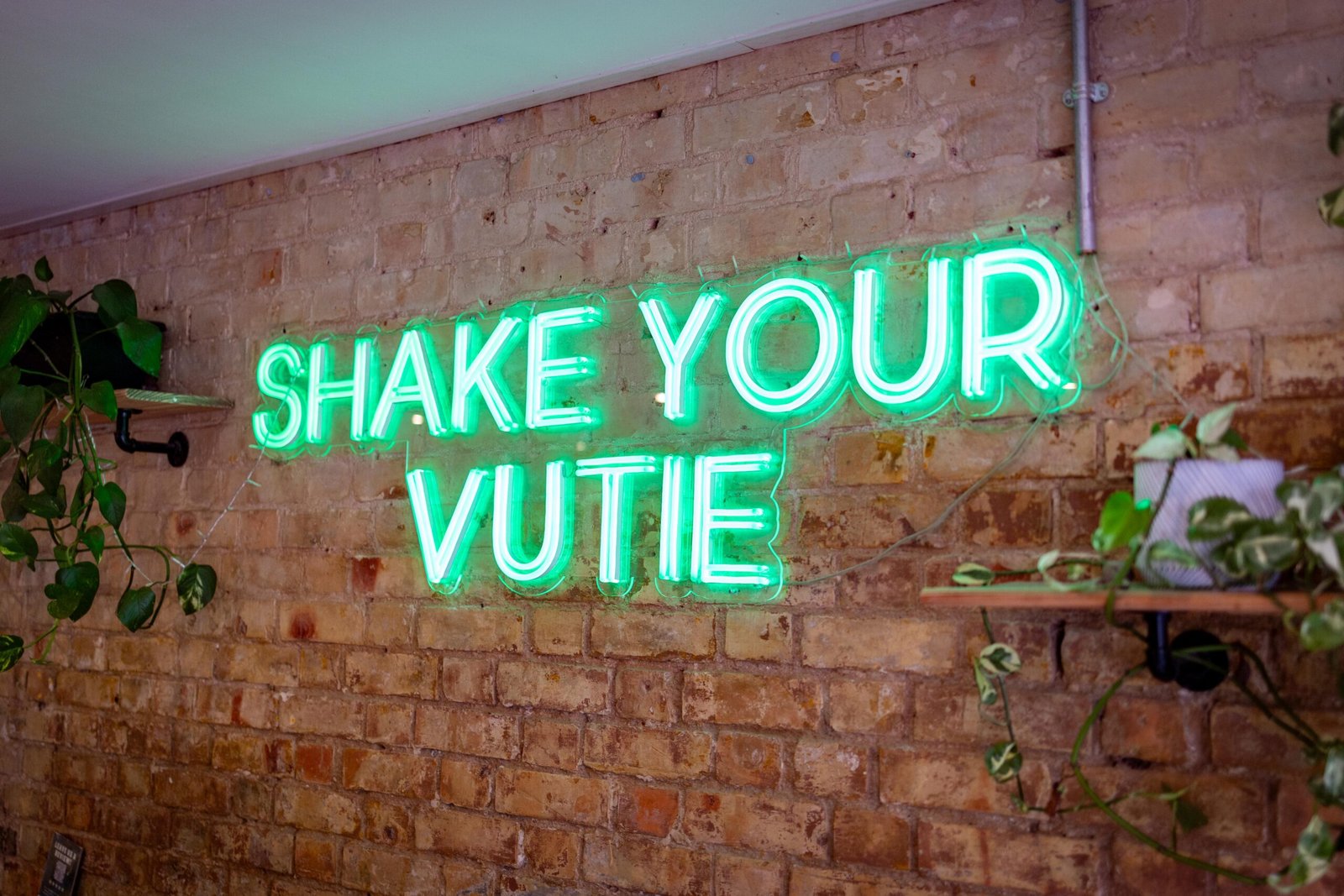
Level Ground Co roasts and serves coffee at 24-26 The Wynd in Letchworth Garden City. It’s open Monday to Saturday 8am to 4pm and Sunday 9am to 4pm, though shut on Mondays for roasting during quieter parts of the year. The café side runs under its own name, Vutie Beets, entirely vegan-friendly with most things available gluten-free too. If you are riding through Hertfordshire and want a coffee with a real story behind almost every name on the shelf, it is definitely worth the stop.