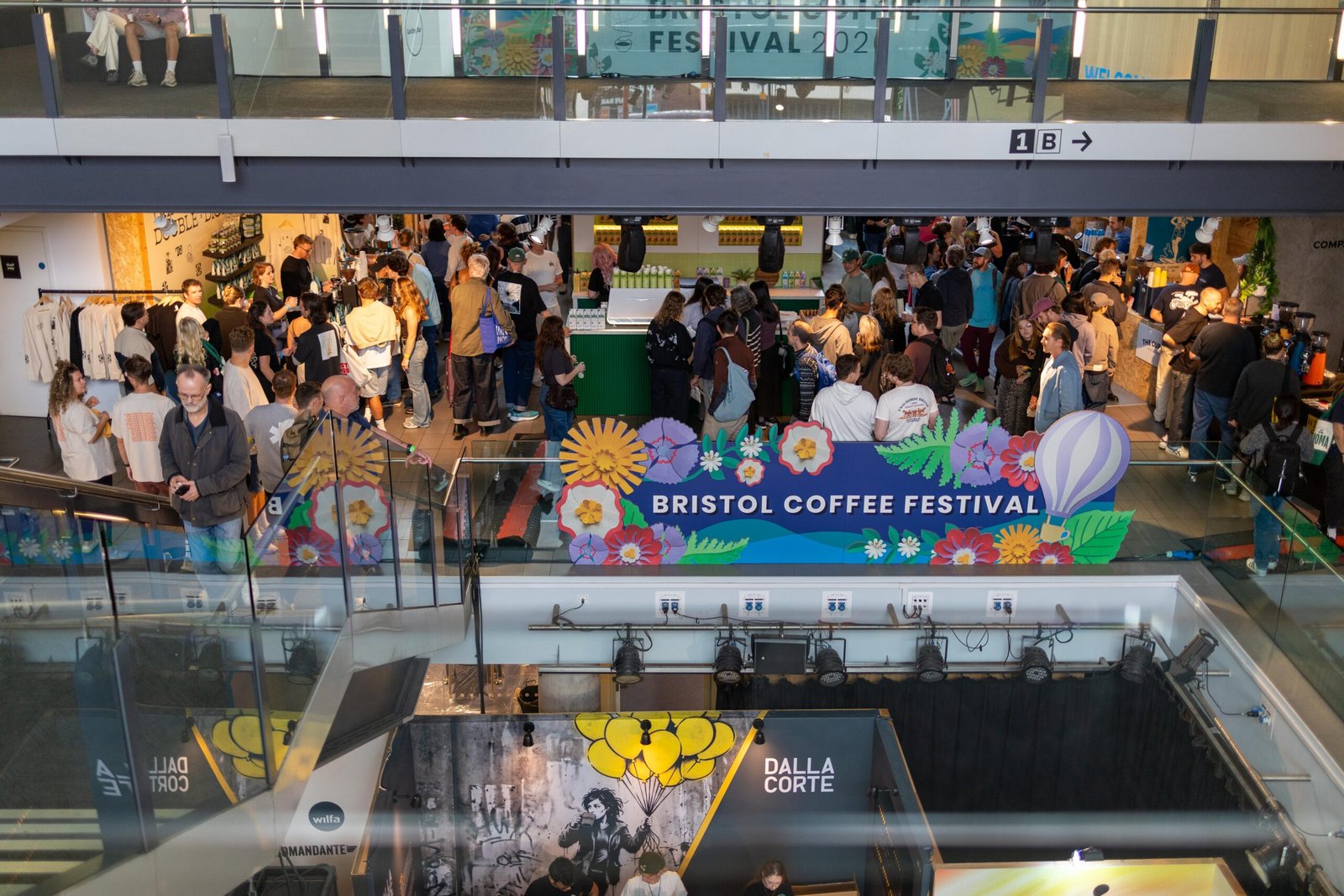

I joined the queue at 9:30am, where every visitor was handed two essentials for the day ahead: a banana and a wristband. With both secured, I headed inside for my first Bristol Coffee Festival. My strategy was simple: speak with the festival organiser, catch up with the exhibitors I’d arranged to interview, then let curiosity guide the rest of the day.
Bristol Coffee Festival first opened its doors in September 2023, but it has already established itself as one of the UK’s most popular coffee events. As I quickly discovered, it was busy just about everywhere. Espresso machines hissed constantly, conversations echoed between stands and the aroma of freshly ground coffee followed visitors from floor to floor.
A cardboard cut-out of James Hoffmann stood at the entrance of Lantern Hall where talks were scheduled throughout the day. The coffee author, educator and YouTube personality was due to take the stage later that afternoon in Beacon Hall, while there were dozens of exhibitors to explore first, this was clearly the main event.
Before that, though, I had four floors and more than 50 exhibitors to discover.
How Bristol Coffee Festival Began
Wanting to understand how the festival came together, I sought out founder Joana Wood, who was moving between visitors and exhibitors while somehow still finding time to answer questions.
The idea for the festival, she explained, came from a simple observation. “Someone needs to do Bristol Coffee Festival.” The next thought followed almost immediately. “I’m going to do that.”
It sounds straightforward now, but Joana had never organised a festival before. She booked the venue, started conversations with exhibitors and slowly built the event from the ground up.
Now in its fourth year, the crowds are considerably larger, yet she remains determined to preserve the original character of the festival. “I always say that the Bristol Festival from day one is the festival that I would like to attend,” she told me.
As I would learn over the course of the day, the festival’s appeal lay in its mix of people. Industry newcomers stood alongside established names, first-time visitors mingled with experienced professionals, and despite the scale of the event, it never felt intimidating.
The festival may be getting “bigger and bigger and bigger,” but Joana believes it still has “the same vibe.” Armed with her advice, I began my own tour.
Making Blends Cool Again
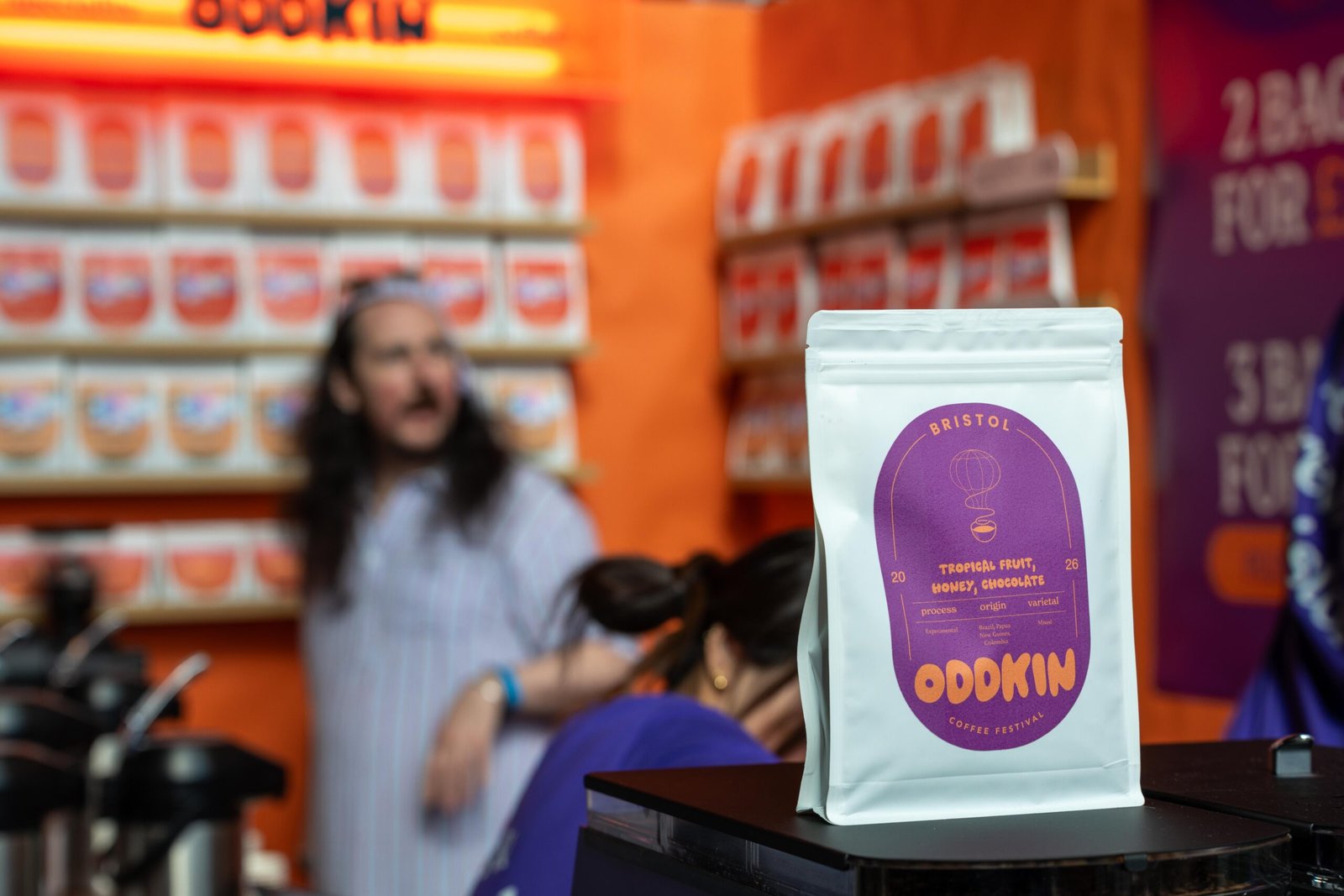
Back on the ground floor, the bright orange branding of OddKin Coffee, one of the many independent coffee roasters exhibiting, is impossible to miss. It’s one of the first stands visitors encounter after entering the venue, and a small crowd had already gathered when I arrived.
I met founder Joe Phillips, whose route into roasting began during the uncertainty of the Covid pandemic. Having already built a successful café business, the opportunity arose to acquire a local roastery.
“We thought, now or never,” he said. Five years later, OddKin describes itself as a “barista first coffee roastery,” something Joe believes gives the business a different perspective on roasting. His mission is simple. Making blends cool again.
In a specialty coffee industry increasingly focused on single origins and experimental processing, OddKin sees value in creating blends that are approachable, consistent and delicious.
Joe is equally passionate about Bristol itself. “It’s really approachable but still really, really high quality,” he said of the city’s coffee scene.
For first-time festival visitors, his advice was straightforward. “Do a full lap, get really caffeinated and then come back and see Rama for your decaf at the end of the day.” I glanced over at Rama behind the stand. Looking cool and entirely unruffled amid the crowds, he wore a tea towel as an improvised headscarf, with a pair of sunglasses balanced on top.
A Family Business
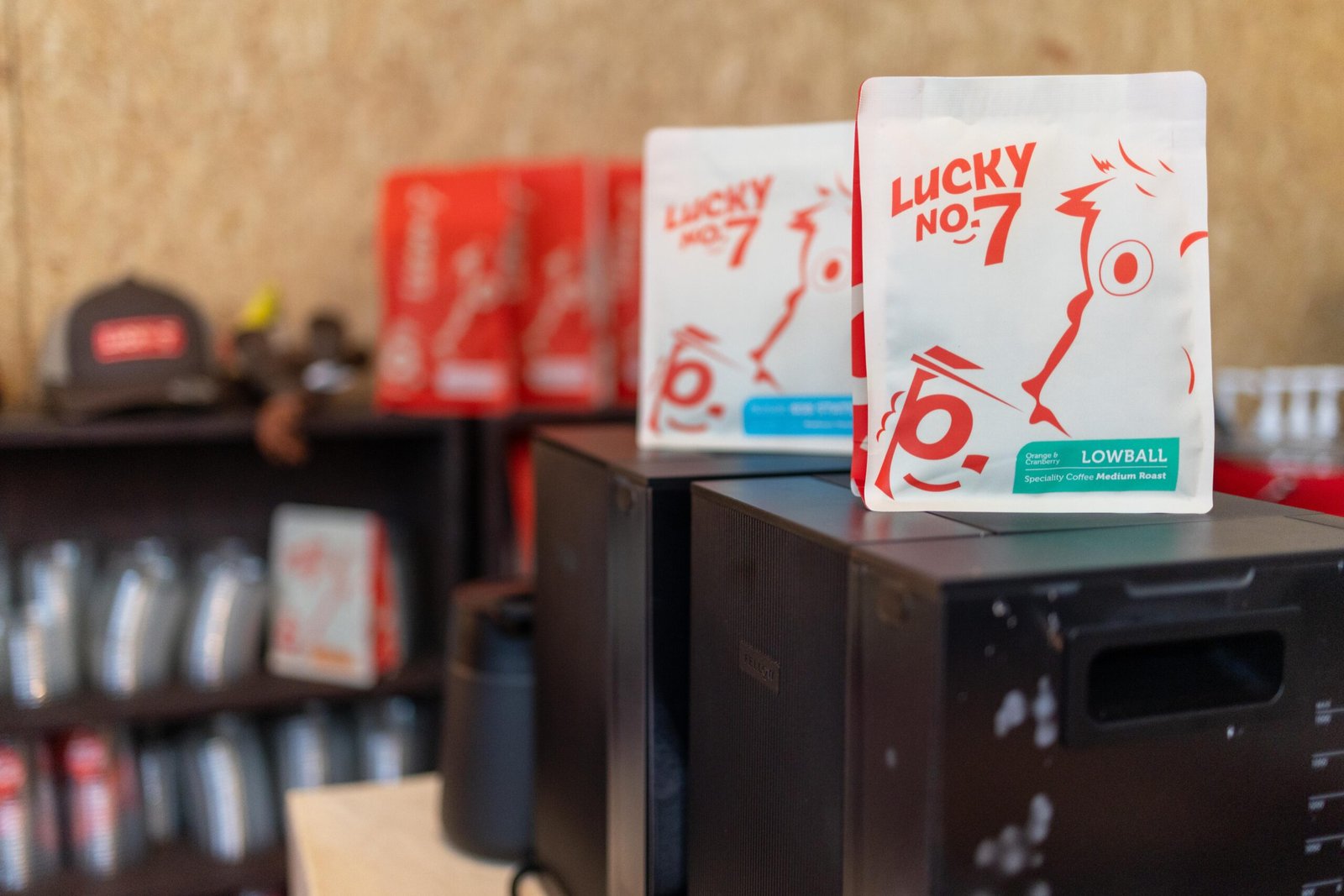
Further upstairs, I stopped at one of the festival’s youngest coffee businesses. Lucky No. 7 has only existed for four months, but its stand was among the busiest I encountered all day.
Behind the espresso machine were founder Hannah’s husband and son. In front of it stood customers queuing to try the coffee. Around them sat a striking selection of merchandise and retail products.
Lucky No. 7 is very much a family enterprise. “We’ve got five children and so there’s seven of us,” Hannah explained when I asked about the name. The simplicity of the answer perfectly reflected the business itself.
In an industry often associated with technical language and specialist knowledge, Hannah’s philosophy was refreshingly direct. “We’re not coffee snobs. We’re not coffee geeks. We just like coffee, and it’s as simple as that.”
Rather than rushing into a permanent location, the family started with events and online sales, testing demand before committing to a physical site. The gamble appears to have paid off. They have now secured their first coffee bar in Cardiff and expect it to open within weeks.
What makes the story particularly compelling is the level of commitment behind it. The family invested their savings and even sold a car to help fund the venture.
“So far it’s been great,” Hannah laughed before stepping away to speak with another customer.
Bringing Specialty Coffee to More People
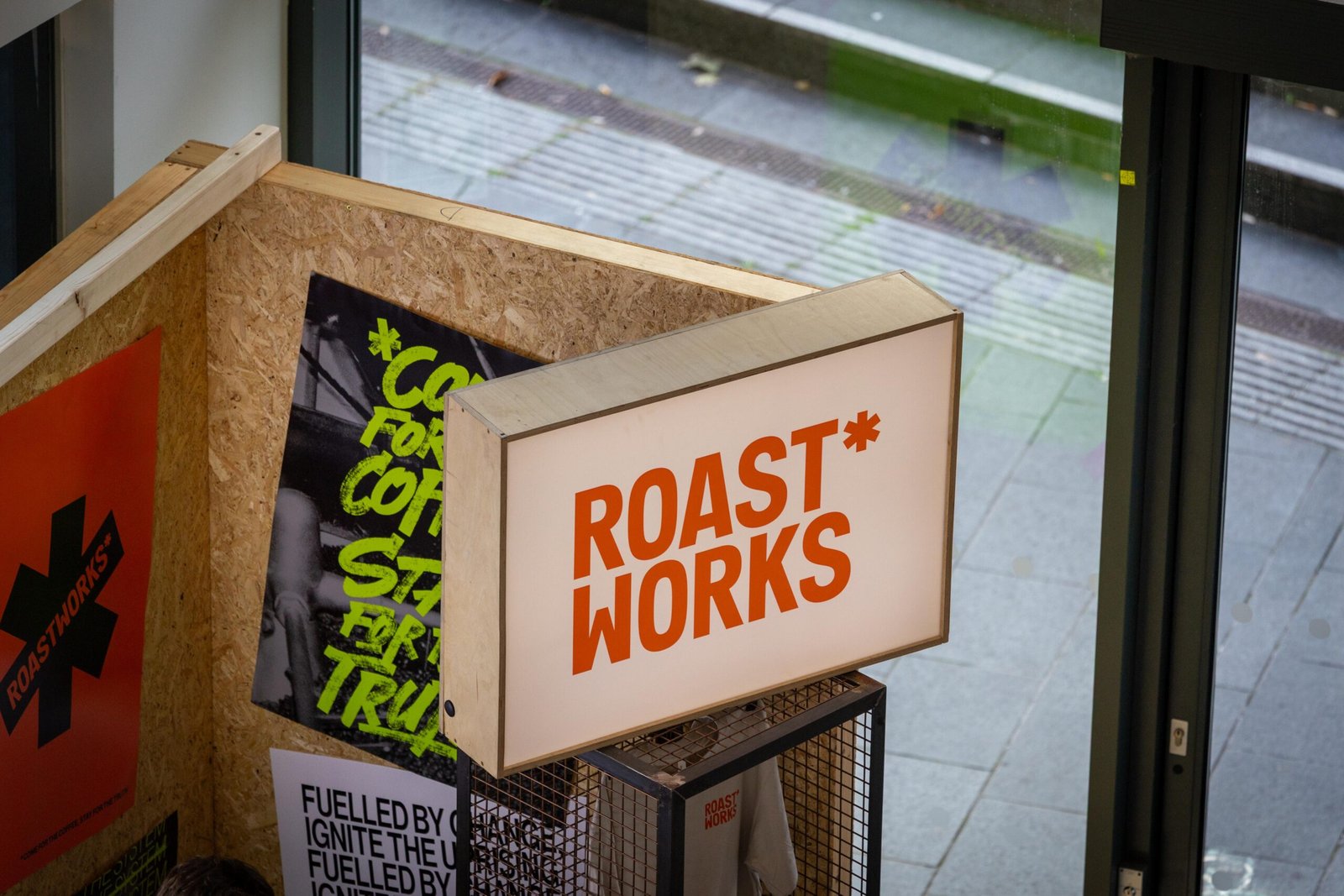
The next stop on my journey was Roastworks Coffee Co. I met Jack, who spoke about the Devon-based company’s evolution from independent roaster to a business now appearing on supermarket shelves.
The company’s founder, Will, built Roastworks with an ambition that continues to guide the business today. “He wanted to be able to get high quality coffees to the majority of coffee consumers,” Jack explained.
He described Roastworks as a “gateway company to specialty coffee.”
That ambition has seen the brand secure listings with retailers such as Waitrose and Ocado, helping introduce specialty coffee to consumers who may never visit an independent coffee shop.
Yet despite the growth, craftsmanship remains central to everything they do. Jack proudly talked about the company’s restored 1950s German roasting machine.
“It’s super old school,” he said. “It’s beautiful, but you’ve just got to know what you’re doing.”
The machine seemed an apt symbol for the wider specialty coffee movement. Technology and innovation continue to advance, but expertise and experience remain irreplaceable.
Twenty-Five Years of Bristol Coffee
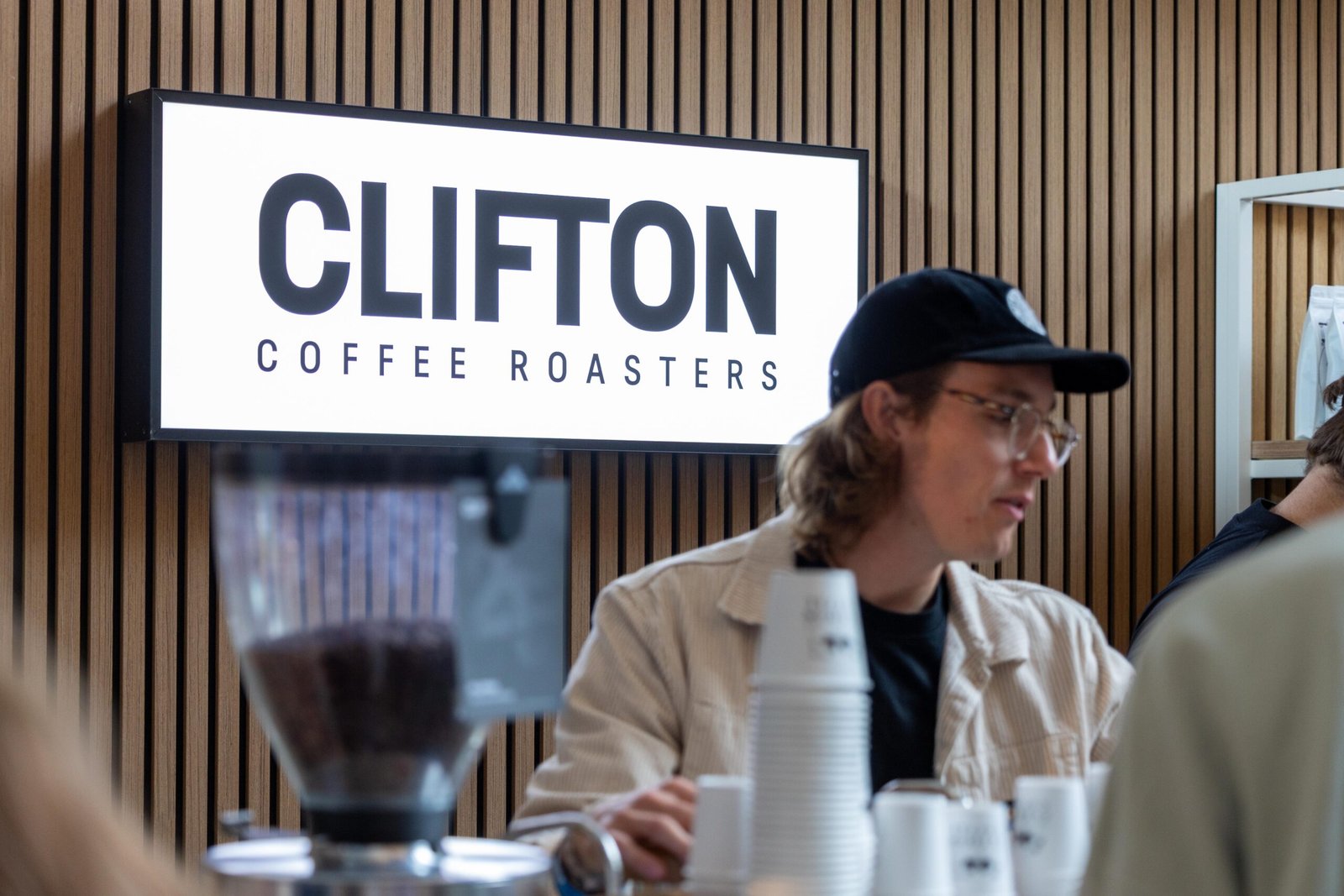
A short walk later brought me to one of Bristol’s most recognisable coffee brands.
Clifton Coffee Roasters is celebrating its 25th anniversary this year, and the team had brought a special commemorative coffee to mark the occasion.
I spoke with George, who has spent more than eight years with the company.
Clifton’s roots might surprise some people. The business actually began as a coffee machine engineering company before evolving into one of the country’s leading specialty coffee suppliers.
George was keen to highlight that Clifton’s success has always been about far more than roasting coffee.
“It’s just getting across the quality of service that we offer as a kind of back up to the amazing coffee,” he explained. Training, maintenance, technical support and customer relationships remain just as important as the coffee itself.
When asked how much the company had changed over twenty-five years, George paused. “I don’t think too much about it has changed, to be honest.” The customer base may have grown and far more coffee may leave the roastery each year, but, he said, “the basis of what we do has kind of remained the same from day one.”
In an industry often obsessed with innovation, there was something reassuring about hearing that.
Coffee as a Route Into Work
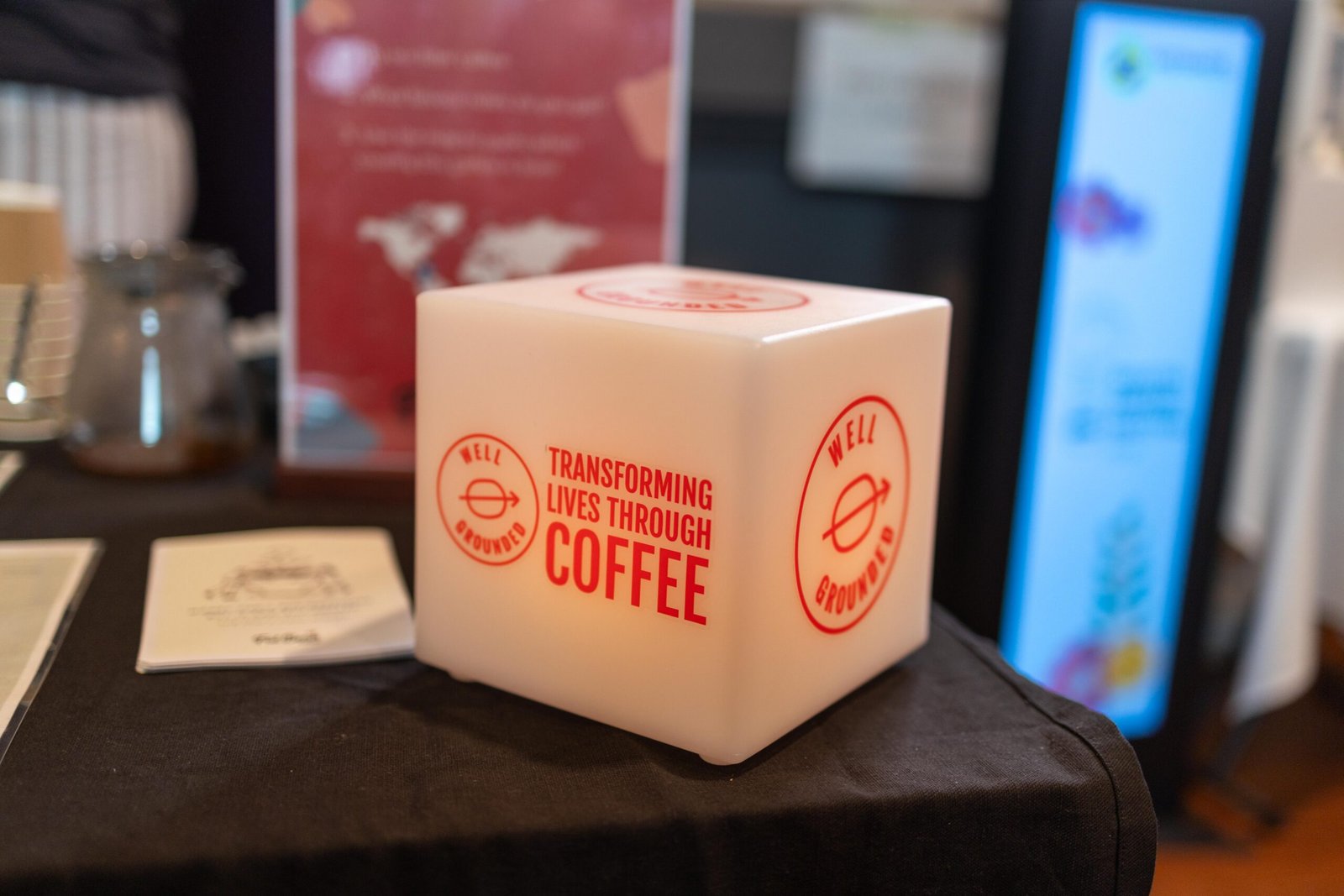
Not every stand was focused solely on coffee products. One of the most thought-provoking conversations of the day happened at the Well Grounded stand.
There I met Zoe, who explained the mission behind the social enterprise, which is celebrating its tenth anniversary this year.
Well Grounded exists to help people facing barriers to employment enter the hospitality industry through training, support and work placements. “There’s a real struggle with people getting that initial step into the industry,” Zoe explained.
Participants complete a ten-week programme covering everything from barista skills and customer service to confidence-building and teamwork. They then move into work placements and employment opportunities.
As we spoke, it became clear that coffee is really the vehicle for something much bigger. For Zoe, the most rewarding moments come after the training itself. “It’s the moment that people get their first job that really is incredible.”
She described seeing people arrive with little confidence and few opportunities, only to leave with qualifications, references and employment.
In a building full of brewing equipment and coffee innovation, Well Grounded served as a welcome reminder that the industry is ultimately about people.
Brewed by Hand
By now, several hours had passed and it was almost time for what was undoubtedly the easiest coffee break of my life.
My next stop was Brewed by Hand, one of the festival sponsors and a company with particularly close ties to the day’s headline speaker. There I met Luke.
Founded by James Hoffmann, Brewed by Hand emerged at a time when home coffee enthusiasts had surprisingly few options available to them. “There weren’t very many brew methods,” Luke explained. At the time, he said, everyone was selling coffee, but “it could only be drunk in cafés.”
The company began introducing specialist brewing equipment that allowed consumers to recreate better coffee experiences at home. Looking back, Luke has watched extraordinary change take place across the industry.
“There’s so much more kit, there’s so much more equipment,” he said. More importantly, there are now “a lot more really incredible places where you can go and buy amazing coffee.”
He also pointed to the rise of processing methods, which he believes have become “a massive part” of how coffee is discussed today. Yet despite all the innovation, his brewing philosophy remains pretty simple. “You’d want to do the thing that makes you comfortable.”
For some people, that means embracing what he described as the “ritualistic, Zen-like moment” of hand grinding coffee every morning. Others prefer “full automation.”
“None of those are wrong,” he said. The important thing is understanding “what’s the coffee you like” and brewing it in a way that fits your life.
Before leaving, Luke spoke passionately about Brewed by Hand’s brewed coffee initiative, which he described as one of the projects he is most proud of. The concept encourages customers to focus less on trends and aesthetics and more on the coffee itself.
Rather than chasing latte art or social media moments, Luke believes people should simply ask: “Where’s the coffee from? How is it going to taste? And do I love it?”
“I think that’s what specialty is kind of about.”
The Build-Up
As the afternoon progressed, the mood inside the festival began to change. You could feel people starting to migrate in a particular direction. Orderly queues started to form and before too long we were let into Beacon Hall. It was time for James Hoffmann.
James Hoffmann Takes the Stage
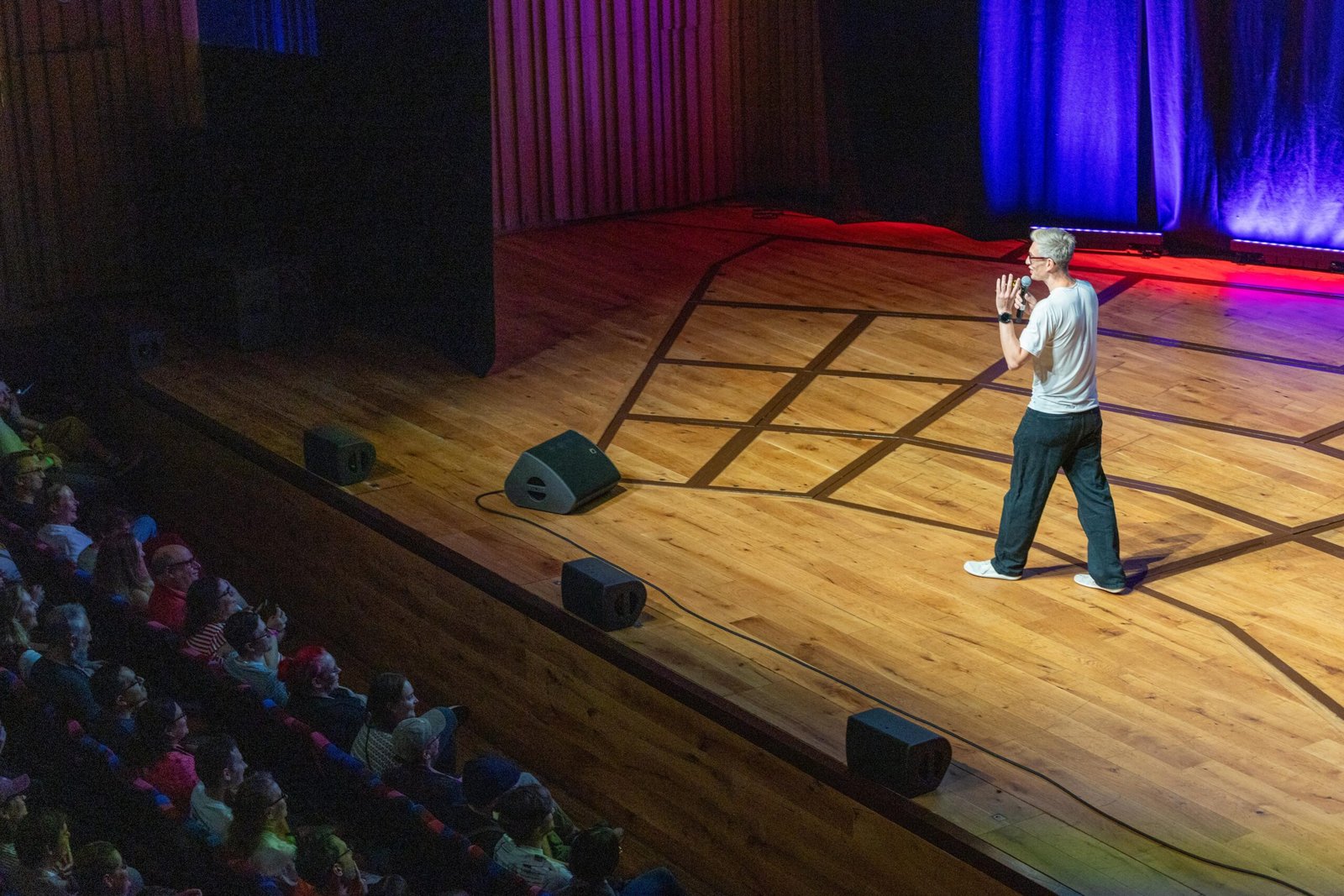
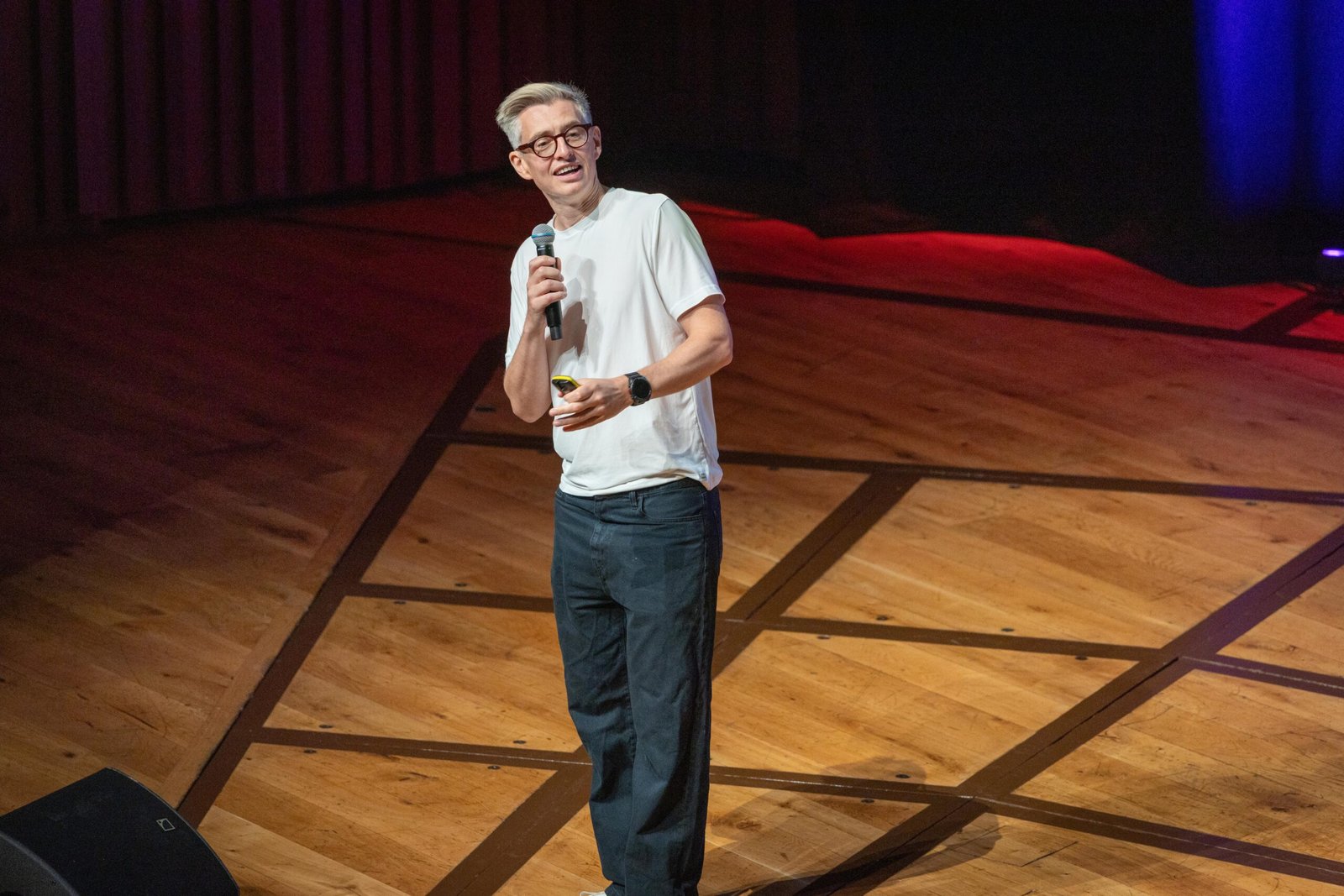
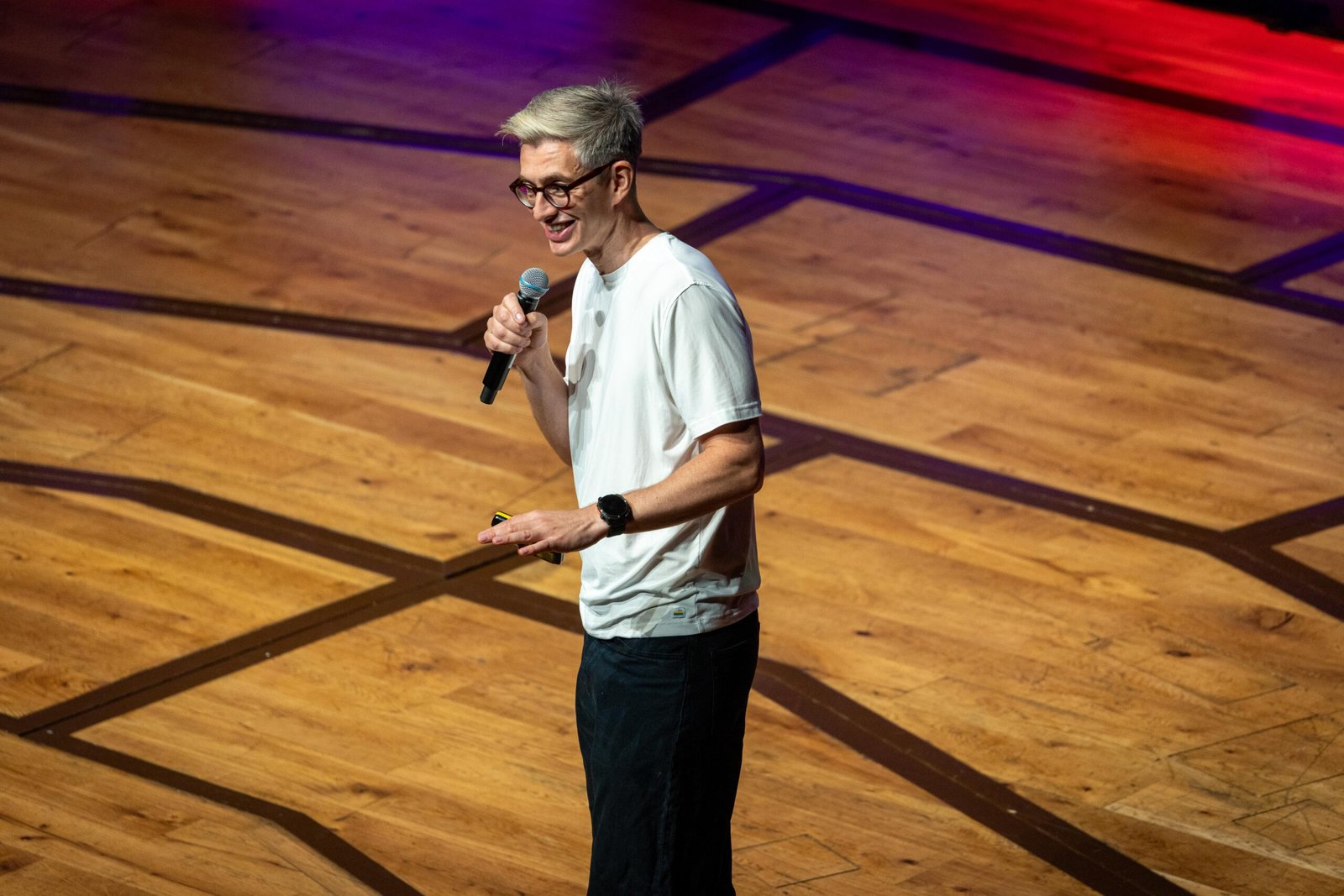
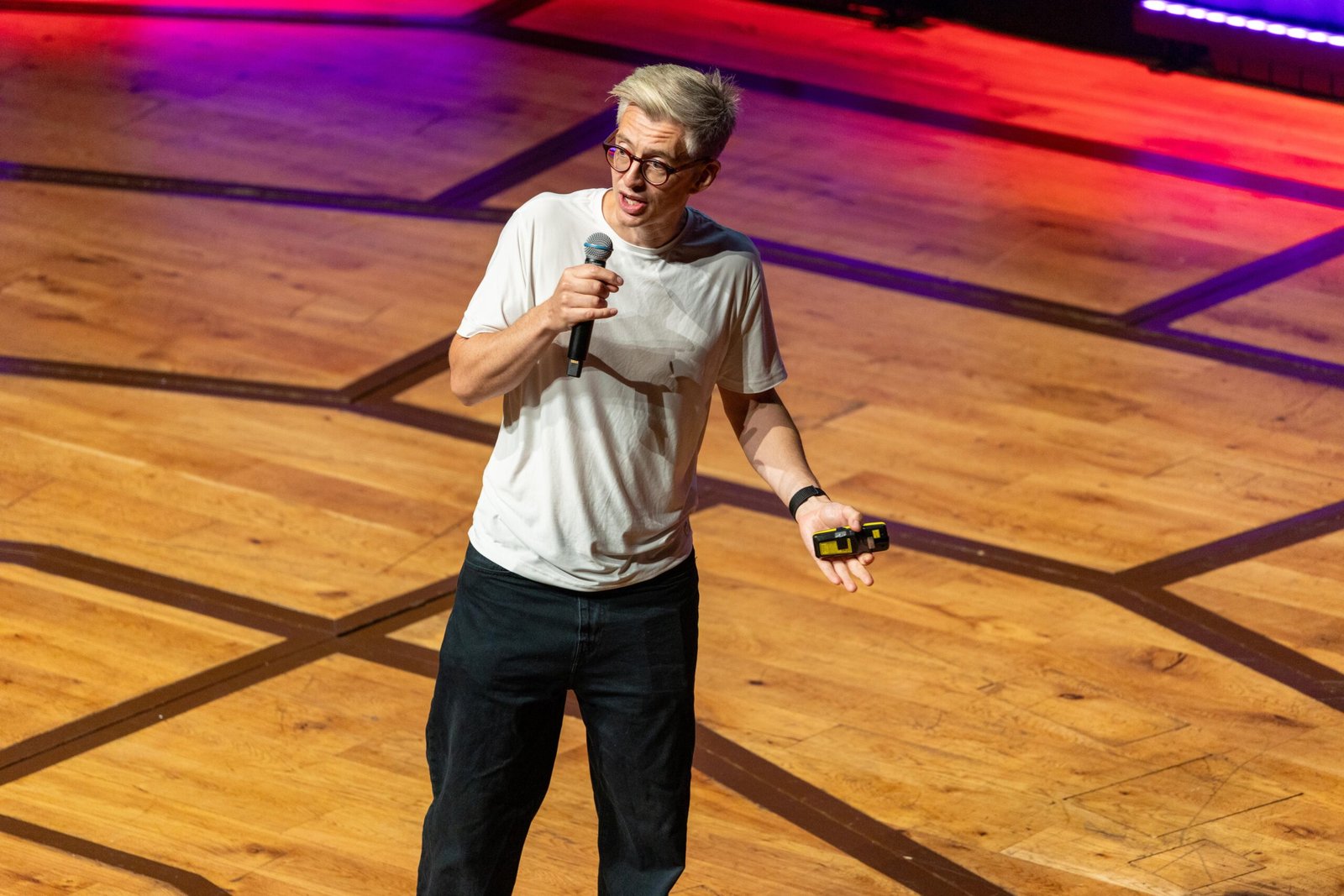
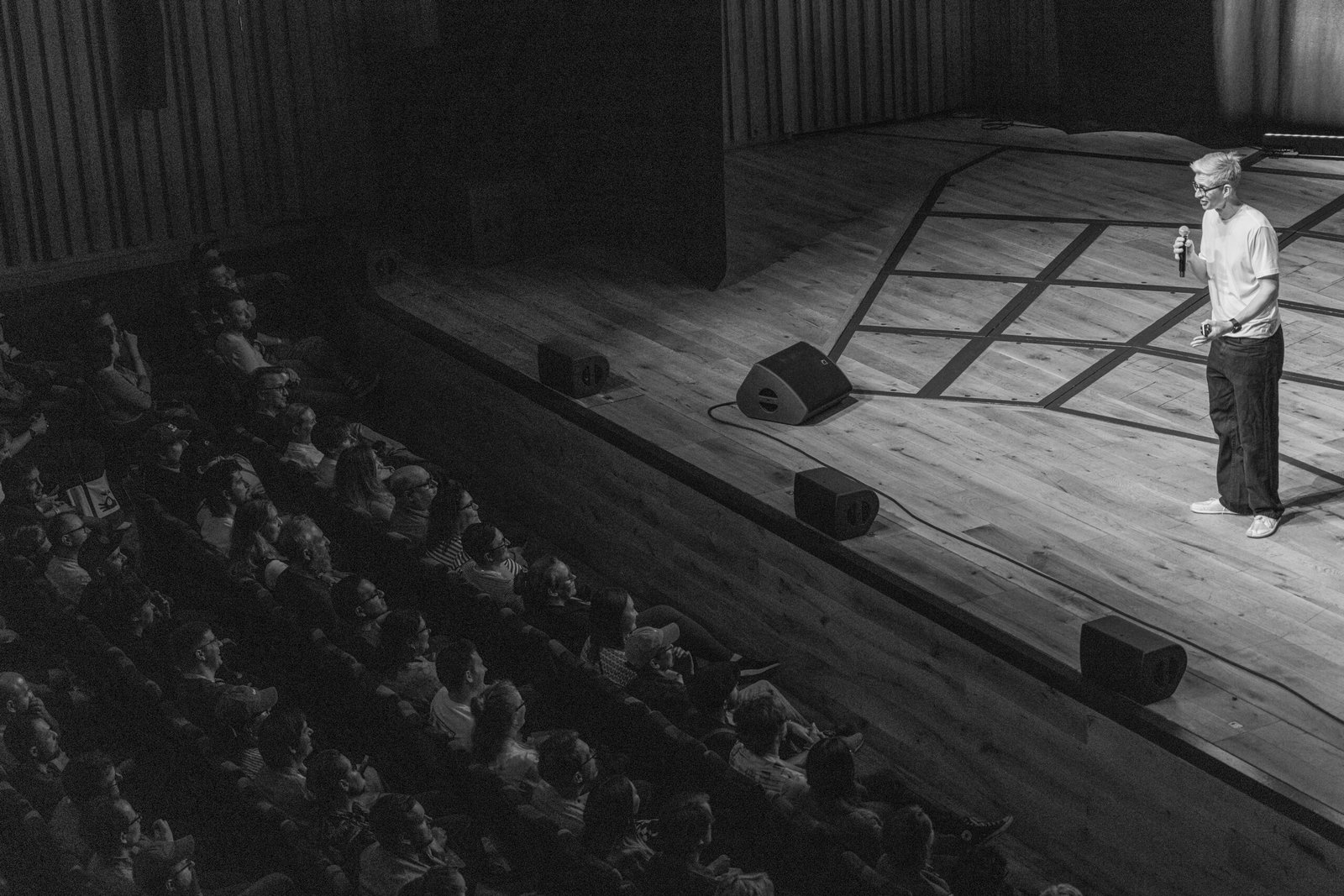
For the next hour, Hoffmann held the room’s attention with an assessment of the coffee industry’s future that was both sobering and optimistic.
He began by outlining an uncomfortable reality. Global coffee consumption continues to rise while production struggles to keep pace. “We keep drinking about as much coffee as we can possibly grow,” he told the audience, describing a market where demand is growing faster than the world’s population. Climate change, labour shortages and rising costs are placing increasing pressure on producers, while the stockpiles that once acted as a buffer against poor harvests have largely disappeared. “We’ve drunk those,” Hoffmann said. “So it’s a bit more precarious now.”
One section focused on China. While many people in the room might associate coffee growth with Europe or North America, Hoffmann described what is happening in China as almost impossible to comprehend. “We do not understand the scale of what is happening in China,” he said, pointing to the explosive growth of coffee chains and a rapidly increasing taste for coffee among Chinese consumers. If consumption continues to rise, he suggested, the impact on global demand could be profound.
Hoffmann also challenged the widely held belief that robusta coffee offers a simple answer to climate-related threats facing arabica production. “People have been like, well okay, if arabica is unreliable, we’ll just plant robusta,” he explained. Yet the reality is more complicated. Research suggests robusta requires large amounts of water and intensive cultivation methods that create environmental challenges of their own. Rather than a silver bullet, Hoffmann argued that the future will depend on innovation, genetic diversity and exploring alternative coffee species.
Yet despite chart after chart detailing pressure on the industry, his message remained surprisingly hopeful. Coffee quality, he argued, has never been better. Advances in processing, fermentation and brewing technology have transformed what producers and consumers can achieve. “As a consumer, it’s genuinely never been better,” he said.
The strongest message came towards the end of the talk, when the focus shifted away from production figures and market trends towards the people who sustain the industry. Hoffmann reminded the audience that producers continue to innovate, consumers continue to care deeply about what they drink, and coffee itself continues to evolve. “Coffee is going to stay delicious,” he said. “Coffee is going to stay diverse.”
Looking around Beacon Hall, filled with hundreds of people who had chosen to spend their Saturday celebrating coffee, it was hard to disagree.
After an hour of serious discussion about climate change, labour shortages and the future of coffee production, the audience-driven Q&A provided some welcome comic relief. Questions ranged from the practical to the absurd, including the strangest coffee Hoffmann had ever tasted and whether he had “ever seen more hipsters in one room.” His response drew one of the biggest laughs of the afternoon: “I live in East London.”
Heading Home
The best festivals leave you with more than you arrived with. Bristol Coffee Festival certainly did that. I arrived expecting coffee and conversations. I left thinking about community, resilience, innovation and the people behind every cup.
And thanks to a memorable afternoon in Beacon Hall, this first Bristol Coffee Festival left me thinking about the future of coffee too.