

This is Oxford Coffee Festival Part 2. In the first part of this story, I met five roasters and heard how they found their way into coffee. I interviewed ten exhibitors in all, and the other five are here. But first, I caught up with Ed, co-founder of the festival, to find out how it all began.
From a Trip to Nottingham to Over 40 Exhibitors: Oxford Coffee Festival
Ed Myatt is co-founder of the Oxford Coffee Festival, and the idea came to him and his brother on a visit to another festival.
I caught up with Ed straight after a talk he gave in the presentation area with Paula Fandino and Omar Sacranie.

“The story was that David, my brother, co-founder, he works with Josh from the Nottingham Coffee Festival, and we’d gone up to visit because we’d seen their socials and they’d been running for three years at this point,” said Ed. “We went in and we were having a brilliant time, but we were about half an hour in and both of us just turned to each other and said, why doesn’t Oxford have this?”
“One of the things that was quite noticeable was that they had their core of Nottingham roasters, but they’d gathered people from all over the country,” he explained. “We thought, there are more than enough roasteries and cafes in Oxford for us to be able to do that. If we had even just one or two in the first year that came down and joined us, then that would be brilliant.”
“We ended up with 30 different vendors last year,” said Ed. “We’ve got just over 40 for this year.”
Oxford Coffee Festival Part 2: putting the Oxford coffee scene on a platform
“The Oxford coffee scene flies under the radar a little bit, which is why we wanted to celebrate it,” he said. “There are five coffee roasters within the ring road that supply to a lot of other cafes. And then there are cafes such as Tree Artisan Cafe, who are doing the Latte Art Throwdown for us today, who have their own beans. We’re not short of people doing really brilliant things with their coffee. We just wanted to put them on a platform and show people that it’s here.”
“It’s part celebration and part being able to invite people into the space and share a love of coffee and cafe culture, and just have a really fun day,” said Ed. “This is our second year.”
“We’d love to be able to open the doors to more people,” he said. That could mean drawing from further afield. “We had our first international exhibitor this year, based in Sweden. If we could start pulling in some international roasters, that’s the end goal really, whether it happens next year or not.”
“We’d like to really put ourselves on the map as a city that people travel to for the coffee scene.”
From 13 Years of Saving to a Lockdown Opening: Tree Artisan Cafe
Graziella, owner and founder of Tree Artisan Cafe, spent more than a decade saving for the day she could open her own place.
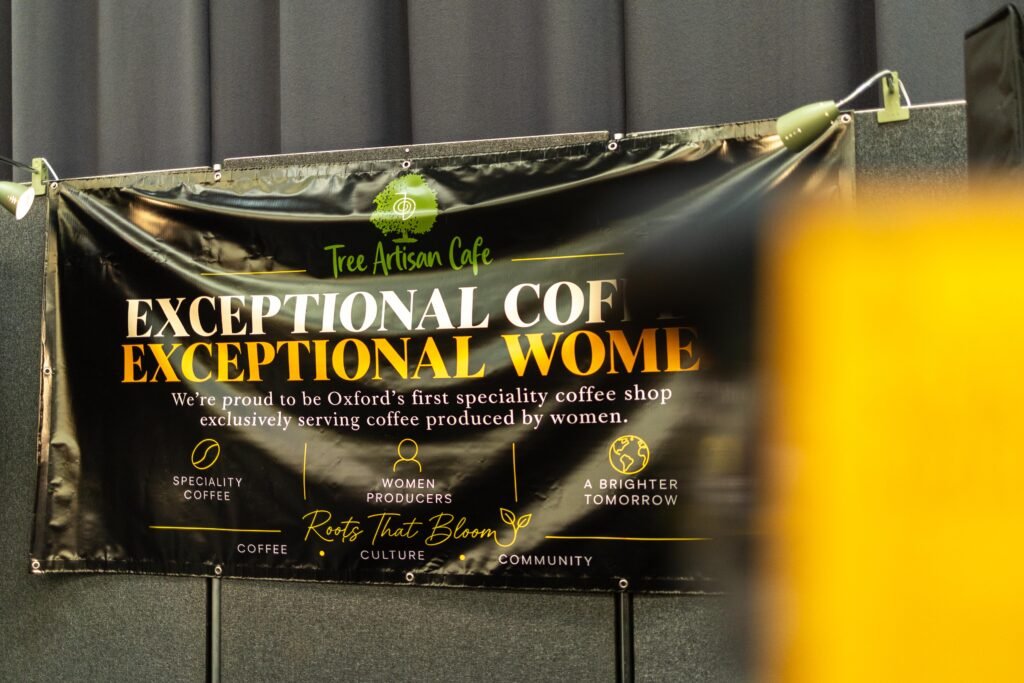
Tree Artisan Cafe was running the festival’s Latte Art Throwdown, and its stand carried a banner reading “Exceptional Coffee, Exceptional Women”.
“I’d been in hospitality for 25 years, and over 13 of those years I was saving up to open the business, instead of taking on credit and all that,” said Graziella. “I was supposed to open before lockdown, but then we had a lockdown and I decided to open during the lockdown. I opened on 18 September 2020. It was takeaway, so that’s what I started.”



“It was the beginning, of course. People, they don’t know you,” she said. “All my hard work, all my love, everything’s in there.”
Oxford Coffee Festival Part 2: women producers and a Botley roaster
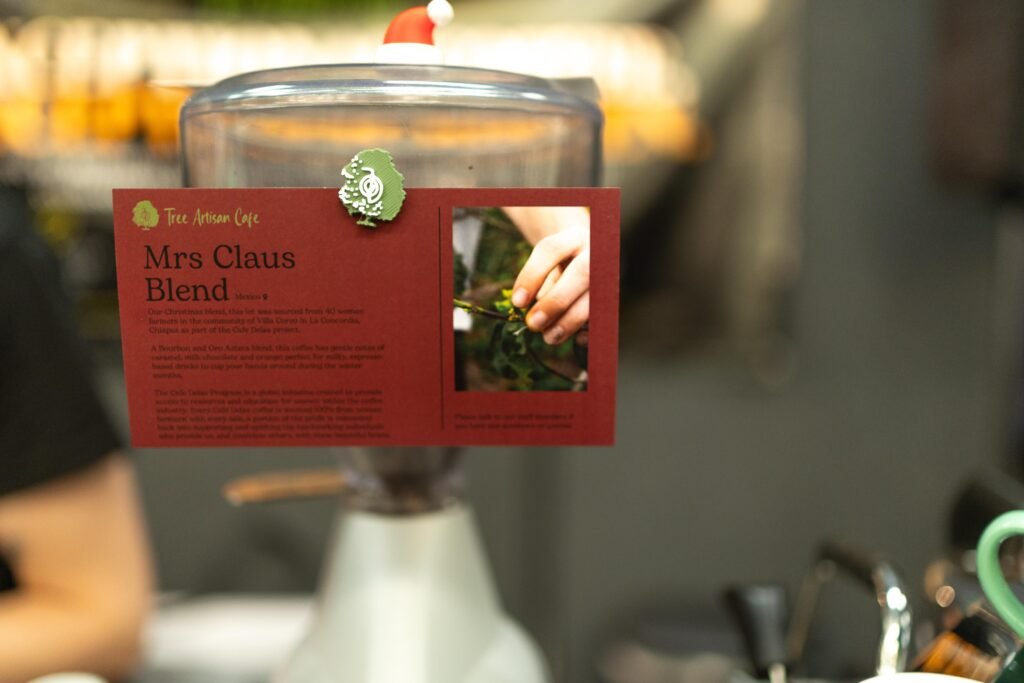
“We are working just with women producers. We are the only ones in Oxford doing just women producers,” said Graziella. “It is helping them to be independent.”
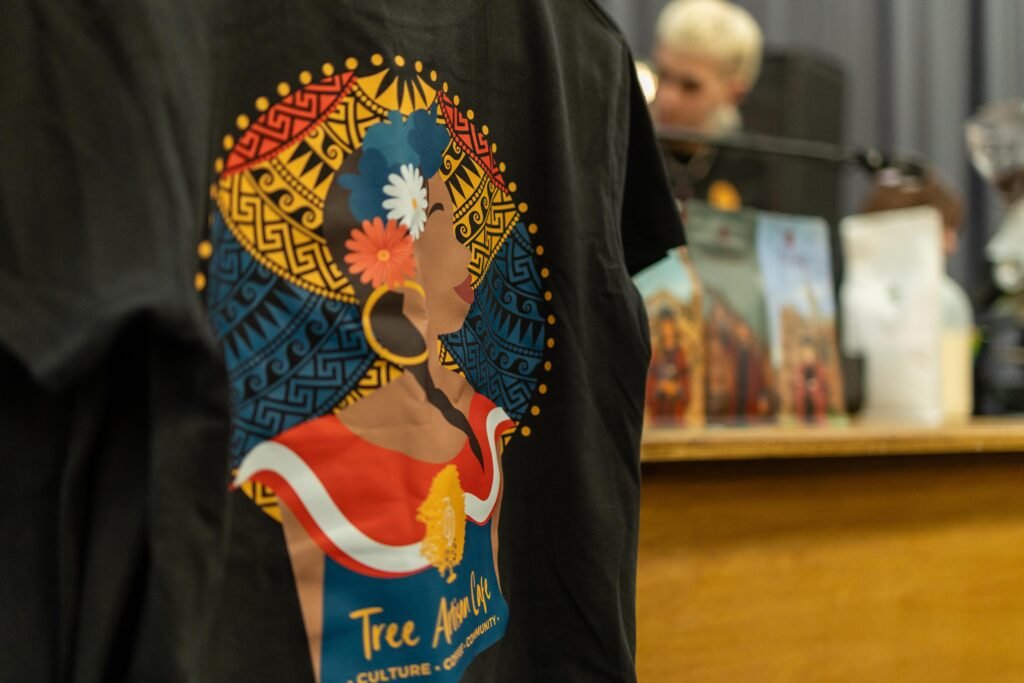
“The green beans come, and we roast them in Botley with the roaster called Kaffirost. Aarón is the one roasting our coffee,” she said. “We have all the bags there which represent the women. They are all designs that represent the country, the woman. So it is all about them.”
Oxford Coffee Festival Part 2: two dreams in one name and logo
“I joined two of my dreams, Tree and Artisan,” she explained. “We always say we are kind of a tree. We put in the seeds, let them grow, let them root, then it’s time to get to the fruits.”
“The symbol in the middle is the Reiki Cho Ku Rei, which means I’m a Reiki master. So I’m bringing the two dreams into one: how can I bring the love and the passion and the very high, nice energy for everyone. That’s how I made the logo, tree of life and Reiki together. The Cho Ku Rei represents water, so it’s flow, and the tree represents the soil. So there are roots.”
Looking ahead, Graziella said the cafe is moving closer to the farms. “It’s growing every day,” she said. “This year we’ve been to El Salvador and visited the farms. We won the Global Coffee Award for the high standard coffee we’re using. Next year we’re going to Brazil, and the following year we’re going to Colombia.”
“We’re going to do some more work getting Tree Artisan to the farm and, I don’t know, maybe open some shops around the UK as well.”
Tree Artisan Cafe | 3 Little Clarendon Street, Oxford OX1 2HP | Instagram: @treeartisancafe
From the Charity Sector to Coffee and Tea Rooted in Joy: Peaberry & Leaf
Cara, founder and director of Peaberry & Leaf, left the charity sector to build a coffee and tea business around everyday moments.
The Peaberry & Leaf stand was stocked with brewing equipment alongside its blue coffee bags. Cara had just come back from her morning Pour Over Masterclass: V60 & Hario Switch when I met her, and she was due to run the same class again in the afternoon.
“I wanted to make a change for myself and do something that was rooted in joy and ritual and the everyday, where you can add moments in your day,” said Cara. “As I started exploring coffee and tea, I thought it’s a lovely way to do that.”


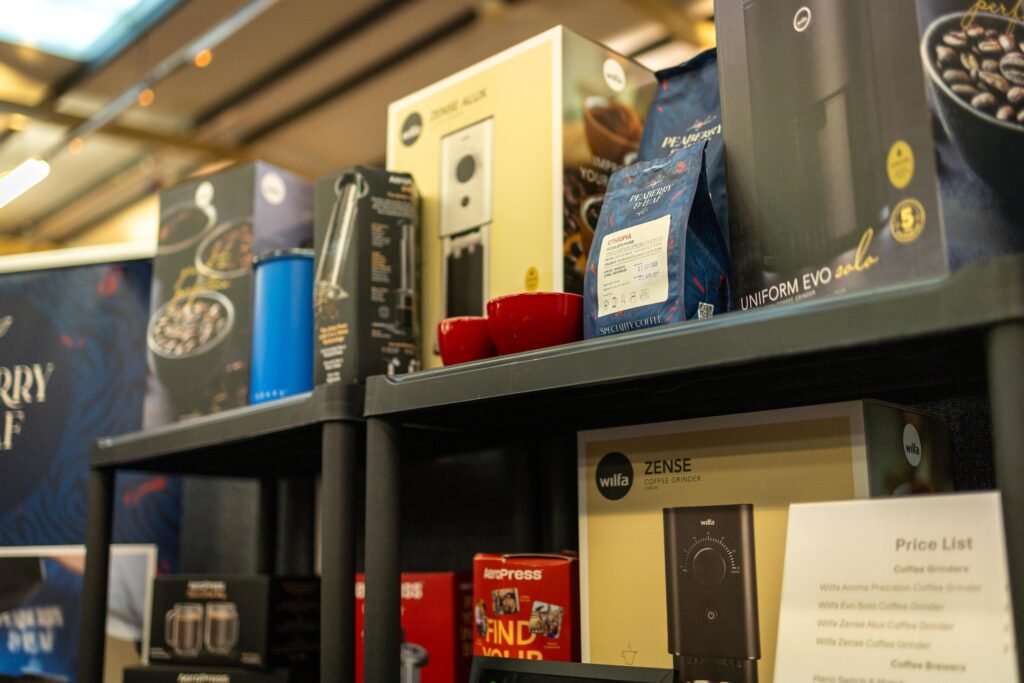
“I loved coffee and tea, but I didn’t really know that much about it, or it felt inaccessible and there was so much information,” she said. “How could I make it accessible and connect the consumer with a quality product? And then the understanding of how to brew it. It can be really simple.”
Oxford Coffee Festival Part 2: women farmers and a coffee quiz
“It’s the International Year of the Woman Farmer 2026, so two of our coffees are women produced: our Ethiopian and our Brazil,” said Cara. “The Brazil is a women’s cooperative. The Ethiopian is a single mum farmer. The coffees are all on our website, so people can learn where they come from and actually connect with the people and communities behind producing these.”
She described one cooperative that changed its crop. “This is a fair trade, organic cooperative where they were growing robusta, but the soil was very good quality and they felt that arabica would grow there. So they replanted the crop. It’s a whole load of microlot farmers that come together, share a watering station and produce these beautiful coffees.”
“When I grind it in my kitchen, it’s the smell of toffee apple,” she said. “It’s lovely acidity, fruitiness, perceived sweetness, just the things that I like. I cup lots of different coffees and then really go in for, this is going to work well online.”
“We’ve got our new coffee quiz we’ve just launched, which people can go on and learn what coffee is right for them,” said Cara. “We just try and guide people to making a choice that they’re going to be happy with, because ultimately we want them to receive the coffee and be delighted with it.”
Oxford Coffee Festival Part 2: masterclasses on brewing
“I’m doing a couple of masterclasses today, talking about the V60,” she said. “I hope that people have an elevated experience, and that it’s not going to cost any more, the equipment you might already have. If you come to a masterclass, you have the opportunity to try it and see what you like. How can you take it to that next level with a bit of knowledge?”
Peaberry & Leaf | Online, with events around Oxfordshire and the Cotswolds | Instagram: @peaberryandleaf
From a Tuk Tuk to an Oxford High Street Espresso Bar: Jericho Coffee Traders
Amy, trainer and manager of the Jericho Coffee Traders roastery cafe, and Hux, the wholesale manager, told me how the business began.
Jericho had a row of V60 brewers set up on the counter, with its coffee bags and the bird logo behind them.
“Originally, James, the owner of our business, was just selling all the coffee out of the back of a little tuk tuk van and micro roasting batches,” said Amy. “He came over from New Zealand and was like, I want a New Zealand style coffee. I want a kiwi-style coffee. That’s where everything came from. It was just wanting good, no frills coffee. It was a passion project at the start that happened to work.”
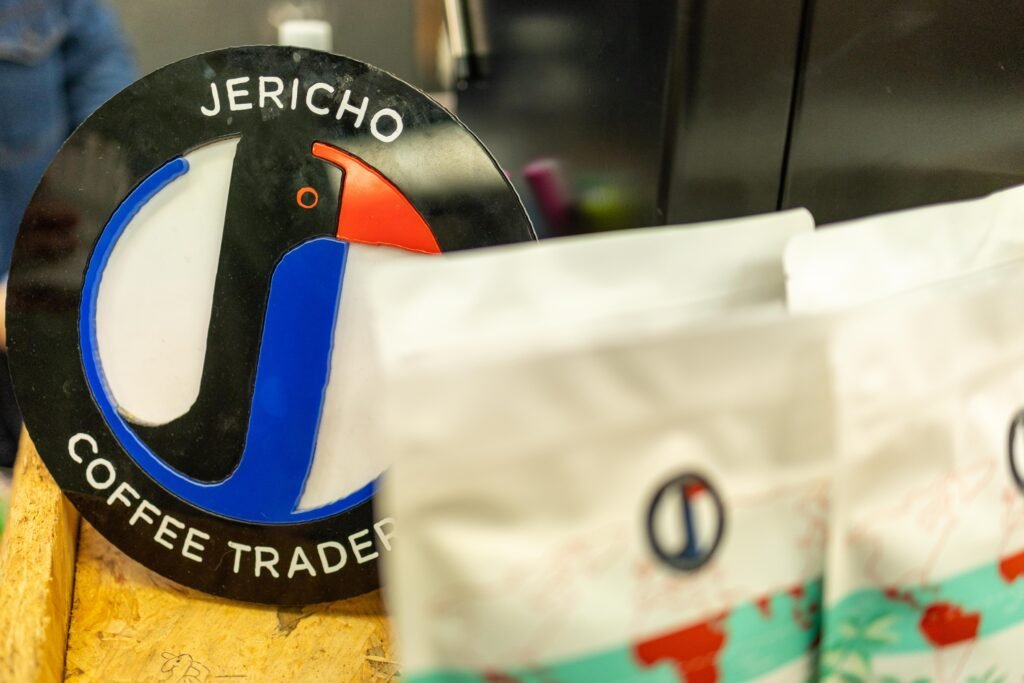
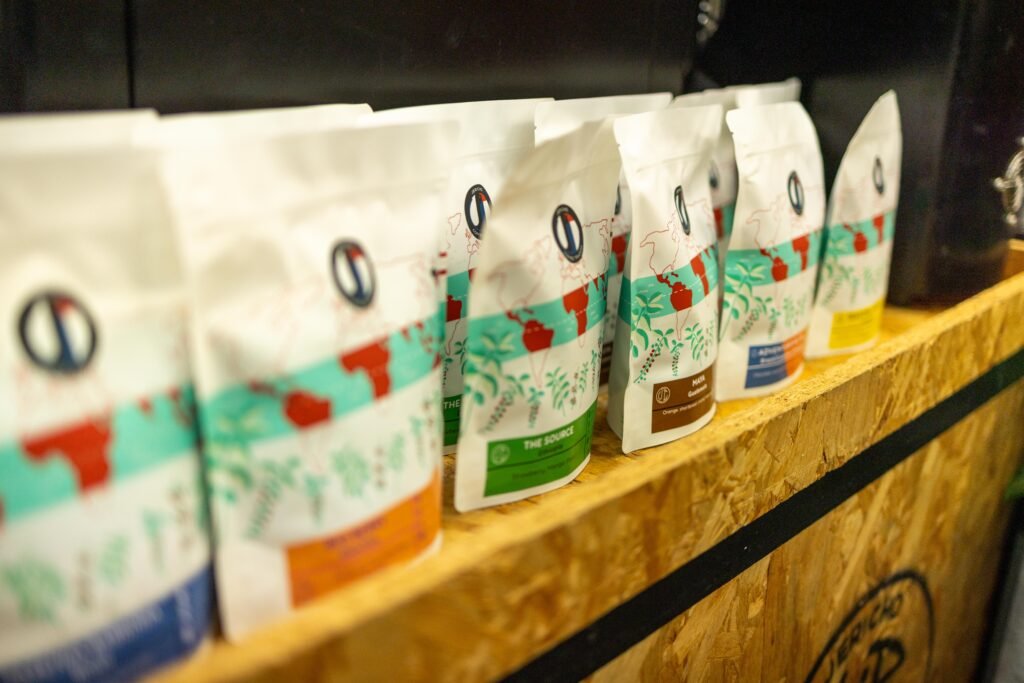


“James and Lizzie, the owners, started out with a little tuk tuk, like a Vespa sort of thing, with a coffee machine on the back that we still have in the roastery, which is amazing,” said Hux. “We just used it for an event this week.”
Oxford Coffee Festival Part 2: a High Street espresso bar in the Oriel College building
“He started renting a little space just off the High Street, which is now Sandy’s Piano Bar. Really great place to go for late night karaoke,” Hux said. “They started roasting more and more coffee for the cafe. Then eventually that started doing really well, so they needed a new spot, a little bit bigger, with a bit more flexibility. We moved to a spot just around the corner, on the High Street, in a space that used to be an art gallery, and turned it into an espresso bar, essentially.”
“James, the owner, worked for Oriel as a rowing coach. Oriel College. So we’re in the Oriel College building,” he explained. “They were able to make something happen there. I think they just recently passed the ten year mark, and no signs of slowing down.”
“It’s very, very big for students. We have a really great student customer base, and there’s a lot of familiar faces, a lot of regulars. It’s a beautiful place to be, right on the high street.”
Making specialty coffee accessible
“One of the things that I talked about a lot with the bosses initially was the idea of making specialty coffee accessible,” said Hux. “It can be quite intimidating going into a specialty coffee place, and I think it’s reflected in the branding. If you look at our branding, it’s not sexy and slick. It feels more open, more broadly appealing.”
“We hire a lot on personality, and we have quite an extensive training programme. The goal for us is to work with people that are just nice humans at the core. And then that makes everything else so much easier. We just train them up until they’re highly skilled baristas.”
Jericho Coffee Traders | High Street Café, 105 High Street, Oxford OX1 4BW; Roastery & Café, Oxford Eco Centre, Osney Mead, Oxford OX2 0ES | Instagram: @jerichocoffeetraders
From One Barista Six Days a Week to a Team of Ten: Batch Baby
Saskia is co-owner and founder of Batch Baby, a specialty coffee shop in De Beauvoir, east London.
A green Batch Baby football shirt hung on the wall of the stand, next to bags with dragon artwork on the table.
“We are quite famous for being a very prolific, excitable multi-roaster,” said Saskia. “We work with lots of roasters from all around the UK and the world. We’re quite a big, busy space with an exceptionally wonderful, friendly team of about ten people. And we do lots of events.”


“We have grown absolutely exponentially,” she said. “When we first opened, it was Tom on his own, six days a week, open to close. That was November 2021, because we just turned five, and then we hired our first team members in February the following year.”
Oxford Coffee Festival Part 2: a brutalist building and a batch brew name
“The building we’re in is this brutalist building, built as part of the local estate. I think it completed in 1971. When we saw the space, we knew we wanted to have this mid-century 70s vibe,” Saskia explained. “For Tom and I, we were always very clear it was going to be a little bit unserious and have a kind of fun. We wanted to be really creative with it. It was meant to come across a little bit silly.”
“Batch brew for us is the best, highest quality drink that you can get at the most affordable price,” she said. “It’s always been a really big part of our menu and it’s always been the cheapest drink on our menu. And so, Batch Baby.”
Oxford Coffee Festival Part 2: a new region of roasters every month
“Tom does most of it, I have to give him credit for that, because he does an exceptional job in all the sourcing,” said Saskia. “Every month we change the region that we get roasters from. Last month we did Scottish roasters, this month we’ve got Midlands and Wales. Then we’ll intersperse it with big, exciting months. Earlier in the year we did a Belgium month. We’ve had Dayglow, we’ve had Bluebird from South Africa. We’ll have these big, exciting roasters on our shelves as well.”
Saskia also has a history with Oxford. “Tom and I met in Oxford. We worked together for two years at a lovely cafe called Society in Oxford,” she said. “I came last year to this festival. It’s a nice little festival. I brought one of our employees, it was a girls trip, and we did half a day here.”
“To be here and to be continuing to grow and continuing to get busy and to feel so comfortably established in our scene and in the space, that’s been a bit of a surprise. A lovely surprise, though.”
Batch Baby | Rose Lipman Building, 43 De Beauvoir Road, London N1 5SF | Instagram: @batchbabycoffee
From a Student Social Enterprise to a Ugandan Seedling Nursery: Brew Crew Coffee
Iain is co-founder and director of Brew Crew Coffee, a roaster built around a social enterprise.
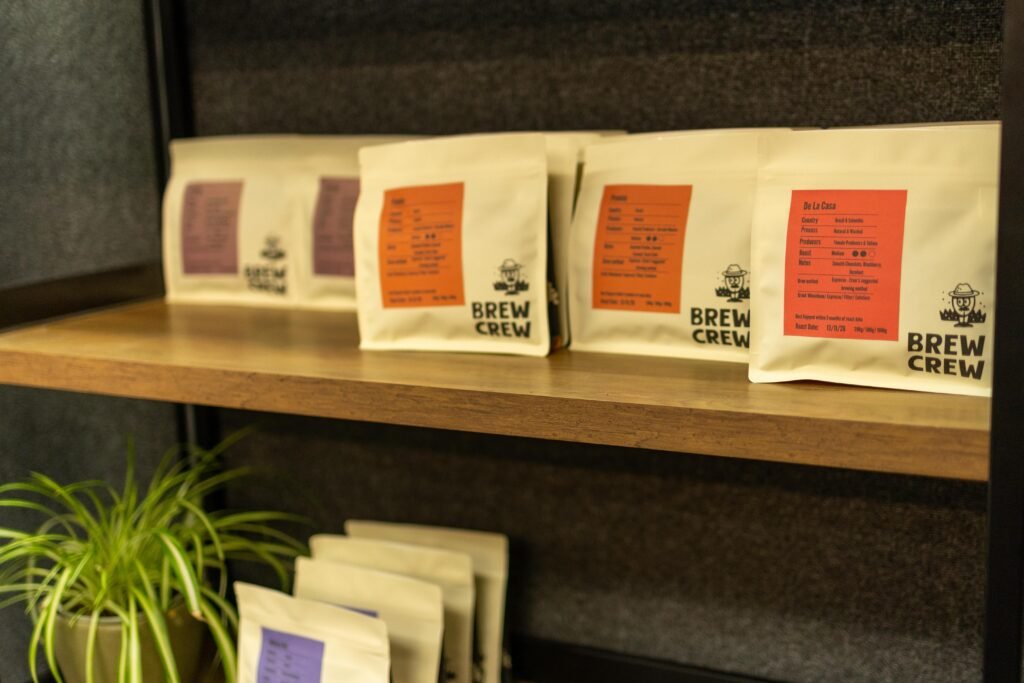
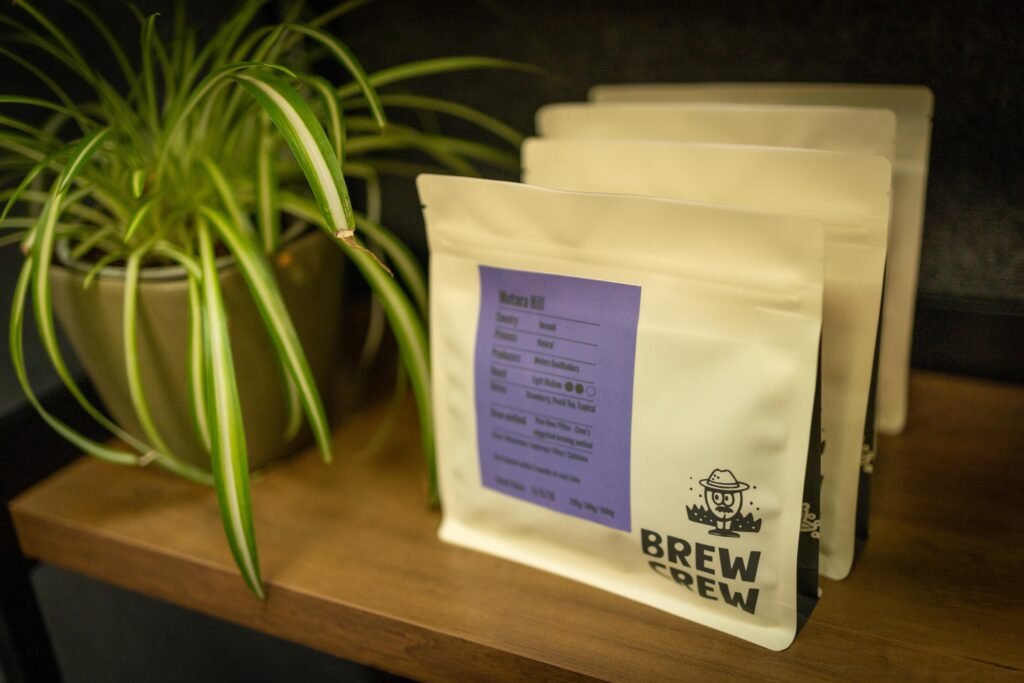
Brew Crew’s bags lined a wooden shelf, with a barista at the grinder serving customers.
“When I was at university, we were doing something called Enactus, which was a student-run social enterprise,” said Iain. “It opened our eyes to see that business can be a force for making an impact. After learning more about coffee and the issues in the industry, we saw how, by selling coffee, we could make an impact at origin.”



Oxford Coffee Festival Part 2: one project, in Uganda
“Recently we switched to supporting one project, having that real focus on making an impact in a very particular sector,” he said. “We’re now working with a project in Uganda to have a coffee seedling nursery for Ugandan farmers. It helps farmers invest in their future crops and maintain a sustainable way of making an income year to year by having consistent yields on their crops.”
“Last month we made a £1,500 donation to that,” said Iain. “We’ve got another £1,500 as the goal by the end of the year. Then we’ll look at new funding milestones and projects for the new year.”
Roasting for who the coffee is for
“It really comes down to lots of tasting and knowing what coffees are worth roasting,” he explained. “I sample a lot of coffee and I really keep in mind, who is this for? Is it going to be for filter? Is it going to be for espresso? Then it’s tweaking how much development you give that coffee for how it’s going to be brewed. For espresso we tend to have a bit more development, a slightly longer roast. It helps give a richer flavour and cut through milk a bit more.”
“Is that for someone who’s got a mocha pot at home, or someone with a really expensive home espresso setup? Those are two very different customers,” said Iain. “So it’s about trying to make it clear who this coffee is for and what to expect from brewing it.”
Oxford Coffee Festival Part 2: what is next for Brew Crew
“We’ve been really growing the online, direct to consumer a lot, which is going really well,” he said. “We’ve got some interesting talks with some wholesale customers. And in an ideal world, finding a roastery cafe location would be ideal, but it’s about finding the right place at the right time, which I’m not completely in control of. Hopefully, fingers crossed, that can happen sometime in the year.”
“I’ve always really liked food and drink. I love cooking, and coffee roasting is this really nice mix of practical, hands-on stuff with problem solving, and you have all the other classic business problems to solve,” Iain said. “I think it’s good for someone who likes to dip into many different interests.”
Brew Crew Coffee | Online | Instagram: @brewcrewuk
That wraps up Oxford Coffee Festival Part 2. Thank you to Ed and to everyone who stopped to talk.
Also read: Oxford Coffee Festival 2026: Meeting the Roasters, Part 1, Nottingham Coffee Festival 2026: Meeting the Roasters, Part 1 and A Day at Bristol Coffee Festival.